Tradition / Region: Manx Mythology
Alternate Names: Boagane; Buggan ny Hushtey
Category: Mountain dweller, Ogre
The Myth
On the Isle of Man there once roamed a terrible being known as the Buggane—a great, hulking creature of malice and brute strength.
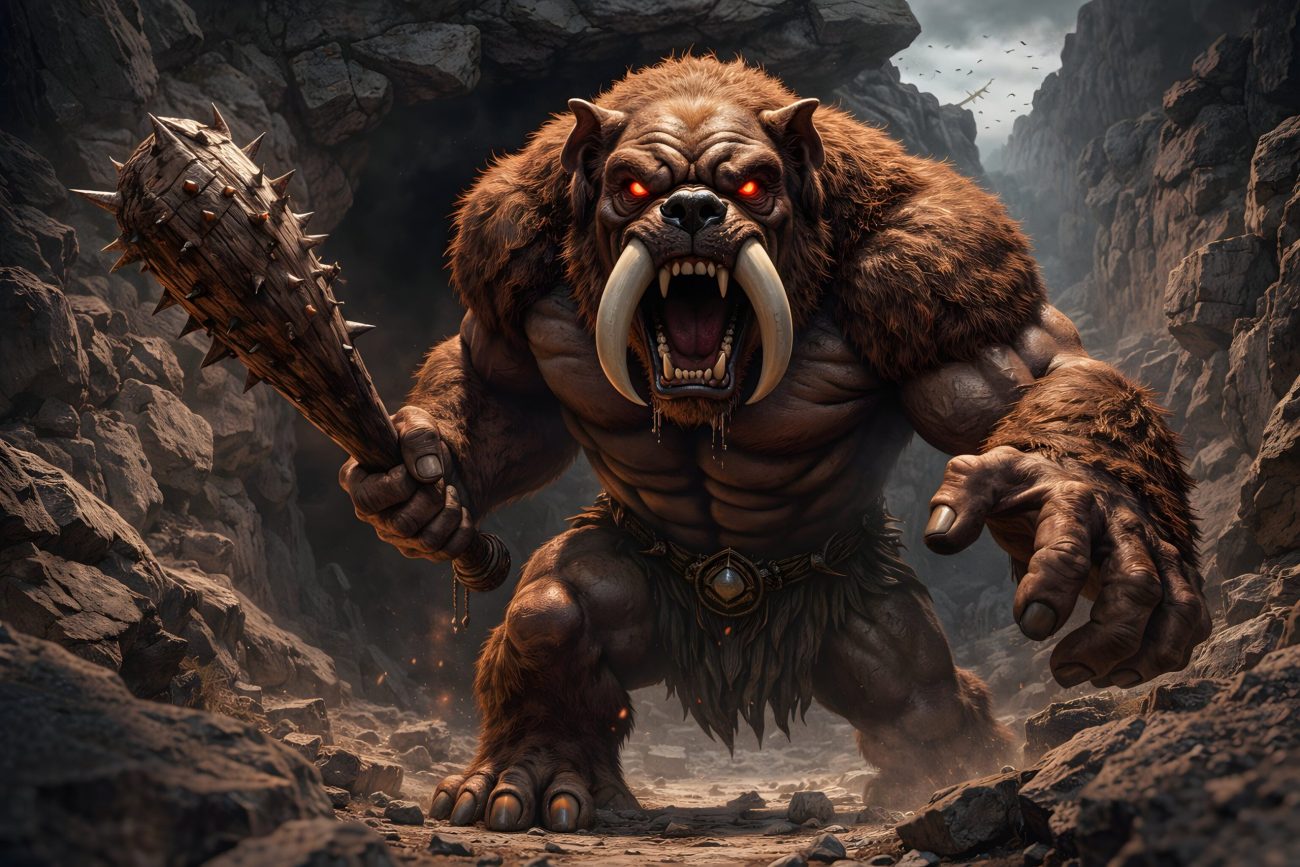
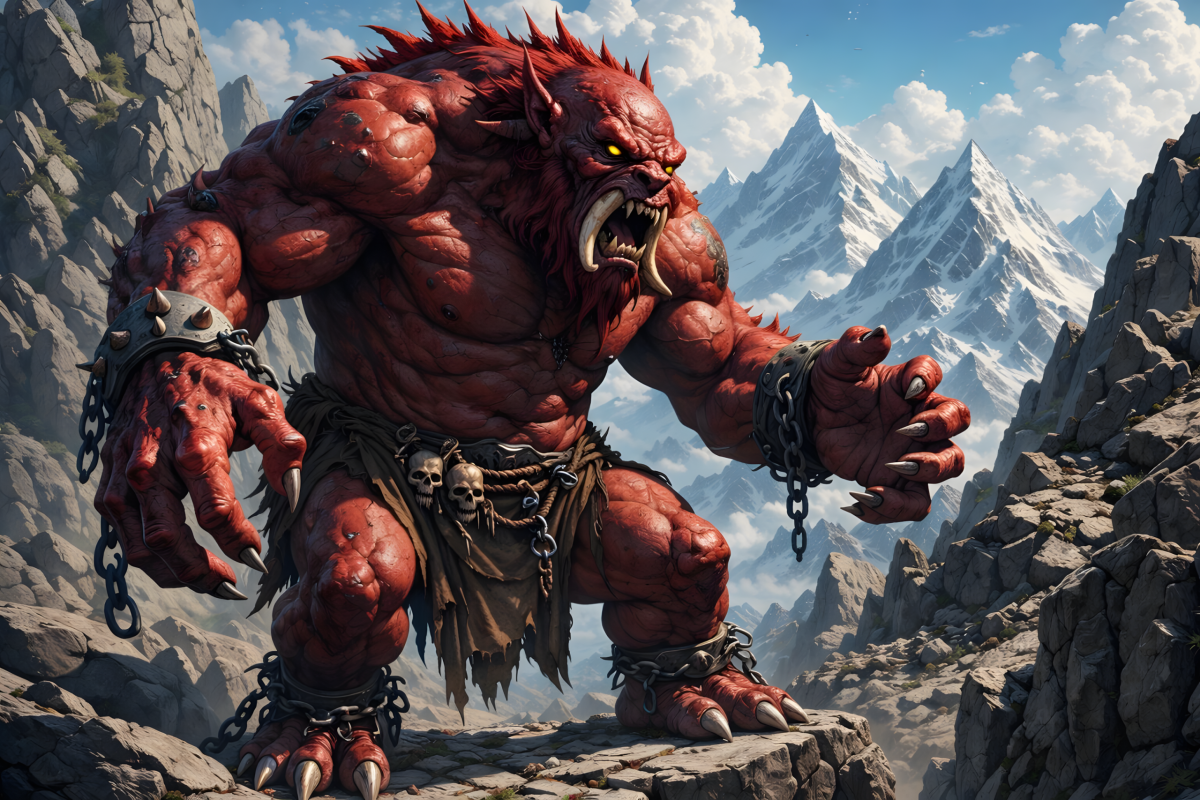
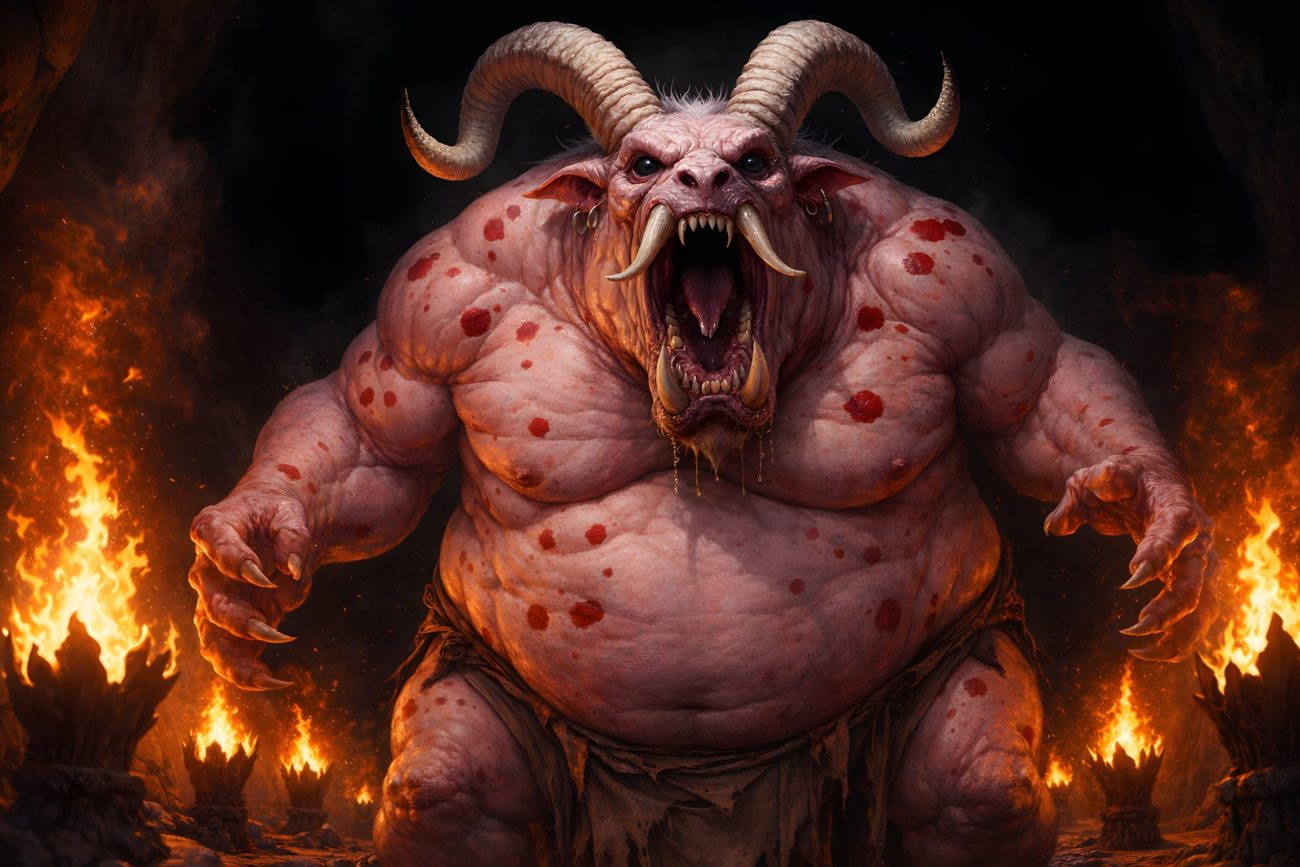
The Buggane was a shapeshifter. At times it appeared as a monstrous black calf, at others as a towering man with horse’s ears or hooves. In its truest and most dreadful shape it was covered in coarse black hair, with blazing eyes like torches and sharp tusks gleaming in its mouth. Some said it bore bull’s horns. It was so immense that it could tear the roof from a church as easily as a man might lift a hat.
Though powerful, the Buggane had its limits. It could not cross running water, nor could it stand upon ground made holy.
One tale tells of a Buggane that found itself accidentally carried away on a ship bound for Ireland. Furious at being taken from its island home, it whipped up a savage storm, driving the vessel toward the jagged rocks of Contrary Head. The terrified captain prayed to St. Trinian, promising to build him a chapel if they were spared. The saint guided the ship safely into Peel Harbour. Enraged, the Buggane roared, “St. Trinian shall never have a whole church in Ellan Vannin!”
True to its word, when a chapel was built in the saint’s honor, the Buggane tore its roof off—once, twice, three times—so that St. Trinian’s Church was never left complete.
Bugganes were not only destroyers of churches. They plagued farms and villages. One from Glen Maye nearly hurled a lazy housewife into a waterfall for neglecting her baking. She escaped only by slipping free of her apron strings. Another, at Gob-na-Scuit, ripped thatch from haystacks, blew smoke back down chimneys, and shoved sheep from steep grassy cliffs.
Some Bugganes lived by the sea in dark caves. The Buggan ny Hushtey was known for despising idleness, punishing those who shirked their work.
Most famous of all is the battle between the Buggane of Barrule and the Irish giant Fionn mac Cumhaill.
When Fionn came to the Isle of Man, the Buggane sought him out for combat. Fionn wished to avoid the fight, so his clever wife disguised him as a baby and laid him in a cradle. When the Buggane saw the size of the “child,” he thought, “If this is the baby, what size must the father be?” and withdrew—for a time.
But they did meet at last, near Kirk Christ Rushen. From sunrise to sunset they fought. Fionn planted one foot in the Big Sound and the other in the Little Sound, shaping the channels between the Calf of Man, Kitterland, and the main island as he struggled. The Buggane stood firm at Port Erin. In the end, the Buggane wounded Fionn so grievously that he fled toward Ireland.
The Buggane could not follow across the sea. Instead, it tore out one of its own teeth and hurled it after him. The tooth struck Fionn and fell into the water, becoming the jagged rock known today as Chicken Rock. Fionn turned and laid a mighty curse upon it, condemning it to remain there as a hazard for sailors as long as water runs and grass grows.
And so the Bugganes remain in Manx memory—wild, shape-shifting giants of fury and strength, feared for their violence and remembered in the land itself.
Sources
Wikipedia contributors. (n.d.). Buggane. In Wikipedia, The Free Encyclopedia. Retrieved February 14, 2026, from https://en.wikipedia.org/wiki/Buggane