Ahuna

Tradition / Region: Norwegian Mythology
Alternate Names: Ahune; Ahunum; Hahune; Hahanie; Swamfisk
Category: Fish


The Myth

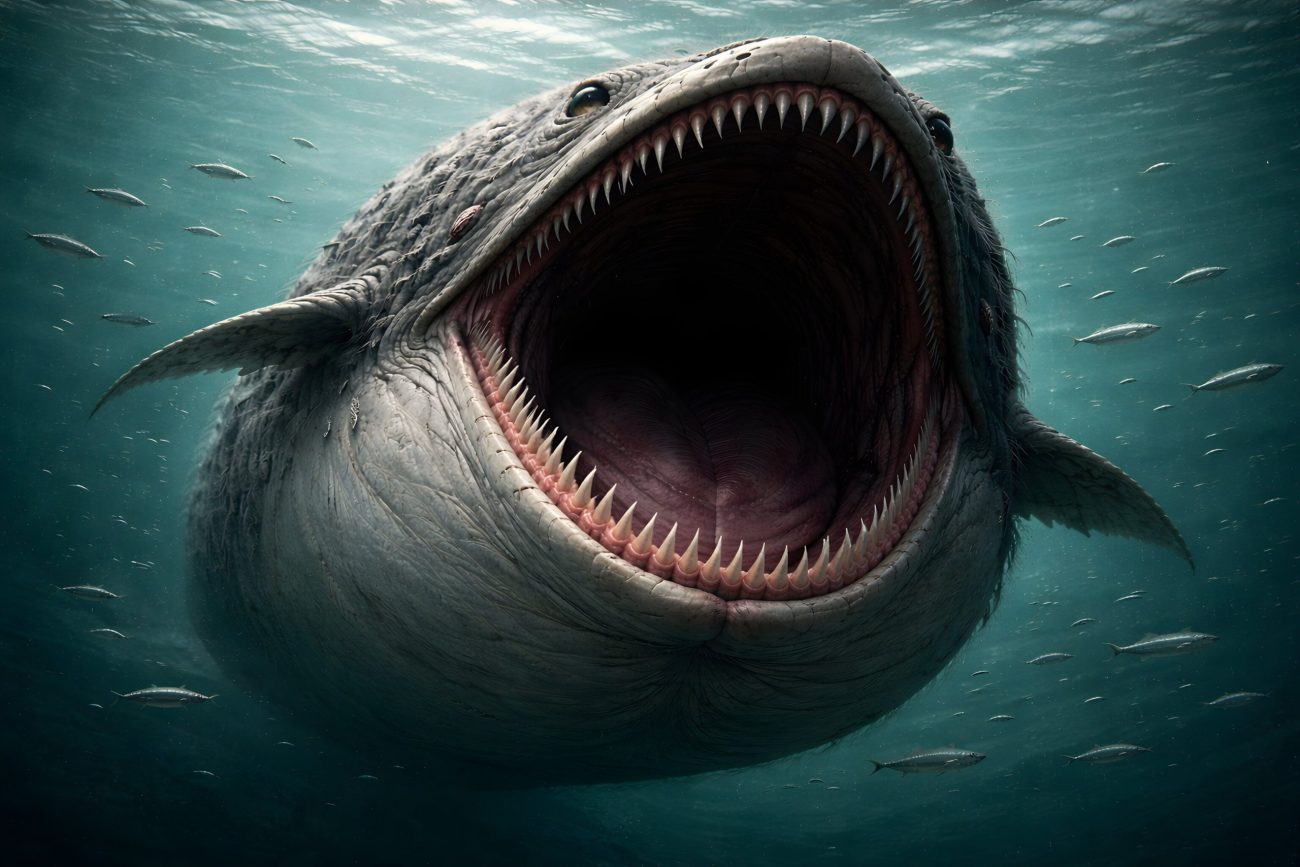
In the depths of the sea lives a creature called the Ahuna, feared not for speed or cunning, but for its boundless hunger. Of all fish, it is the most voracious. It eats without pause, consuming fish after fish until its belly swells larger than its own body, stretched and distended beyond what seems possible.

The Ahuna’s body is strange and ill-formed. Its mouth opens directly into its stomach, with no true neck or throat between, as if it were nothing but hunger given flesh. When danger approaches, the creature does not flee. Instead, it curls inward, tucking its head and limbs into its own body like a hedgehog, folding skin and flesh over itself until nothing vulnerable remains. In this state it lies still, waiting for the threat to pass.

But the Ahuna’s appetite never sleeps.

If hunger seizes it while it is curled tight, the monster turns upon itself. Unable to unfold without exposing itself to danger, it gnaws at its own body, devouring its own flesh to satisfy its need. Thus it survives by consuming itself, only to grow hungry again.

Some say the Ahuna bears a beak like a bird and is marked with wavelike stripes; others describe it as a sea-hedgehog, round and coiled, with a twisted tail. Whatever its shape, all agree on its nature: a creature trapped by endless appetite.

In northern waters it is also called the Swamfisk, a rare monster hunted for its fat and oil. Yet even when slain, the Ahuna is remembered as a warning—that hunger without limit devours not only the world, but itself.


Sources

A Book of Creatures contributors. (n.d.). Swamfisk. In A Book of Creatures, from https://abookofcreatures.com/2019/04/26/swamfisk/


Huldra

Tradition / Region: Norwegian Mythology, Swedish Mythology
Alternate Names: Skogsrå, Tallemaja, Ulda, Hulder
Category: Fox, Forest dweller


The Myth

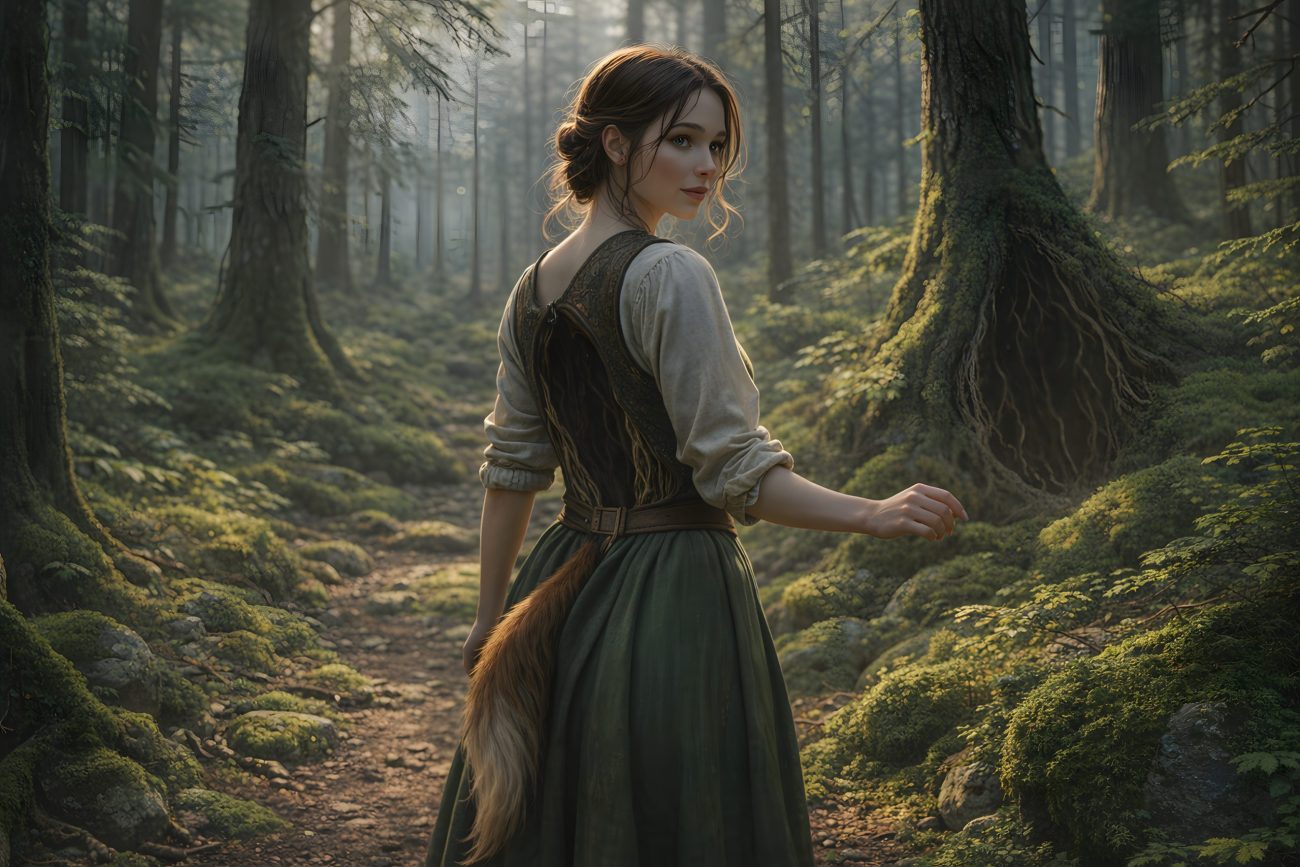
Deep within the Scandinavian forests, people spoke of the Huldra, a hidden woman who ruled the woods and the spaces between trees. She appeared as a beautiful young woman, dressed like a farmer’s daughter or forest maiden, her voice gentle and her manner inviting. Those who met her often believed they had encountered an ordinary human, for she moved easily among people and spoke their language. Yet the Huldra was never entirely what she seemed.

Those who looked too closely, or who followed her too far into the forest, might glimpse what she concealed. Beneath her skirt could be seen the tail of an animal, often that of a cow or fox, or her legs might be covered in coarse hair. Some said that if she turned her back, it was hollow like the inside of a rotting tree. For this reason she wore long clothing and kept her secrets well hidden, revealing them only to the careless or the doomed.

The Huldra was one of the rå, the wardens of the natural world, spirits who governed forests, waters, and mountains. As skogsrå, she claimed dominion over the woods and all who worked within them. Charcoal burners, who labored day and night tending their kilns, were said to be especially favored by her. While they slept from exhaustion, the Huldra would watch over the burning charcoal, waking them if danger threatened. In return, the men left food for her in a hidden place, knowing that respect earned protection.

Yet her kindness was matched by danger. Men who mocked her, tried to expose her secret, or followed her seduction without respect often lost their way in the forest, fell ill, or were never seen again. Some tales tell of men who were lured into marriage with a Huldra, only to discover her true nature too late. Others say that if she were treated well, baptized, or brought fully into the human world, her tail would fall away and she could live as a woman, though the forest would mourn her loss.

Thus the Huldra remained a presence both alluring and feared — a reminder that the forest was alive, watchful, and governed by powers older than humanity, rewarding respect and punishing arrogance in equal measure.