Skoffín

Tradition / Region: Icelandic Mythology
Alternate Names: none firmly fixed; related beings include Skuggabaldur, Urdarköttur, and Modyrmi
Category: Fox


The Myth

In Icelandic lore there is a dreadful creature called the Skoffín, born from the unnatural union of an Arctic fox and a house cat. It carries the cunning of the fox and the cruelty of the cat, and its very existence is considered a sign of evil.

The Skoffín resembles both parents at once. Its fur may change with the seasons like a fox’s coat, and some say its body bears bare patches of skin. Yet its most feared power lies in its eyes. The creature’s gaze is said to bring instant death to anything it looks upon, whether human or animal.

It is said that Skoffín kittens are born with their eyes already open. If they are not destroyed at once, they sink into the ground and vanish, only to emerge again after three years, fully grown and dangerous. Because of this, people once took great care to destroy such kittens before they could escape into the earth.

When grown, the Skoffín roams farms and wilderness alike, killing livestock and sometimes people simply by fixing its eyes upon them. The safest way to deal with one is from afar, with a bullet blessed by prayer or made of silver. Some stories say that even hardened sheep dung can serve as a missile against it.

Yet the creature is not invincible. If a Skoffín sees another of its kind, both die instantly from the meeting of their deadly gazes. Mirrors also defeat it, for if it sees its own reflection, it perishes at once. One tale tells of a Skoffín that perched upon a church roof, causing people to die as they stepped outside. A clever man raised a mirror toward it on a long pole, and the monster died the moment it saw itself.

The Skoffín belongs to a family of similar hybrid beasts — foxes, cats, and other creatures twisted into monstrous forms. But among them all, the Skoffín is remembered as one of the most feared: a creature whose eyes alone could end a life, and whose birth was taken as an omen of darkness in the land.


Gallery


Sources

A Book of Creatures. (n.d.). Skoffín. Retrieved March 1, 2026, from https://abookofcreatures.com/2015/11/06/skoffin/.


Interpretive Lenses

Religious Readings
  • Christian Ascetic Deep Dive
Philosophical Readings
  • Nietzschean Deep Dive
Psychological Readings
  • Jungian Deep Dive
Esoteric Deep Dive
  • Hermetic Deep Dive
Political / Social Readings
  • Marxist Deep Dive

Dog King

Tradition / Region: Danish Mythology, Swedish Mythology, Icelandic Mythology
Alternate Names: Raka, Rakke, Rakken, Saurr
Category: Dog: Mock king / royal animal


The Myth

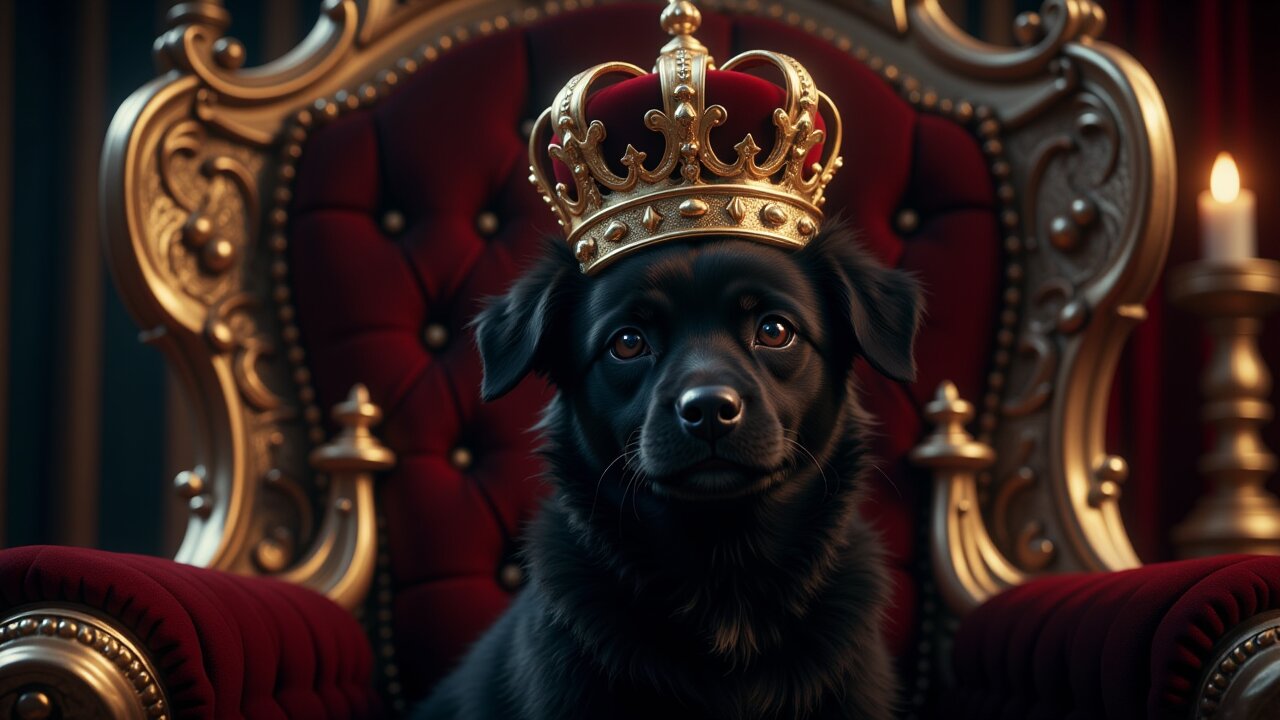
In the old northern histories, there are tales of a strange and humiliating rule — the time when a dog was made king over men.

One version tells that after the deaths of the Danish rulers Haldan and Helgi, the Danes fell under the power of a foreign king from Sweden. Instead of sending them a prince or governor, the conqueror sent them a small dog and commanded that it should be their king. He warned that anyone who brought him news of the dog’s death would pay with his life.

The Danes were forced to accept the animal as their ruler. For a time the dog was treated with ceremony and obedience. But one day, when larger dogs began fighting, the small royal dog leapt among them and was torn apart.

No one dared announce what had happened. At last a herdsman named Snyo went to the foreign king’s court. Speaking in riddles and clever words, he maneuvered the king into declaring the dog dead himself. Because the king had spoken it, Snyo was spared and was then made king of Denmark in the animal’s place.

Another northern tale tells of a conqueror who invaded Norway and defeated its aged ruler. To shame the defeated people, he placed a dog upon the throne and ruled the country through officials who acted in the animal’s name. The dog was surrounded by nobles and guards, and strict laws were given that anyone who failed to show it proper honor would be punished. Thus the land was forced to bow before a beast.

A further story speaks of King Eysteinn, who conquered the region of Trondheim. After the people killed the son he had set over them, the king returned in anger and gave them a cruel choice: they must take either his slave Thorer or his dog Saurr as their new ruler.

Believing a dog would be easier to endure, the people chose Saurr.

The dog was treated as a true king. He was given a golden collar, a throne, attendants, and a great hall to dwell in. Judgments were issued in his name, and decrees were marked with the print of his paw. For three years the land lived under the rule of the animal king.

At last wolves broke into the fold where Saurr was kept and tore him to pieces. So ended the strange reign of the dog king.

Yet the memory of these tales remained strong enough that poets spoke of the time when men bowed to a dog, and songs were even sung in honor of the beast who had once worn a crown.


Gallery


Sources

Wikipedia contributors. (n.d.). Dog king. In Wikipedia, from https://en.wikipedia.org/wiki/Dog_king


Interpretive Lenses

Religious Readings
  • Christian Ascetic Deep Dive
Philosophical Readings
  • Nietzschean Deep Dive
Psychological Readings
  • Jungian Deep Dive
Esoteric Deep Dive
  • Hermetic Deep Dive
Political / Social Readings
  • Marxist Deep Dive

Flyðrumóðir

Tradition / Region: Icelandic Mythology
Alternate Names: Halibut Mother; Laxamóðir (Salmon Mother); Silungamóðir (Trout Mother)
Category: Fish, Trout


The Myth

In the cold seas around Iceland there swims a being known as the Flyðrumóðir, the Halibut Mother. She appears as a halibut of monstrous size, so vast that she can rival a fishing boat. With age her body turns grey on both sides, and shells, barnacles, and seaweed cling to her skin, so that when she rises to the surface she resembles a small drifting island.

Though some say she is the mother of all fish in the sea, her true children are the halibut. Far offshore she is followed by entire schools of them, and she watches over them fiercely. When fishermen take too many halibut, the Flyðrumóðir rises in anger.

Once, a schooner in Faxaflói hauled forty halibut aboard. The Halibut Mother appeared and pursued the ship, though it narrowly escaped. Another vessel was not so fortunate. It caught a Flyðrumóðir on a coffin-nail hook, and in her fury she overturned the boat, drowning all who were aboard.

Even when a Flyðrumóðir is successfully killed, her death brings ruin. In Breiðafjörður, a halibut mother was snagged with a golden hook and cut apart. After that, the waters yielded no fish, and the man who caught her never caught another fish for the rest of his life.

Other mothers are known as well. The Laxamóðir, the Salmon Mother, swims down from salmon-rich rivers, tearing through fishing nets as she goes. The Silungamóðir, the Trout Mother, has an enormous head and brings great misfortune to anyone who catches her. Wise fishermen release such beings at once.

Thus the fish-mothers endure in memory as guardians of the waters—vast, ancient, and unforgiving to those who forget that the sea has its own kin to protect.


Gallery


Sources

A Book of Creatures contributors. (n.d.). Flydrumodir. In A Book of Creatures, from https://abookofcreatures.com/2016/08/28/flydrumodir/


Interpretive Lenses

Religious Readings
  • Christian Ascetic Deep Dive
Philosophical Readings
  • Nietzschean Deep Dive
Psychological Readings
  • Jungian Deep Dive
Esoteric Deep Dive
  • Hermetic Deep Dive
Political / Social Readings
  • Marxist Deep Dive
Other
  • How to Invite The Flyðrumóðir

Hrökkáll

Tradition / Region: Icelandic Mythology
Alternate Names: Coil-eel
Category: Fish, Eel, Zombie


The Myth

Long ago, a malicious wizard in Iceland defied the natural order. From polluted water he drew up a dead eel, half-rotted and foul, and by dark arts forced it back into motion. Thus was born the first Hrökkáll, the coil-eel—an unnatural thing animated by corruption and spite.

Though the wizard himself vanished with time, the creature did not. The Hrökkáll bred, and its descendants spread into stagnant ponds, still waters, and sluggish rivers, thriving wherever decay and filth gathered.

A Hrökkáll is about two feet long and shaped like an eel, but its body is armored with flexible scales as hard as iron. Along its sides run sharp, saw-toothed fins. Like many fearsome fishes of Iceland, it exudes a corrosive venom, and its flesh is deadly to eat. When captured, Hrökkálls have been known to melt through soil and stone alike, dissolving their escape and slipping back into the water.

They wait unseen beneath the surface until a person steps into their domain. Then the Hrökkáll strikes, coiling tightly around a leg. With crushing force and slicing edges, it cuts through flesh and bone, severing the limb entirely. Whether it is the acid of its venom, the blades of its fins, or both together that accomplish this horror is unknown.

Men and horses alike fall victim to the Hrökkáll, but sheep are spared, for their legs are too slender for the creature to grasp.

In later times, the name Hrökkáll passed into common speech, and came to be used for electric eels as well—but in old tales, it is remembered as a thing born of sorcery, rot, and water gone bad.


Gallery


Sources

A Book of Creatures contributors. (n.d.). Hrokkall. In A Book of Creatures, from https://abookofcreatures.com/2015/08/12/hrokkall/


Interpretive Lenses

Religious Readings
  • Christian Ascetic Deep Dive
Philosophical Readings
  • Nietzschean Deep Dive
Psychological Readings
  • Jungian Deep Dive
Esoteric Deep Dive
  • Hermetic Deep Dive
Political / Social Readings
  • Marxist Deep Dive
Other
  • How to Invite The Hrökkáll

Loðsilungur

Tradition / Region: Icelandic folklore
Alternate Names: Shaggy Trout
Category: Fish, Trout


The Myth

The Loðsilungur, or Shaggy Trout, is feared throughout Iceland as one of the most deadly fish to dwell in lakes and rivers. Any person who eats its flesh is said to fall violently ill, and death often follows.

At first glance, the loðsilungur resembles an ordinary trout, but its body is twisted and unpleasant to look upon. Its shape is uneven, with a thick front and a narrow tail. The eyes are small and sunken, set beneath a swollen skull, and its short snout juts forward with a noticeable overbite. Its teeth are said to be black as pitch.

What truly marks the loðsilungur is its hair. Fine, pale, downy strands grow along its body, fins, jaw, and neck. Sometimes it appears as a beard; other times as a mane or scattered patches. This hair is difficult to see while the fish is alive, lying flat against the skin, and only becomes clearly visible after death—especially when the body is wet. Because of this, the loðsilungur is often mistaken for an edible trout, with fatal consequences.

The shaggy trout is usually small, sometimes no larger than an Arctic char, or even no thicker than a man’s finger. Despite its size, it carries powerful poison. Entire households have perished after sharing a single cooked loðsilungur. One well-known tale tells of a farm where all who ate the fish died, leaving only a young girl alive—she alone had not felt hungry that evening.

Other stories tell of hunters found dead beside their meals, plates still resting on their knees. Wherever the loðsilungur appears, tragedy follows.

Animals seem to sense the danger. Dogs and birds of prey refuse to eat it, no matter how hungry they are. The fish itself is stubbornly difficult to kill. Fishermen once left a pile of freshly caught fish overnight, only to find a loðsilungur still alive atop the heap by morning. Horrified, they threw the entire catch away and abandoned the lake.

The loðsilungur remains a warning hidden in clear water: a creature that looks harmless, but carries death beneath its skin.


Gallery


Sources

A Book of Creatures contributors. (n.d.). Lodsilungur. In A Book of Creatures, from https://abookofcreatures.com/2019/07/15/lodsilungur/


Interpretive Lenses

Religious Readings
  • Christian Ascetic Deep Dive
Philosophical Readings
  • Nietzschean Deep Dive
Psychological Readings
  • Jungian Deep Dive
Esoteric Deep Dive
  • Hermetic Deep Dive
Political / Social Readings
  • Marxist Deep Dive
Other
  • How to Invite The Loðsilungur

Öfuguggi

Tradition / Region: Icelandic folklore
Alternate Names: Reverse-Fin Trout
Category: Fish, Trout


The Myth

The Öfuguggi, known as the Reverse-Fin Trout, is one of the most feared fish in Icelandic lore. Its name alone carries dread, for the creature is said to be lethally poisonous, more dangerous than any ordinary fish of lake or river.

At first glance, the öfuguggi resembles a normal brown trout. Only on closer inspection does its true nature reveal itself. Its fins are reversed, and it swims backward, moving tail-first with its head following behind. Some say only a single fin is reversed, but this is enough to mark it as unnatural. Its body is jet-black, dark as coal, while its flesh is deep red, a sign that it feeds on the bodies of the drowned.

The öfuguggi lives in the cold depths of freshwater lakes, far from light. Though rarely seen, it is sometimes caught by unsuspecting fishermen. When cooked and eaten, it brings terrible death. Those who consume its flesh are said to swell violently, their bodies bloating until the stomach bursts, leaving a cross-shaped wound behind.

One of the most dreadful stories tells of a farm where nearly everyone who shared a meal of trout fell ill and died. Only one girl survived—the lone person who had eaten nothing.

Stories of the reverse-fin trout are known throughout Iceland, and certain lakes and pools bear names that warn of its presence. These places are remembered as cursed waters, where the öfuguggi once swam—or may still swim—waiting in the dark below.

The öfuguggi remains a symbol of hidden danger, a fish that looks ordinary yet carries death within, reminding people that not all that comes from clear water is safe to eat.


Gallery


Sources

A Book of Creatures contributors. (n.d.). Ofuguggi. In A Book of Creatures, from https://abookofcreatures.com/2019/05/13/ofuguggi/


Interpretive Lenses

Religious Readings
  • Christian Ascetic Deep Dive
Philosophical Readings
  • Nietzschean Deep Dive
Psychological Readings
  • Jungian Deep Dive
Esoteric Deep Dive
  • Hermetic Deep Dive
Political / Social Readings
  • Marxist Deep Dive
Other
  • How to Invite The Öfuguggi

Vatnagedda

Tradition / Region: Icelandic folklore
Alternate Names: Eiturgedda (“Poison Pike”), Loch-Pike
Category: Fish, Flounder


The Myth

Among the dangerous fishes of Icelandic lakes, none is feared more than the Vatnagedda, known also as the Eiturgedda, the poisonous pike. Despite its name, it does not resemble a pike. It is described as a small, furry, flounder-like fish, most often golden in color, though some accounts speak of blue variants.

The Vatnagedda is lethally poisonous in every part of its body. Its flesh and skin contain a corrosive toxin so powerful that mere contact is fatal. The poison eats through cloth, leather, and even solid materials, dissolving both organic and inorganic matter. Nothing living is immune to it—not even ghosts or spirits.

Because of this, the presence of a dead Vatnagedda is believed to drive away evil beings. Its fat is said to cure pain caused by ghosts, hauntings, and sorcery, making the creature both feared and sought after.

Vatnageddas dwell at the bottom of dark, murky lakes. They are said to hate light, which can kill them, and for this reason they only rise to the surface before storms or during heavy fog. To catch one, a fisherman must use a hook baited with gold. Even then, the task is extremely dangerous. The angler must wear gloves made of human skin, or else many layers of skate skin. Despite these precautions, handling the fish often causes burns, rashes, and swelling.

Once caught, the greatest challenge is keeping the Vatnagedda contained. Its poison gradually destroys anything around it. In one tale, a Vatnagedda wrapped in two horse skins burned its way through them, melted into the ground, and vanished beneath the earth. The only known way to transport the creature safely is to wrap it first in the caul of a newborn child, and then in the caul of a calf.

One story tells of a sorcerer who came to the aid of a farmer whose home was plagued by an evil spirit. The haunting drove the farmer’s daughter to madness. Wearing human-skin gloves and using a gold-baited hook, the sorcerer caught a Vatnagedda from Gedduvatn, Pike Lake. The dead fish was sealed in a bottle, wrapped in layers of sheepskin and leather, and placed on a pack horse.

By the time the sorcerer returned, the horse bore a hairless, sunken wound on its back where the fish had rested, and it remained weakened for the rest of its life. The Vatnagedda was buried beneath the threshold of the house, and from that moment on, the haunting ceased. The evil spirit never returned, and the girl fully recovered.


Gallery


Sources

A Book of Creatures contributors. (n.d.). Vatnagedda. In A Book of Creatures, from https://abookofcreatures.com/2015/06/26/vatnagedda/


Interpretive Lenses

Religious Readings
  • Christian Ascetic Deep Dive
Philosophical Readings
  • Nietzschean Deep Dive
Psychological Readings
  • Jungian Deep Dive
Esoteric Deep Dive
  • Hermetic Deep Dive
Political / Social Readings
  • Marxist Deep Dive
Other
  • How to Invite The Vatnagedda