Oy Iyase

Tradition: Kazakhstan Mythology
Alternative Names: Oy eyhäe, Oy eyäne, Yort iyase, Yortiyase, Yort yeyähä, Oy eyyaho, Uy iesi, Uy nesi, Khert-surt, Khert-surt su, Yuy yesi, Oy iesi, Oy iyase
Category: House dweller


The Myth

Oy Iyase is the spirit-master of the house in the folklore of various Turkic peoples, including the Tatars, Bashkirs, and other communities. It is a household guardian comparable to the Slavic Domovoy and is regarded as a special kind of brownie. The spirit protects the family and is associated with the well-being and prosperity of the household.

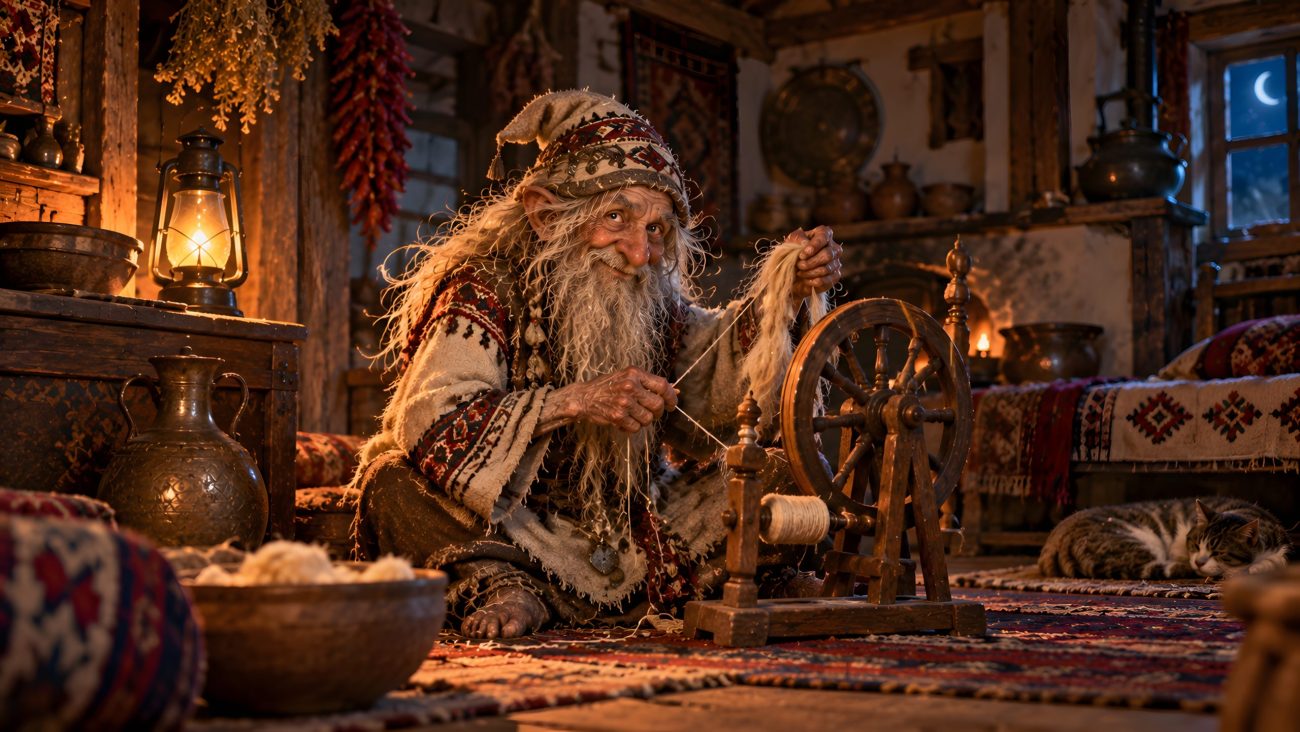
Among the Bashkirs and Kazan Tatars, Oy Iyase is traditionally described as an old man with long hair who lives beneath the floor of the house, where three special places are prepared for him. At night, he may emerge from beneath the floor and spin thread, sometimes working at a spinning wheel. This activity is believed to foretell the family’s future. The sound of spinning can therefore be interpreted as an omen concerning the household’s fortunes.

Oy Iyase is also associated with the protection of livestock and the family. In some traditions, the spirit is connected with the abzar iyase, the guardian of the farmyard. It is believed to appear at night, rustling and disturbing people, and it may even frighten those who encounter it inside the house. A person who sees the spirit is said to experience either good or bad fortune, depending on the tradition.

The Oy Iyase has different names among Turkic-speaking peoples. The Tatars and Bashkirs call it yort iyase or yort eyähä, while related household spirits are known as yuy yesi among the Karachays, khert-surt among the Chuvash, ev bekchisi among the Turks, and uy nesi among the Nogais. In Kazakh folklore, the spirit may be represented as a good character in the form of a white snake. These variations reflect the widespread belief that a household has an unseen guardian whose presence can influence the family’s fortunes and domestic harmony.


Sources

“Oi Iyase.” New Bestiary (Bestiary.us). https://www.bestiary.us/oi-iyase

Ovinnik

Tradition: Russian Mythology, Belarusian Mythology
Alternative Names: Joŭnik, Jovnik
Category: House dweller


The Myth

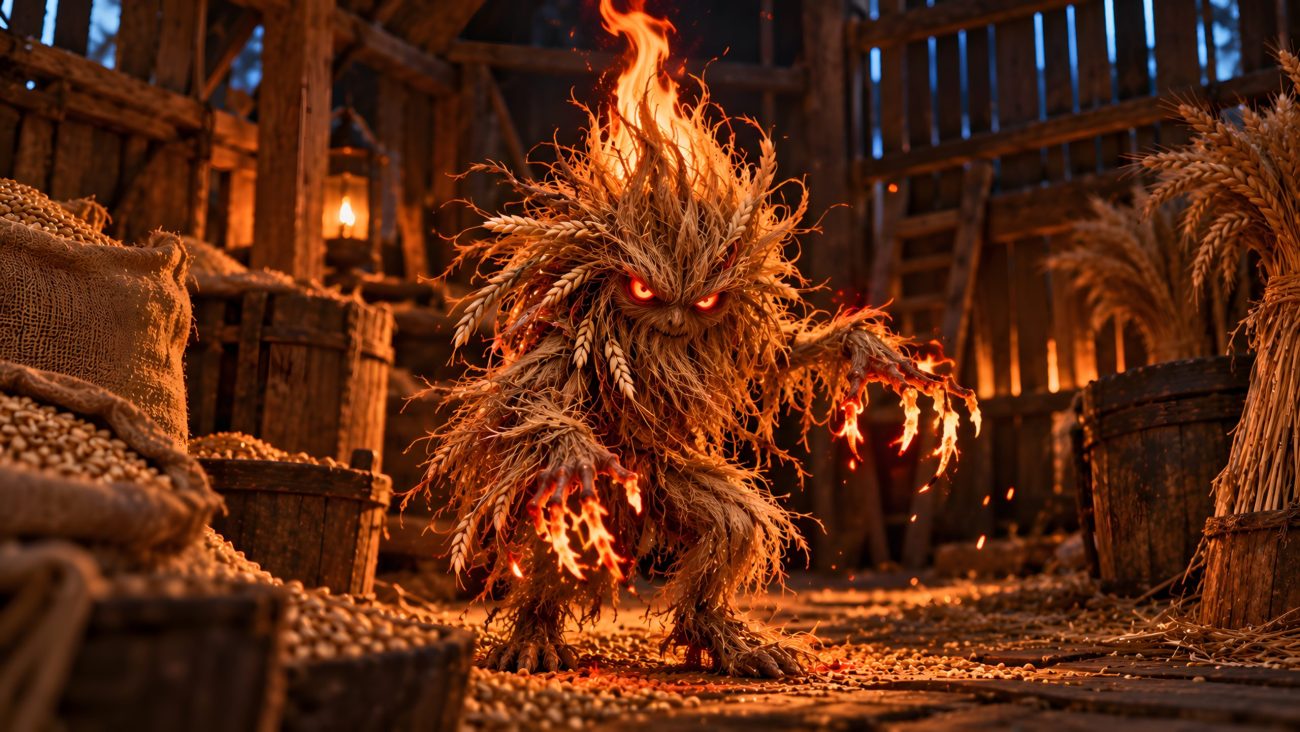
The Ovinnik is a malevolent spirit that inhabits the threshing house, the agricultural building where harvested grain is threshed. Feared for its association with fire, it is notorious for setting grain alight and burning down the buildings in which it lives. Its presence makes it a dangerous guardian of an essential part of rural life, where a single fire could destroy a family’s harvest.

Peasants sought to placate the Ovinnik with offerings of roosters and bliny, traditional pancakes. These gifts were intended to appease the spirit and protect the threshing house and its stores of grain from destruction. Its behaviour reflects the dangers surrounding the storage and processing of crops, particularly the risk of fire in agricultural buildings.

The Ovinnik also played a role in New Year’s Eve divination. According to folk belief, the spirit’s touch could reveal a person’s fortune for the coming year. A warm touch was considered a favourable sign, promising good luck and prosperity, while a cold touch foretold unhappiness. Thus, despite its destructive reputation, the Ovinnik could also be consulted as a supernatural indicator of future fortune.


Sources

“Ovinnik.” New Bestiary (Bestiary.us). https://www.bestiary.us/ovinnik/ru


Zhirovik

Tradition: Russian Mythology
Alternative Names: Zhiroviy, Lizen, Lizun, Fat Devil
Category: House dweller


The Myth

The Zhirovik is a small household spirit in Slavic folklore, known for its mischievous behaviour and love of warmth. It prefers warm, enclosed places around the home, especially near the stove, in chimneys, or in underground spaces. Although it can cause trouble, it is not necessarily malicious: its pranks often arise from boredom or an unusual nature rather than a desire to harm people.

The Zhirovik is particularly fond of food and domestic comfort. It may linger around food being prepared, lick pancakes and fritters left unattended, and poke around unwashed dishes at night. It is also associated with underground corners of the household, including the golbets, a partition or space behind the stove. Its love of warmth and food makes it a familiar presence in the domestic world, where it can be both an amusing nuisance and an unsettling companion.

Like other Slavic household spirits, the Zhirovik resembles a brownie: an invisible guardian of the home that can influence the household’s comfort and prosperity. In some traditions, a brownie may be described as a permanent inhabitant of a house who enjoys contentment and abundance, while in others it can bring misfortune when neglected or living in unsuitable conditions. The Zhirovik’s violent or troublesome nature is said to emerge particularly when it inhabits empty mansions.

Despite its reputation as a troublemaker, the Zhirovik is also a spirit of warmth and domestic life. Its fondness for food, hot places, and the quiet corners of a house reflects the belief that homes are inhabited by unseen beings whose habits and moods can affect the people living there.


Sources

“Zhirovik.” New Bestiary (Bestiary.us). https://www.bestiary.us/zhirovik


Zharenitsa

Tradition: Russian Mythology
Alternative Names: None recorded
Category: House dweller


The Myth

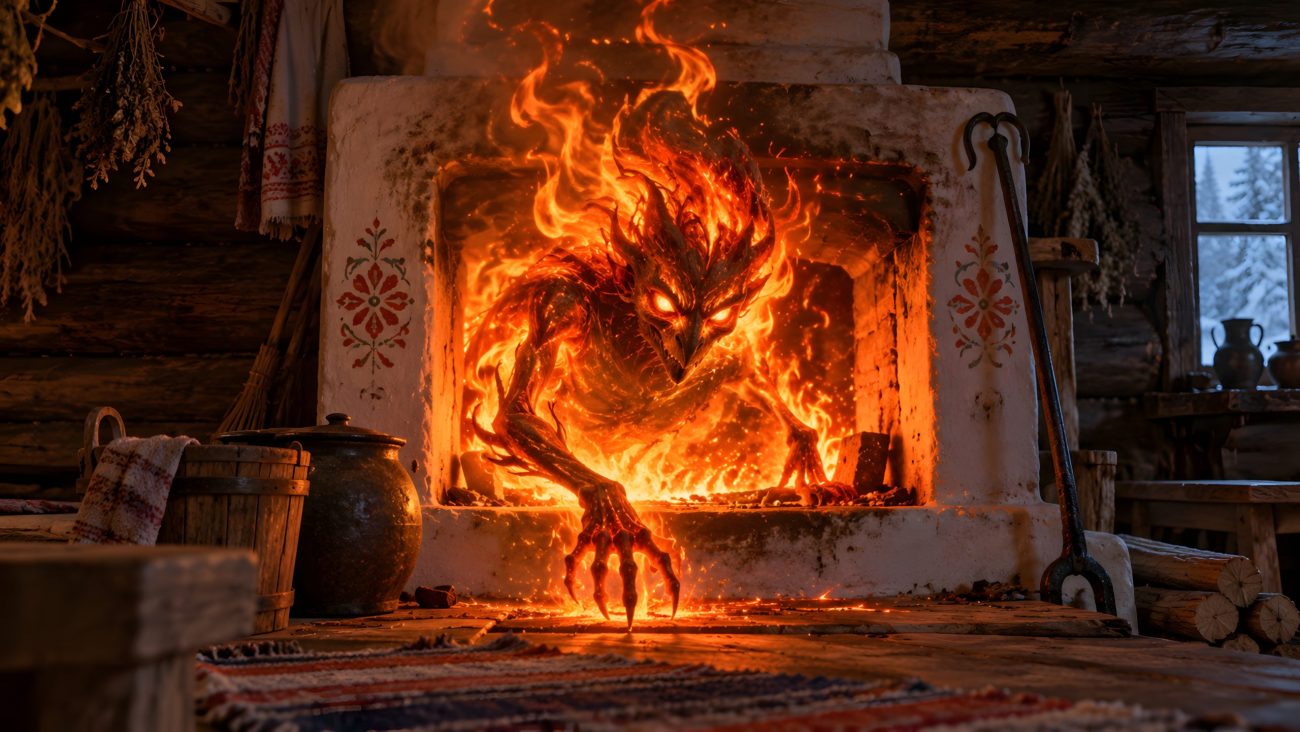
Zharenitsa is an evil spirit in the folklore of the Russian North, believed to live in the hearth near the bottom of the stove. It appears as a fiery glow, described as blazing and glowing within the hearth. Its exact shape and other physical features are not described in the available accounts.

Zharenitsa was used to frighten small children and keep them away from the stove. Adults warned children about the spirit to prevent them from climbing into the hearth and getting burned. Its association with fire made it a threatening presence in the home, turning the dangerous heat of the stove into a supernatural warning.

Unlike the Zharenik and Zharenitsa figures associated with midday heat in the Vologda region’s fields and gardens, this Zharenitsa belongs to the domestic folklore of the Russian North. Here, the spirit is specifically connected with the stove and the danger of household fires.


Sources

“Zharenitsa.” New Bestiary (Bestiary.us). https://www.bestiary.us/zharenitsa


Zharenik

Tradition: Russian Mythology
Alternative Names: Zharenitsa
Category: House dweller


The Myth

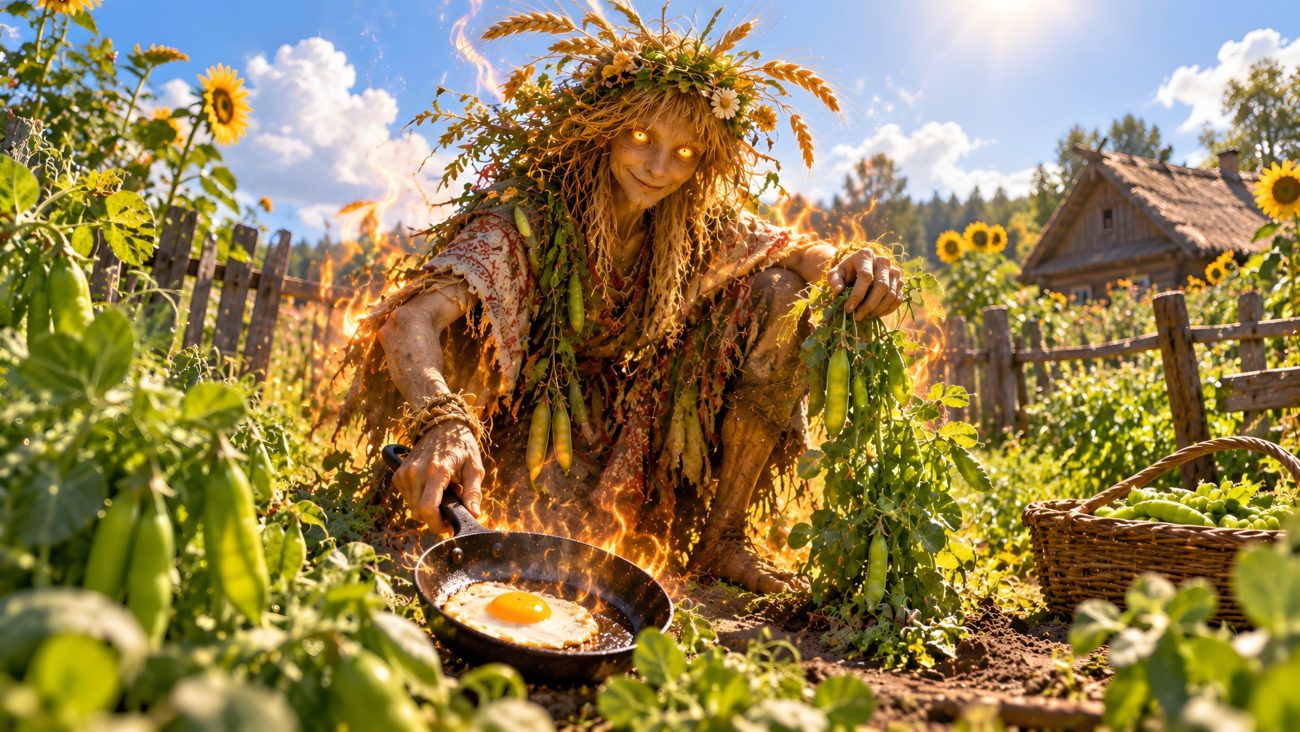
Zharenik is a spirit associated with pea fields and vegetable gardens in the Vologda region of Russia. Its female counterpart, Zharenitsa, is believed to inhabit the same places. Both spirits personify the intense midday heat during the summer, particularly when peas and other crops are ripening. Their appearance is not described in the available folklore accounts.

Zharenik and Zharenitsa belong to the category of midday spirits believed to inhabit fields during the hottest part of the day. Their presence was associated with the summer heat, when the ripening crops required protection and fieldwork could be uncomfortable. Although little is known about their nature, they formed part of the supernatural beliefs surrounding rural life and agriculture.

According to a local tradition, these spirits were used to frighten children away from pea fields. A flying pan and a frying pan were employed to scare children so that they would not pick peas from the crops. Another belief tells of a girl weeding a vegetable garden who sees a fried egg between the garden beds. Such stories reflect the association of these spirits with gardens, fieldwork, and the dangers or peculiarities of the summer midday heat.


Sources

“Zharenik.” New Bestiary (Bestiary.us). https://www.bestiary.us/zharenik/ru


Idym Oza

Tradition: Mari Mythology, Russian Mythology
Alternative Names: Idym oza
Category: House dweller


The Myth

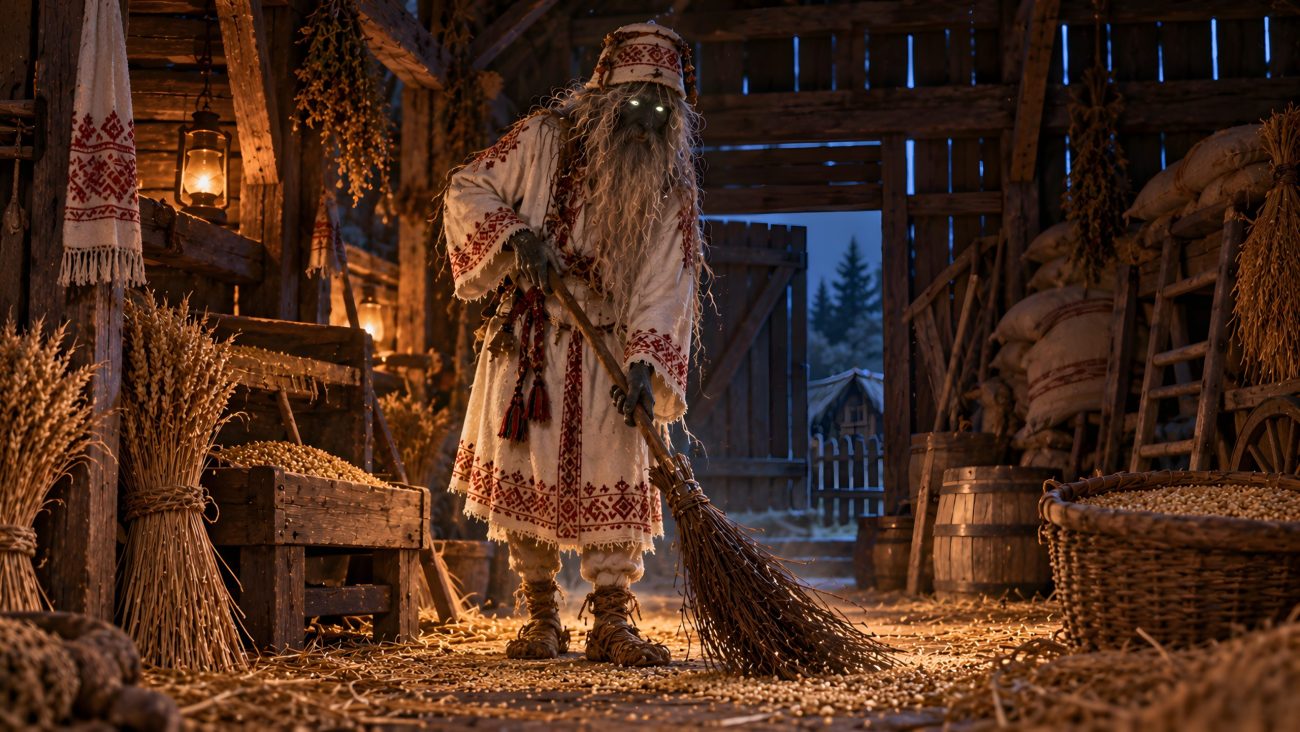
The Idym Oza is the guardian spirit of the threshing floor and barn in Mari folklore. It is usually invisible, but may appear as a man dressed in traditional white Mari clothing or, in some accounts, as a black figure. The spirit watches over barns where grain and bread are dried, threshed, and stored, ensuring that everything remains in order.

The Idym Oza is said to appear around midnight, carrying a broom as it walks through the barn and inspects the premises. It checks that the work area is tidy and that the stored grain is properly cared for before disappearing. People who encounter the spirit should not disturb it or interfere with its duties. In traditional accounts, it is important to ask the barn guardian’s permission before spending the night in the barn. Those who forget may be frightened by strange noises, footsteps, or other disturbances, and the spirit may prevent them from sleeping.

The Idym Oza was treated with respect, particularly during the harvest season. At the beginning of threshing, families performed sacrificial rites to honour the barn’s guardian and secure a successful harvest. A priest might bring porridge to the barn and recite prayers asking the spirit to preserve the grain, assist with threshing, and protect the flax and hemp. The barn owner was also expected to maintain the building and remember the spirit with appropriate offerings.

Neglecting these customs was believed to bring misfortune. Some traditions tell of barns destroyed by fire after sacred prohibitions were violated, with the destruction interpreted as punishment from higher powers. Over time, these beliefs began to fade as barns changed and modern technology became widespread. Electric lighting and other changes were said to have made the Idym Oza invisible or driven it away, although the barn and its guardian retained an important place in Mari cultural memory.

The Idym Oza reflects the traditional importance of the barn as more than a place to store and process crops. It was a shared space where people worked together and depended on the harvest for their livelihood. Respecting its guardian was therefore part of maintaining order, protecting grain, and ensuring the well-being of the household and community.


Sources

“Idym Oza.” New Bestiary (Bestiary.us). https://www.bestiary.us/idym-oza


Evnik

Tradition: Belarusian Mythology
Alternative Names: Eunice, Asetnik, Osetnik, Eunik, Ey̆nik
Category: House dweller


The Myth

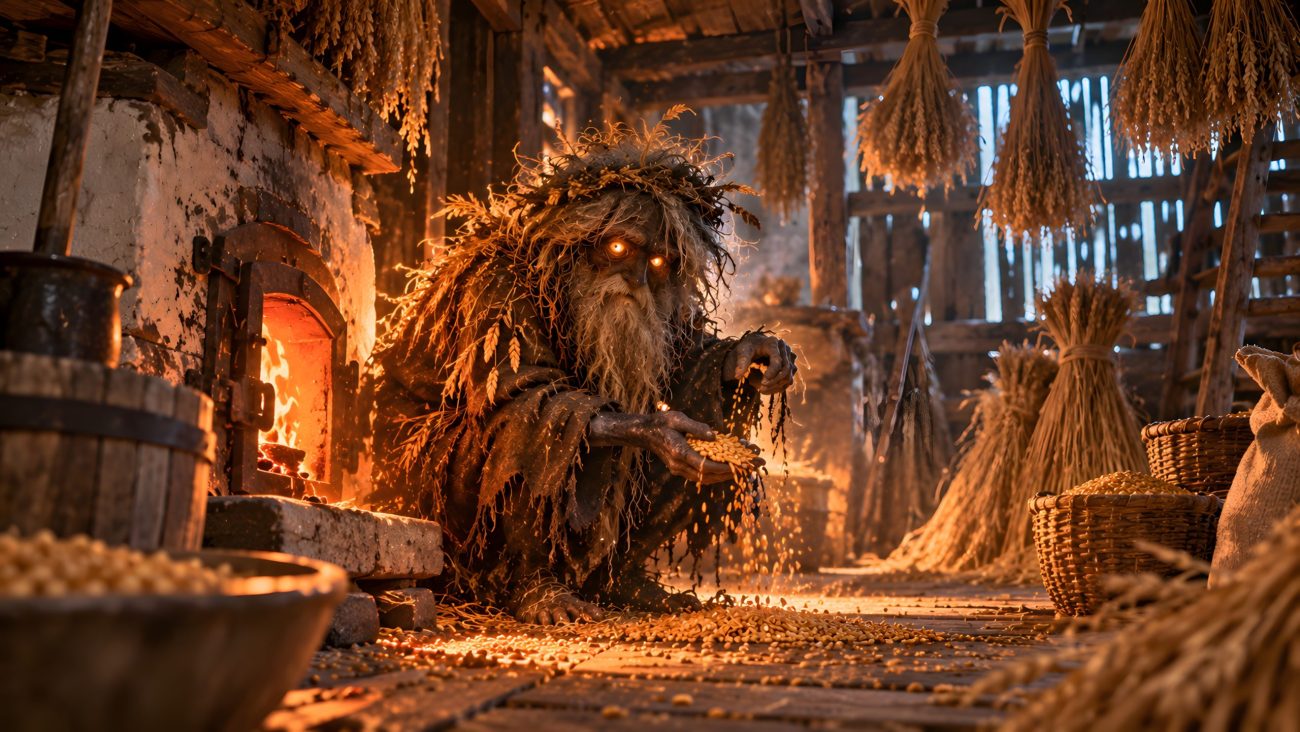
The Evnik is a guardian spirit of the evnya, a Belarusian drying house where harvested grain sheaves are dried before threshing. It inhabits the drying structure, usually settling beneath the stove, in a corner near the oven, or on a drying pole. The Evnik is associated with the warmth and fire needed to dry grain, and its presence helps ensure that the harvest is processed properly.

The Evnik is described in some accounts as a humanoid figure, while in others it appears as an amorphous mass of soot and dust, with glowing eyes that resemble burning coals. It may remain invisible for long periods, revealing itself when people enter the drying house. When it appears, it can watch workers closely, approach them unexpectedly, and even frighten them by filling the room with fumes or smoke. Despite this unsettling behaviour, it is not simply an evil spirit: its role is closely connected to protecting the drying process and the grain stored inside.

The Evnik can be helpful when the drying house is used carefully. It ensures that the oven is properly heated, that the sheaves dry without breaking, and that the grain is prepared for threshing. It also assists with processing hemp and flax, helping crush and soften the fibres. However, it dislikes carelessness and disorder. If people fail to tend the fire properly or leave the sheaves unattended, the spirit may become hostile. In some traditions, it can emerge from the oven, climb onto the roof, or cause a fire that destroys the drying house and its contents.

Belarusian folklore also associates the Evnik with other spirits connected to agricultural buildings and fire. It is considered related to the laznik, a spirit of the bathhouse, and to the Domovoy, the household guardian. Although its behaviour can be contradictory, the Evnik is generally presented as more benevolent than the Russian spirit Ovinnik. Its presence reflects the importance of carefully managing fire during grain drying: a well-maintained oven brings a successful harvest, while negligence can destroy the entire store of grain.


Sources

“Evnik.” New Bestiary (Bestiary.us). https://www.bestiary.us/evnik/ru


Domovikha

Tradition: Belarusian Mythology
Alternative Names: Domovukha, Bolshukha, Damavukha, Damavya, Domovaya, Domovilikha, Domovikha, Domovikchikha, Domovizha
Category: House dweller


The Myth

The Domovikha is a female household spirit in Slavic mythology, often described as a middle-aged woman who acts as a guardian of the home and family. She usually lives beneath the stove and watches over the household, helping with domestic chores, protecting the family, and maintaining harmony. In some traditions, she is regarded as the wife of the Domovoy, the male house spirit, while in others she is an independent protector of the household.

The Domovikha’s character depends on how the family treats her. When treated with respect, she helps with household work, cares for children, and may even assist sick children in recovering. She particularly favours neatness and order, and is said to appreciate a clean home and a well-kept kitchen. Families could offer her food, especially boiled potatoes with milk or kvass, in return for her protection and assistance.

However, the Domovikha can become hostile toward careless or disrespectful household members. She may punish dirty or untidy housewives by adding rapeseed oil to dishes they prepare, causing quarrels and discord within the family. In some Belarusian traditions, she is associated with the domovik, and the two spirits are believed to have children who grow up to become household spirits in other families, accompanying the younger generation when they move into new homes.

Belarusian folklore also connects the Domovikha with other female spirits of the household and fields. She is sometimes mentioned alongside the palyasya, a female field spirit, and is associated with the kikimora, another domestic spirit. Like these beings, the Domovikha embodies the belief that a household’s prosperity and harmony depend not only on human effort but also on maintaining a respectful relationship with the unseen powers believed to inhabit the home.


Sources

“Domaha.” New Bestiary (Bestiary.us). https://www.bestiary.us/domaha/ru


Domovicha

Tradition: Belarusian Mythology
Alternative Names: Damavichka, Damavika, Domovinka
Category: House dweller


The Myth

Domovicha is an unmarried daughter of a household spirit in Belarusian folklore. Like other female household spirits, she is associated with domestic spaces, but she is particularly known for her romantic interest in human men. She is said to fall in love with young men and pursue affairs with them, sometimes complicating their relationships and marriages.

According to Belarusian traditions, a brownie may have sons and daughters who grow up within the household. When the sons reach adulthood, they may marry female brownies from other houses, while the daughters may be married to brownies elsewhere. Some daughters, however, remain unmarried and continue to be attracted to human men. These spirits are described as eternally youthful and beautiful, able to entice young men into romantic relationships.

The relationships between Domovicha and human men are not always lasting. In some accounts, the spirits demand fidelity to themselves and may take revenge on men who abandon them for other women, even if the men have already begun new relationships. Their attachment can therefore bring trouble to those who become involved with them.

Domovicha is also associated with the wider tradition of female household spirits who spend their free time spinning. Her stories combine the familiar domestic setting of the brownie with themes of love, temptation, jealousy, and supernatural consequences. Although she belongs to the household spirit tradition, her defining characteristic is her tendency to seek romantic relationships with human men.


Sources

“Domovichka.” New Bestiary (Bestiary.us). https://www.bestiary.us/domovichka/ru


Domovoy

Tradition: Russian Mythology, Belarusian Mythology
Alternative Names: Gaspadar, Dedko, Domozhil, Izbny, Rarashек, Susedko, Khatnii diadko, Khatnik, Khatnichak, Chovanets, Khozain
Category: House dweller


The Myth

The Domovoy is a household spirit in Slavic folklore, believed to live inside the home and watch over the family. Often described as an invisible presence or an old, bearded man, it is closely associated with the hearth and the everyday life of the household. The spirit can act as a guardian and helper, but it may also punish residents who disregard household customs or show it disrespect. Belief in the Domovoy reflects older traditions in which the home was understood to have its own supernatural protector.

In Belarusian folklore, one name for the brownie is Gaspadar, literally meaning “master.” A recorded account describes household spirits called gaspadarki as small in stature and associated with particular parts of the house. They may be kind to people who treat them properly, but can become troublesome when neglected or disrespected. Some are said to spend the night in the owner’s home, making noises such as footsteps, shuffling, and rumbling. Their presence can be frightening, particularly when a person senses someone nearby in the darkness.

In Russian folklore, the Domovoy may inhabit the cellar or the space beneath the stove. It can appear as a cat or dog, help with household work, and care for horses by braiding their manes and tails. It may also braid women’s hair and men’s beards. Some accounts describe it sitting beside a spinning wheel and undoing work, or expressing its displeasure with a particular horse by tangling its hair. A horse disliked by the spirit may be smoked with horsehair when a new home is entered, while bread baked for the household can be placed beneath the cottage roof as an offering.

The Domovoy’s behaviour depends on how the household treats it. A well-disposed spirit may bring warmth, assist with chores, protect livestock, and help the family prosper. If offended, it can disturb sleep, make frightening noises, interfere with work, or torment the residents. Traditional customs associated with the brownie include feeding it, inviting it into a new home, and maintaining respectful relations with the spirit.

The Domovoy is known by numerous regional names across Slavic cultures. These include Dedko and Domozhil in Russian, Gaspadar in Belarusian, and Khatnii diadko and Khatnik in Ukrainian. The names vary by region, but they refer to the household spirit that shares the family’s living space and influences its fortunes.

As a guardian of the home, the Domovoy occupies an ambivalent role in Slavic folklore. It can be a generous helper when properly treated, yet a frightening and disruptive presence when household traditions are ignored. Its stories express the belief that domestic prosperity depends not only on human effort, but also on maintaining a respectful relationship with the unseen being believed to inhabit the house.


Sources

“Domovoy.” Wikipedia: The Free Encyclopedia. Wikimedia Foundation. Accessed October 24, 2026. https://en.wikipedia.org/wiki/Domovoy