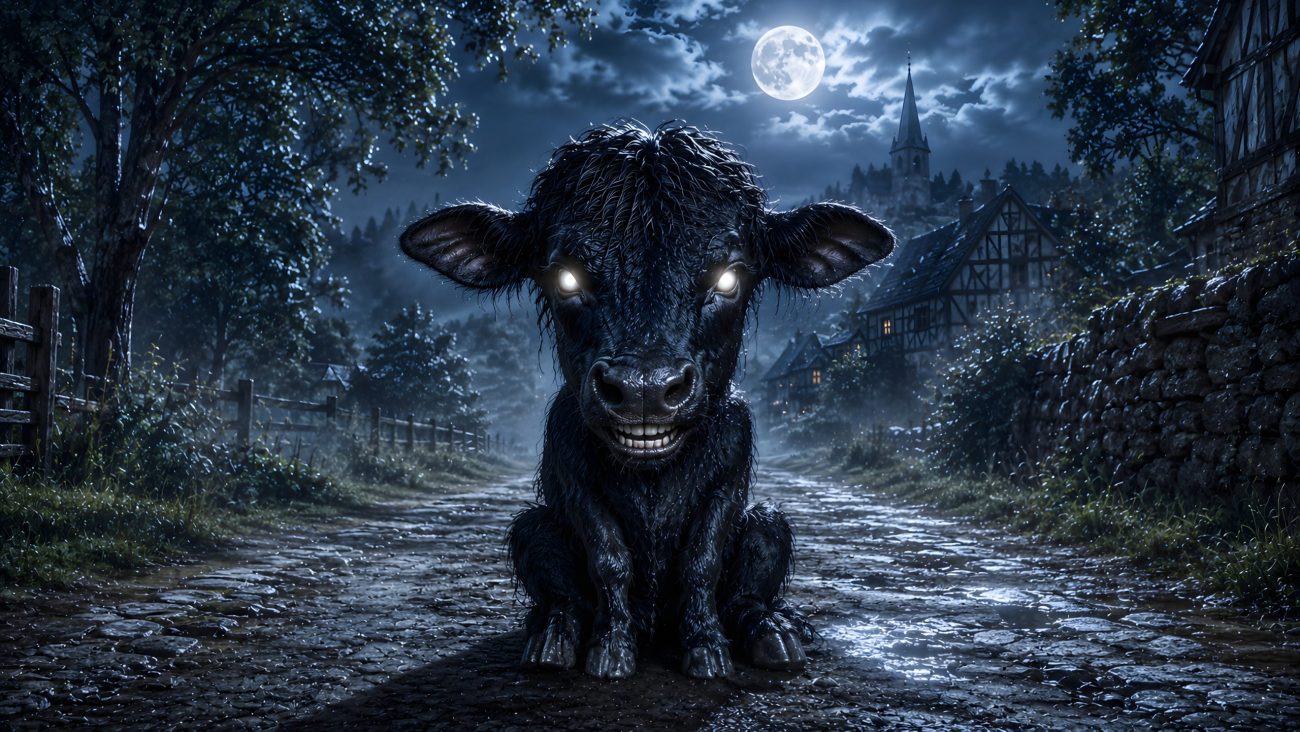
Bokeler Bulle

Tradition / Region: German mythology
Alternate Names: Bokel Bull
Category: Cow


The Myth

At the southern edge of the Breitenhees, near the quiet village of Bokel, the Ilmenau River rises from a chain of small ponds and flows eastward, murmuring softly through meadow and hollow. The people say this sound is no ordinary current, but the bathing of a hidden being—the Bokeler Bulle.

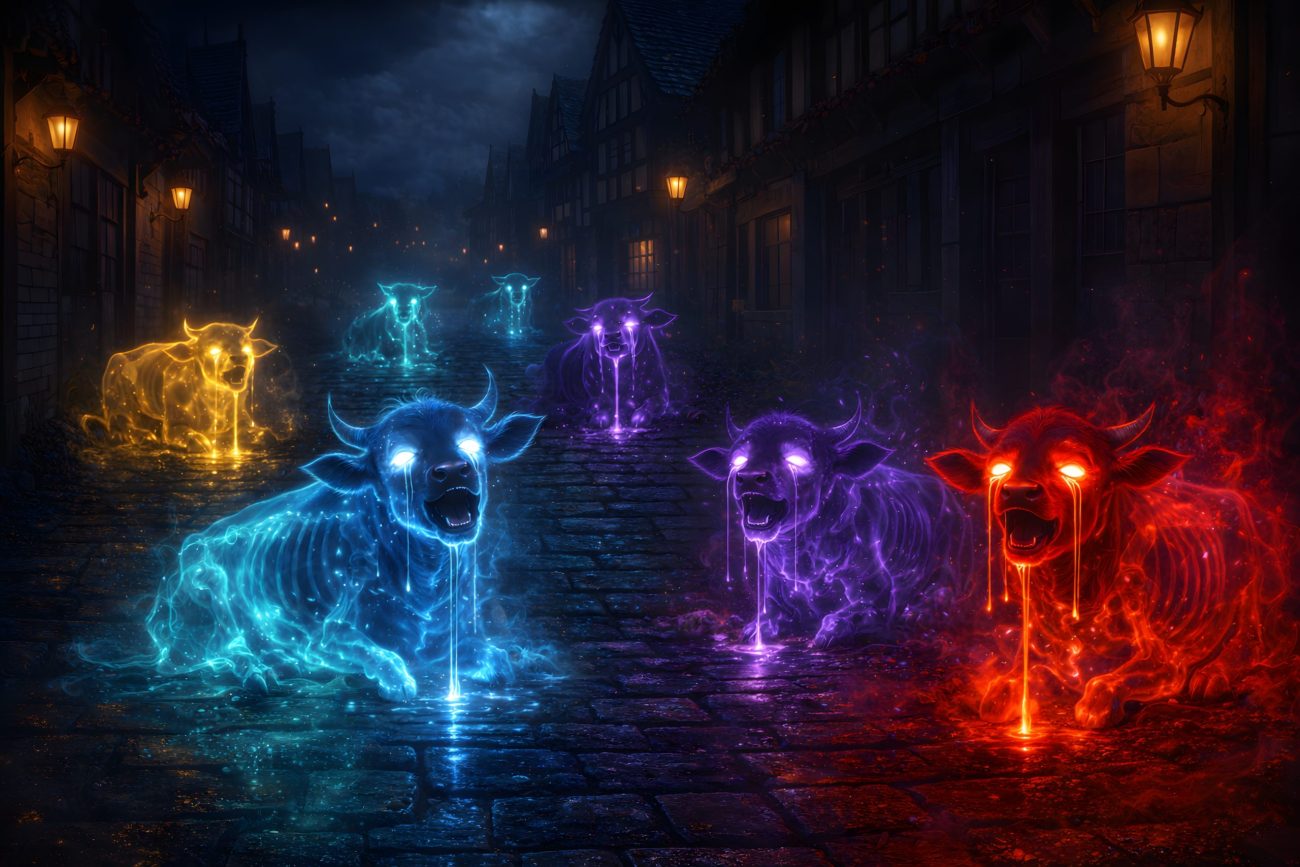
Near the village lies a place known as the Bull’s Hollow. Each year, when May arrives and the nights grow long and dark, the bull is said to emerge. At the stroke of midnight, it leaves the waters and moves silently into the village stables, seeking the cows of Bokel. From these secret unions are born calves of extraordinary size and strength, yet they are wild and unruly, never fully tame, and often slaughtered before they can grow dangerous.

The Bokeler Bulle is feared, and few dare to wander the area on May nights. Shepherds keep their distance, knowing the bull can be fierce when angered. Once, a young apprentice shepherd from Günne encountered the creature. The bull lowered its head and charged, its snort shaking the air. In terror, the shepherd cried out to the Holy Virgin Mary, and at that very moment the bull vanished, leaving him unharmed.

In gratitude for his escape, the shepherd later carved a magnificent door and gave it to the chapel in Bokel. Thus the legend endured: of a powerful bull rising from the river, of danger and deliverance, and of a hidden presence that still murmurs beneath the waters of the Ilmenau.


Sources

Meyer, C. (1950). Stadt und Kreis Uelzen. Ein Heimatbuch. Uelzen, p.166

SAGEN.at – DER KUHBANNER. (n.d.). https://www.sagen.at/texte/sagen/liechtenstein/seger/kuhbanner.html


Brunswick Lion

Tradition / Region: German mythology
Alternative names: –
Category: Lion


The Myth

The Brunswick Lion is not merely a statue or heraldic emblem, but a moral creature shaped by medieval imagination. In the Heinrichssage, the lion emerges as an independent symbolic actor whose meaning extends far beyond the human figures around it. It embodies ideal loyalty, righteous strength, and natural justice—virtues medieval society believed could exist in animals in purer form than in people.

The lion first appears as a combatant against a dragon, a creature universally understood in medieval Europe as a manifestation of chaos, destructive violence, and spiritual corruption. By confronting the dragon, the lion positions itself as a defender of cosmic order. Unlike the dragon’s blind destruction, the lion’s violence is purposeful. It fights not from hunger or rage, but from an instinct aligned with justice, establishing it as a moral warrior.

After the dragon’s defeat, the lion’s role shifts from warrior to companion. Crucially, it is not subdued or enslaved; it chooses companionship. In medieval thought, such voluntary loyalty was the highest form of fidelity. The Brunswick Lion thus represents free allegiance—the idea that true authority is recognized rather than imposed. The lion follows not out of fear, but from recognition of shared virtue.

The legend’s defining moment comes after the death of its companion. The lion refuses food and withers away upon the grave, choosing death over a life without the bond it has sworn. This act transforms the lion into a symbol of absolute constancy. Its death is not weakness but proof of unwavering devotion, a loyalty that transcends reward, command, or survival. Medieval audiences would have read this as a moral judgment: true virtue is measured by sacrifice, not power.

Erected as a statue in the heart of Brunswick, the lion assumes an apotropaic role. Like guardian lions across Eurasia, it protects not through violence but through symbolic authority. Its stillness signifies permanence; its posture, vigilance. It stands as a reminder that strength must be restrained by virtue and power justified by loyalty.

Ultimately, the Brunswick Lion represents an ideal moral order in which courage serves fidelity and strength answers to devotion. It is remembered not as a slayer, but as a guardian; not as a conqueror, but as a witness—holding humanity to a standard it could rarely meet.