Ankou

Tradition: French Mythology, English Mythology, Welsh Mythology
Alternative Names: An Ankoù, An Ankow, Yr Angau, The Servant of Death, The Collector of Souls
Category: Skeleton


The Myth

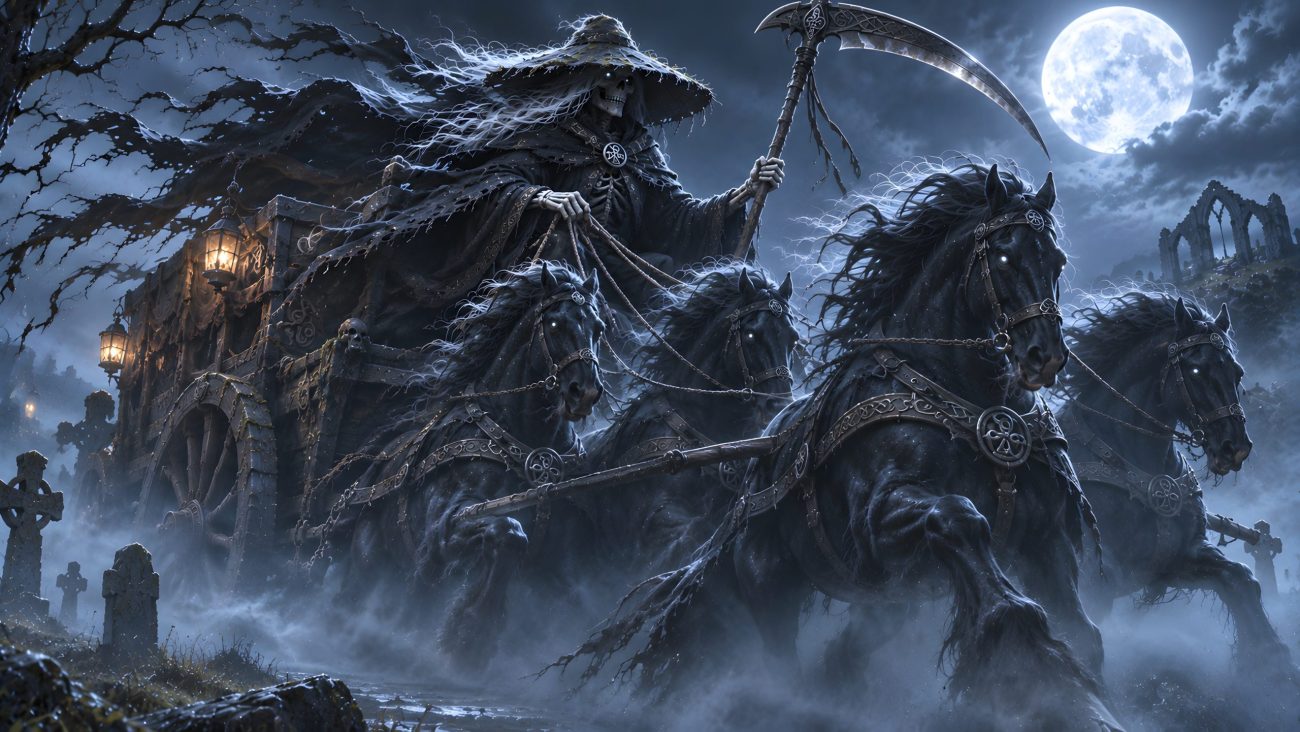
The Ankou is a supernatural personification of death found in Breton, Cornish, and Welsh traditions. He is commonly depicted as a tall, skeletal figure dressed in a long black robe and wearing a broad hat that conceals his face. Sometimes he appears only as a shadow. He carries a scythe, with which he gathers the souls of the dead, and travels in a creaking cart known as the karrig an Ankou. In other accounts, he drives a large black coach pulled by four black horses and accompanied by two ghostly attendants.

In Brittany, the Ankou is not death itself but its servant and collector, known as the oberour ar maro, or worker of death. He watches over graveyards, gathers lost souls, and travels through the land collecting those whose time has come. The sound of his approaching cart is considered a dreadful omen, warning that death is near.

His position can pass from one person to another. According to tradition, the last person to die in a parish during the year becomes its Ankou for the following year. This makes the Ankou a recurring office held by the recently deceased rather than an eternal individual. When a community experiences an unusually high number of deaths, people may describe its Ankou as particularly cruel or relentless.

Several legends explain his origins. In one account, the Ankou is the first child of Adam and Eve. Other versions identify him as the first person to die in a given year, condemned to collect other souls before entering the afterlife. Another tale tells of a cruel prince who encountered Death during a hunt and challenged him to see who could kill a black stag first. Death won, and the prince was cursed to wander the earth as a supernatural collector of the dead.

The Ankou is also sometimes portrayed as a king or leader of the dead, whose subjects follow their own sacred routes in ghostly processions. He is distinct from the lavandières de la nuit, the supernatural washerwomen who wash the burial shrouds of those destined to die.


Sources

Wikipedia contributors. (n.d.). Dullahan. Wikipedia. https://en.wikipedia.org/wiki/Dullahan#Folk_beliefs
Bloody Bones

Tradition: English Mythology, American Mythology
Alternative Names: Rawhead and Bloody Bones, Old Bloody Bones
Category: Skeleton


The Myth

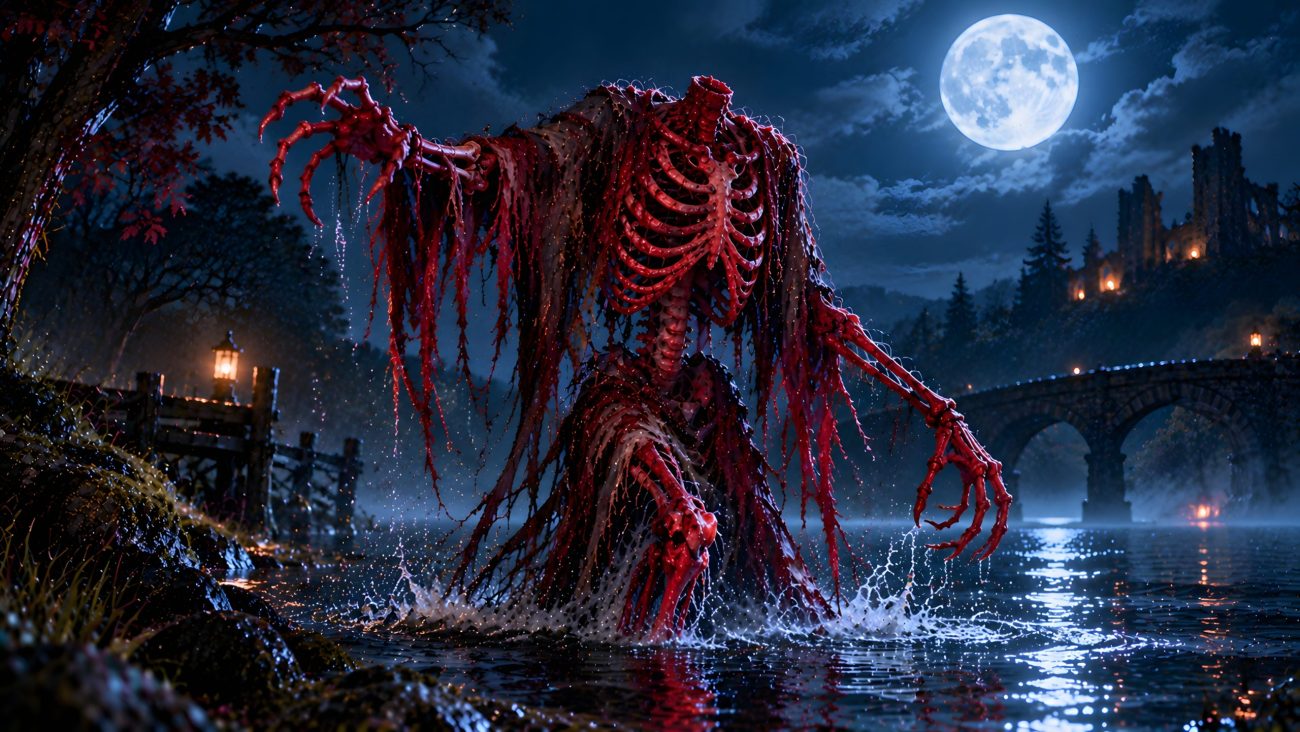
Bloody Bones is a terrifying supernatural creature from British and American folklore, associated with blood, death, and the punishment of misbehaving children. Its appearance varies between traditions. It may take the form of a headless skeleton, a blood-covered figure, or one half of a monstrous pair known as Rawhead and Bloody Bones.

In parts of England, Bloody Bones was feared as a water demon lurking in deep ponds, lakes, and flooded marl pits. Like the grindylow and Jenny Greenteeth, it supposedly dragged unsuspecting children beneath the water. Parents warned children to avoid these dangerous places, threatening that Rawhead and Bloody Bones would seize anyone who ventured too close.

Other traditions placed Bloody Bones inside dark cupboards, particularly beneath staircases. It was described as a crouching creature with blood running down its face, sitting upon a pile of children’s bones. These were said to belong to children who had lied or used bad language. Those curious enough to peer through a crack in the cupboard might glimpse the monster, while anyone looking through the keyhole risked being caught.

In Cornwall, Old Bloody Bones was said to haunt Knockers Hole near the village of Baldhu. Local tradition associated the area with a massacre, and the creature was regarded as a ghost or evil spirit connected to the violence that had occurred there.

Across the southern United States, Rawhead and Bloody Bones could be described as two separate monsters or as two parts of a single terrifying creature. Rawhead was sometimes imagined as a skull stripped of its skin that bit its victims, while Bloody Bones appeared as a dancing, headless skeleton. One cautionary tale tells of a gossip who loses his head as punishment for his malicious speech.

The legend also became part of African American folklore and spread to other parts of the United States. Whether lurking beneath the water, crouching in a cupboard, or dancing as a headless skeleton, Bloody Bones was feared as a creature that punished wrongdoing and preyed upon those who ignored warnings.


Sources

Wikipedia contributors. (n.d.). Bloody Bones. Wikipedia. https://en.wikipedia.org/wiki/Bloody_Bones


Bettiscombe Screaming Skull

Tradition: English Mythology
Alternative Names: Bettiscombe Skull, The Screaming Skull of Dorset
Category: Skeleton


The Myth

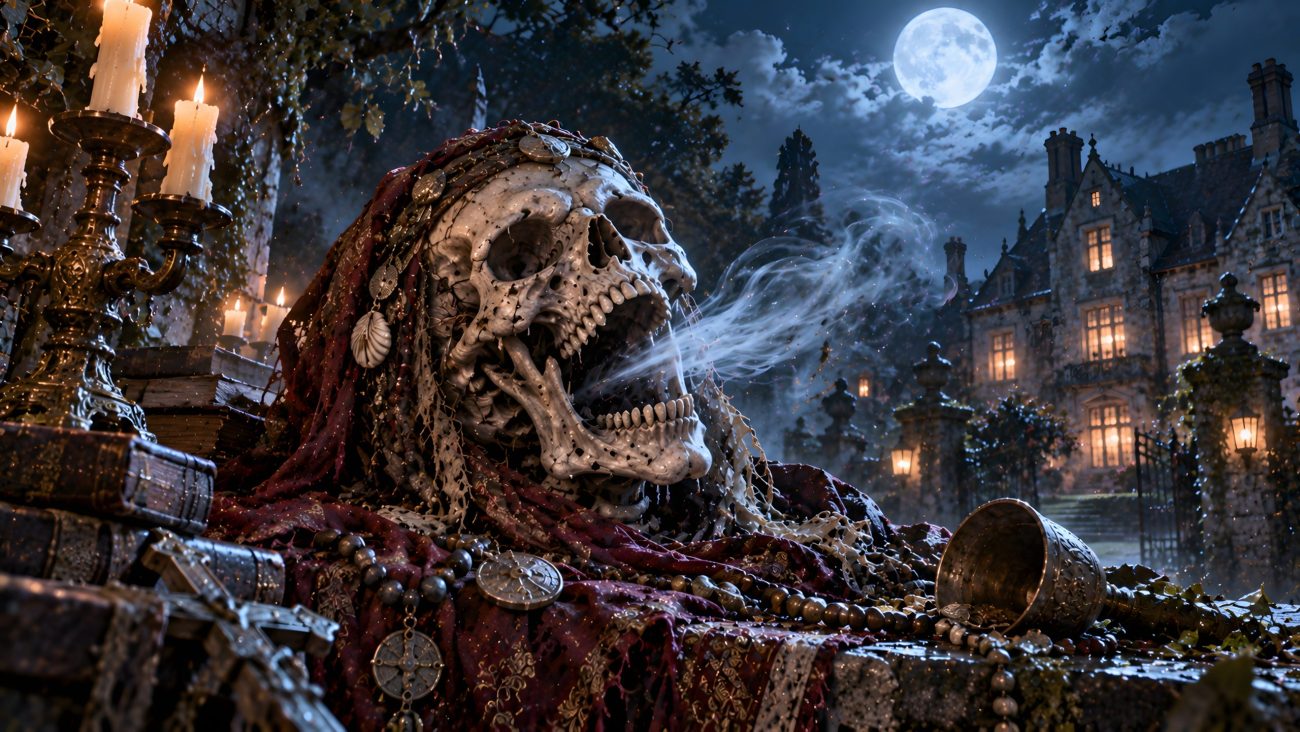
The Bettiscombe Screaming Skull is a reportedly haunted human skull associated with Bettiscombe Manor in Dorset, England. According to legend, it belonged to an African enslaved man who once served the household. Before his death, he supposedly expressed a desperate wish to be buried in his homeland rather than in a foreign country.

The man allegedly died without his wish being fulfilled, and his skull remained at Bettiscombe Manor. Whenever someone attempted to bury it elsewhere, it was said to emit terrifying screams. These cries continued until the skull was returned to the house, where it could remain undisturbed.


Sources

Wikipedia contributors. (n.d.). Screaming skull. Wikipedia. https://en.wikipedia.org/wiki/Screaming_skull