Tradition / Region: Egyptian Mythology
Alternate Names: Hapis; Hapi-ankh
Category: Cow
The Myth
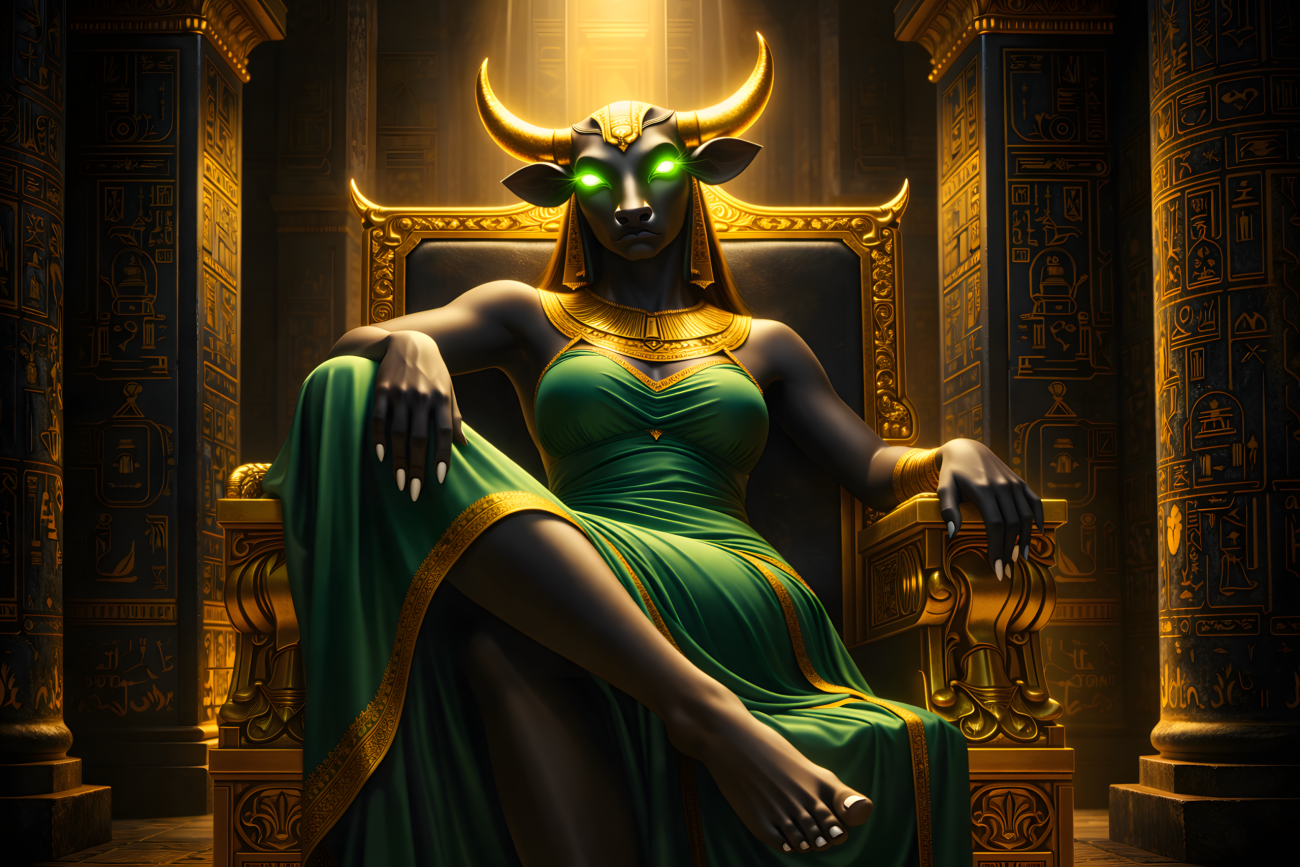
In ancient Egypt, the gods did not always speak through thunder or visions. Sometimes, they walked the earth in living form. One such presence was Apis, the sacred bull of Memphis.
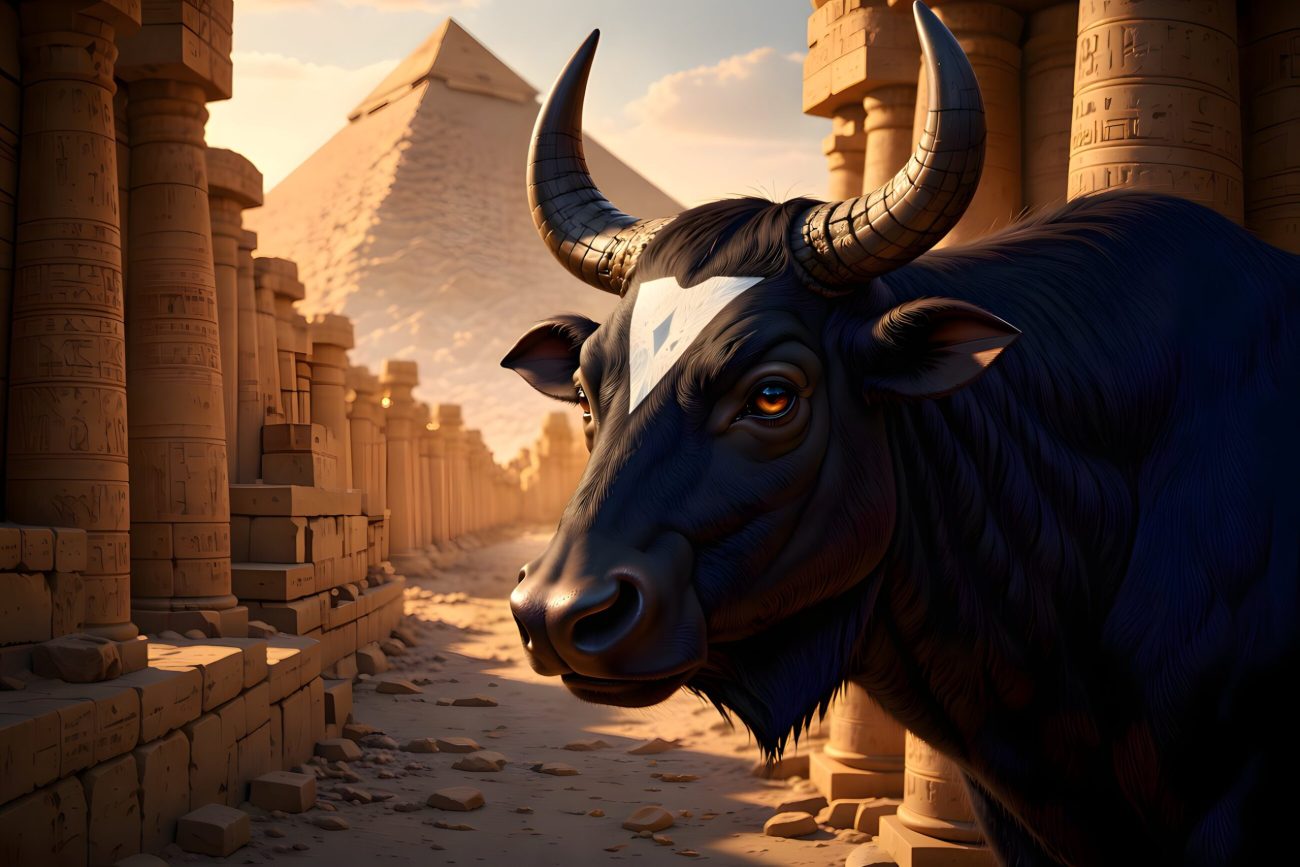
Apis was born when a ray of divine light struck a cow, filling her womb with the power of the heavens. From this miracle came a calf unlike any other, marked from birth as holy. His black body bore signs placed by the gods themselves, and through these signs the people knew that a divine will now walked among them.
Apis lived in a temple, tended with great care. He was not worshipped as an animal alone, but as a bridge between worlds. Through his movements, his moods, and his behavior, the gods revealed their intentions. When Apis was calm, the land prospered. When he grew restless, people feared change was coming.
He was bound to great gods. In life, he carried the presence of Ptah, the shaper of the world. In death, he became one with Osiris, lord of rebirth and the underworld. Thus Apis embodied the cycle of existence itself: birth, power, death, and return.
When Apis died, he was mourned as a king. His body was laid to rest with ceremony and reverence, and the people waited for his return, knowing another Apis would be born. Each new bull was not a replacement, but a continuation—the same divine force entering the world again in living flesh.
Through Apis, the Egyptians believed the gods remained close. He was strength made visible, fertility given form, and the promise that life, even in death, never truly ends.
Sources
Herodotus. (1921). The Histories, Book 3, Section 28 (A. D. Godley, Trans.). Loeb Classical Library, Vol. II. Cambridge, MA: Harvard University Press.
Wikipedia contributors. (n.d.). Apis (deity). In Wikipedia, The Free Encyclopedia. Retrieved May 28, 2025, from https://en.wikipedia.org/wiki/Apis_(deity)