Hussen

Tradition / Region: Belgian Mythology
Alternate Names: Alvervrouwen, wives of the alvermannekes
Category: Gnome


The Myth

In the heaths around Leuven and Aarschot lived the Hussen, the female counterparts of the alvermannekes. They were small, secretive beings who survived not by honest labor but by raiding and stealing, slipping unseen into human spaces and vanishing again with what they needed.

The Hussen lived apart from people, bound by their own harsh customs. Among them was a grim belief about age and renewal. When a Hus grew too old to keep up with the others, she was buried alive by her own kind. This was not done in cruelty alone, but as part of a strange promise.

Before the earth was closed over her, they placed beside her a small bottle of beer or a loaf of bread, and spoke these words:
“Vertrek, oud moederke, ge zult in jongheid wederkeren.”
“Depart, old mother, you will return in youth.”

It was believed that death beneath the soil would restore her, allowing her to be reborn young, ready to return to the world of the Hussen once more.

Thus the Hussen were remembered as beings of theft and survival, ruled by their own laws—laws in which age was not endured, but buried, and where the earth itself was the gateway back to youth.


Gallery


Sources

Abe de Verteller contributors. (n.d.). Van aardmannetje tot zwarte juffer: Een lijst van Nederlandse en Vlaamse elfen en geesten. In Abe de Verteller, from https://abedeverteller.nl/van-aardmannetje-tot-zwarte-juffer-een-lijst-van-nederlandse-en-vlaamse-elfen-en-geesten/


Interpretive Lenses

Religious Readings
  • Christian Ascetic Deep Dive
Philosophical Readings
  • Nietzschean Deep Dive
Psychological Readings
  • Jungian Deep Dive
Esoteric Deep Dive
  • Hermetic Deep Dive
Political / Social Readings
  • Marxist Deep Dive
Other
  • How to Invite The Hussen

Galgenjong

Tradition / Region: Belgian Mythology
Alternate Names: Galgenaas, Duivelsjongen
Category: Gnome, Demon, Familiar


The Myth

In old Flemish tales there is a sinister little being known as the Galgenjong, a creature bound to bargains and blood. In its smallest form it appears as a tiny black beast, no larger than a pea, with a blood-red mouth. At other times it takes on a clearer shape: a gnome-sized figure, as large as a child’s doll, black-skinned, with shining eyes and a red tongue. In this form it hides itself in a small box or a pouch, waiting for its owner’s command.

Whoever possesses a Galgenjong gains unnatural advantages. Their hands move faster than any other worker’s, their strength exceeds human limits, and luck follows them—especially in games of cards. The creature can see what is yet to come and knows where hidden treasures lie, whispering secrets no ordinary person could uncover.

But its gifts are never free. Each day the Galgenjong must be fed a drop of its owner’s blood. Without this offering it grows restless and dangerous. Though it brings fortune to its master, it spreads misfortune to everyone around them. Neighbors fall into bad luck, accidents multiply, and prosperity withers wherever the creature lingers.

To obtain a Galgenjong, one must commit oneself to darkness. Some say it can be gained by fasting for three days in honor of the Devil. Others claim it comes only through joining a secret and wicked brotherhood. Once acquired, the creature is almost impossible to be rid of. It cannot be dismissed or destroyed by its owner’s will alone. Only if someone else steals it away can its bond be broken.

If the Galgenjong remains with its master until death, it claims its final payment. When the owner dies, the creature carries their soul with it, dragging it down to hell as the last fulfillment of the pact.

Thus the Galgenjong is remembered as a source of power and ruin alike: a tiny servant of immense danger, promising success in life while quietly ensuring damnation in the end.


Gallery


Sources

Abe de Verteller contributors. (n.d.). Van aardmannetje tot zwarte juffer: Een lijst van Nederlandse en Vlaamse elfen en geesten. In Abe de Verteller, from https://abedeverteller.nl/van-aardmannetje-tot-zwarte-juffer-een-lijst-van-nederlandse-en-vlaamse-elfen-en-geesten/


Interpretive Lenses

Religious Readings
  • Christian Ascetic Deep Dive
Philosophical Readings
  • Nietzschean Deep Dive
Psychological Readings
  • Jungian Deep Dive
Esoteric Deep Dive
  • Hermetic Deep Dive
Political / Social Readings
  • Marxist Deep Dive
Other
  • How to Invite The Galgenjong

Antonen

Tradition / Region: Belgian Mythology
Alternate Names:
Category: Gnome


The Myth

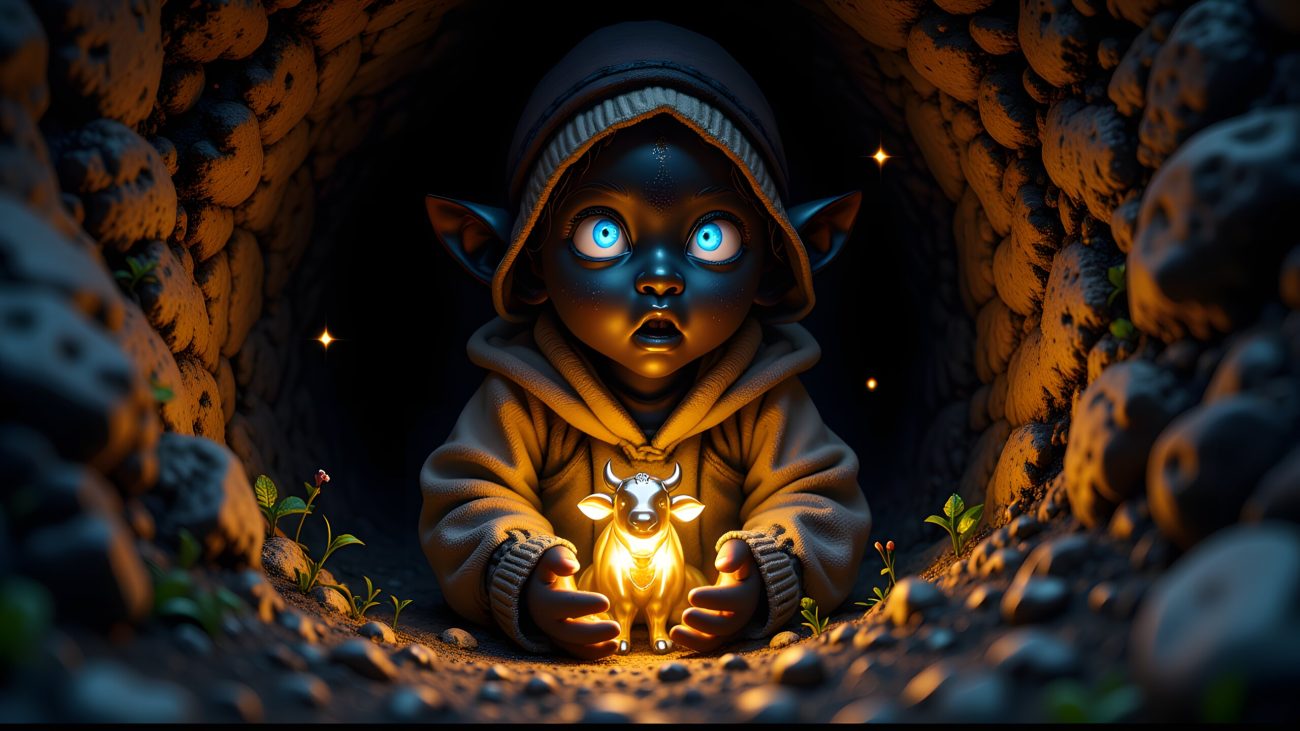
In the villages of Ophoven and Molenbeersel, people once spoke of strange little beings known as the Antonen. They were a kind of earth spirit, much like the aardmannetjes, but darker and more secretive. Their skin was said to be black, and they lived hidden away from human sight, close to the ground and the old places of the land.

The Antonen were said to worship a golden calf, which they had buried in a secret place known only to them. There, underground and unseen, they honored it in silence, guarding both the idol and its location with great care.

For a long time they remained near the villages, unseen but present. Then the church bells began to ring the Angelus. The sound of the bells carried across fields and forests, cutting through earth and air alike. At the first ringing, the Antonen fled in terror. The holy sound was unbearable to them, and they abandoned their hidden places, their buried calf, and the land they had once inhabited.

After that, they were never seen again. Yet people say that wherever the Antonen once lived, the ground still remembers them—and that somewhere beneath the earth, the golden calf may still lie buried, waiting in silence.


Gallery


Sources

Abe de Verteller contributors. (n.d.). Van aardmannetje tot zwarte juffer: Een lijst van Nederlandse en Vlaamse elfen en geesten. In Abe de Verteller, from https://abedeverteller.nl/van-aardmannetje-tot-zwarte-juffer-een-lijst-van-nederlandse-en-vlaamse-elfen-en-geesten/


Interpretive Lenses

Religious Readings
  • Christian Ascetic Deep Dive
Philosophical Readings
  • Nietzschean Deep Dive
Psychological Readings
  • Jungian Deep Dive
Esoteric Deep Dive
  • Hermetic Deep Dive
Political / Social Readings
  • Marxist Deep Dive
Other
  • How to Invite The Antonen