Tradition / Region: Austrian Mythology
Alternate Names: White Cat Spirit
Category: Cat, Ghost
The Myth
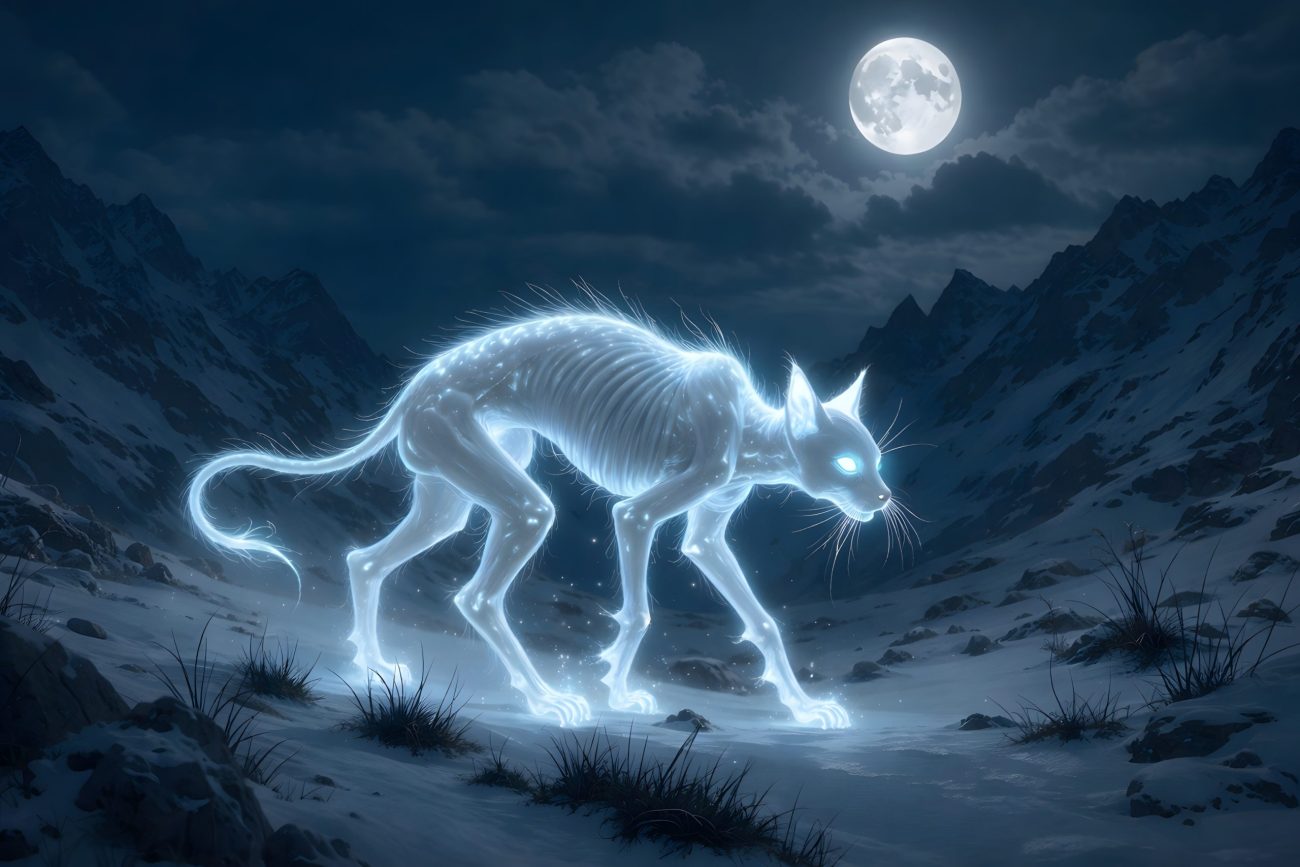
The Ghostly Cat is the spirit of a woman condemned to wander in the form of a large white cat, appearing at night on the rooftops of an old house.
The legend tells of a man who lived a corrupt and immoral life, while his wife endured everything in silence. Eventually, he fell under the influence of another wicked woman, and together they plotted to murder his wife using poisoned food.
However, through a twist of fate, the poison was consumed by the very woman who had prepared it. The effects were unnatural and disturbing. Instead of dying immediately, she began to lose her humanity and believed herself to be a cat.
She crawled on all fours, ran wildly through the house, climbed across the roof, and screamed like an animal. Her madness intensified with time, growing worse by the hour, until finally she fell from the highest point of the roof and broke her neck.
After her death, she did not find rest.
She became a restless spirit, condemned to return as a ghostly white cat, roaming the rooftops at night. Those who come too close to her path risk being attacked, as she lashes out with sharp claws at anyone who dares approach.
The Ghostly Cat represents a punishment tied to guilt, corruption, and unnatural transformation — a human reduced to an animal in life, and bound to that form even after death.
Sources
sagen.at contributors. (n.d.). Die gespenstische Katze. In sagen.at, from https://www.sagen.at/texte/sagen/oesterreich/wien/sagen_legenden_gugitz/katze.html