Eagle Maiden

Tradition / Region: Albanian Mythology
Alternate Names: —
Category: Bird, Nymph


The Myth

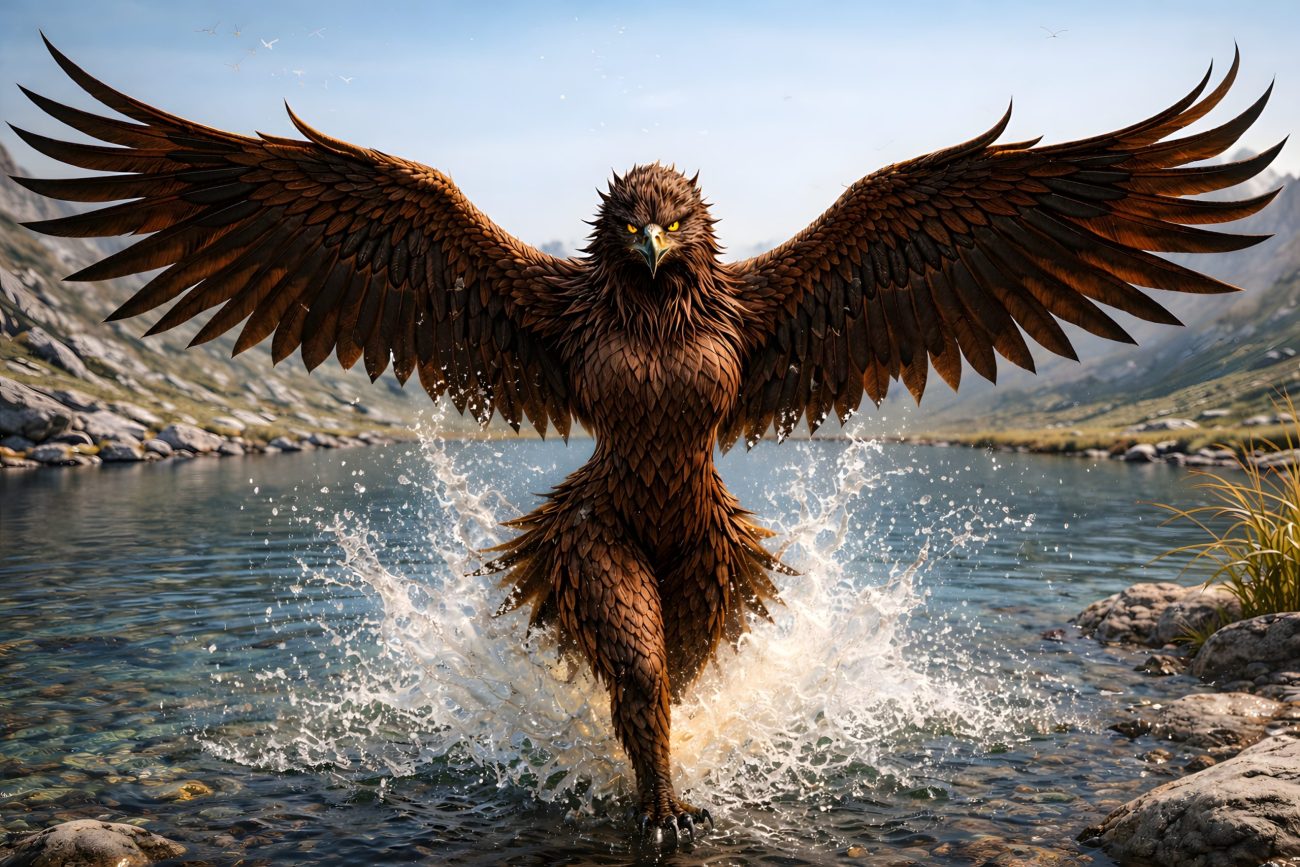
The Eagle Maidens are beings who take the form of eagles and transform into maidens by bathing in water. They are encountered by a traveler during his search for Gjizar the nightingale and possess knowledge of its location.

A youth traveling through a wilderness came upon a house where an old woman lived. She warned him that her daughters would return and devour him, then hid him in a closet with a hole through which he could see. After some time, three eagles arrived, each one wounded. They entered through the window, bathed in a bowl of water, and became maidens. They spoke with their mother and then ate.

The old woman asked what they would do if a man were present, and each maiden swore not to harm the one who had wounded her. The youth was then revealed, and he told them he was the one who had injured them. The maidens did him no harm and asked his purpose. He told them he was searching for Gjizar the nightingale. They said they knew where it was and that he could not reach it on foot.

They told him to remain with them for three months. After this time, they took him to the place where the nightingale was and left him there.


Sources

Albanian Literature contributors. (n.d.). Folktale 14. In Albanian Literature, from http://www.albanianliterature.net/folktales/tale_14.html

Pedersen, H. (1895). Albanesische Texte mit Glossar. In Abhandlungen der philologisch-historischen Classe der Königl. Sächsischen Gesellschaft der Wissenschaften, Vol. 15 (reprinted in Folklor shqiptar 1, Proza popullore, 1963). Translated by Elsie, R.

Zana

Tradition / Region: Albanian mythology, Kosovo Mythology
Alternate Names: Zanë, Zërë, Xanë, Zâna, Zónja, Jashtësme
Category: Mountain dweller, Nymph


The Myth

High in the Albanian mountains, where cold springs run clear and forests cling to the slopes, dwell the Zana—wild and radiant maidens of the peaks. Each mountain is said to have its own Zana, who appears as a beautiful young woman with untamed hair and fearless eyes, often seen bathing in hidden streams or wandering among rocks and alpine flowers.

The Zana are guardians of nature—of forests, animals, springs, and the living strength that pulses through human beings. They walk accompanied by wild goats with golden horns, and the air grows tense with power wherever they pass. Though fair in form, they are fierce in spirit. Their courage is unmatched, and in Albanian speech it is said of a brave person: “He is as bold as a Zana.”

They favor warriors. In times of battle, a Zana may watch unseen from the mountainside. If she is pleased by a hero’s heart, she grants him strength beyond mortal limits. In the epic songs of the highlands, the young hero Muji was once found in the mountains by the Zana. They took pity on him and nursed him with their own milk. From that moment, Muji possessed the strength of many men, able to lift boulders and defeat giants. His power was the gift of the Zana.

Yet their favor is not lightly won, and their anger is dreadful. With a single glance, a Zana can paralyze a man, turning him stiff as stone. Those struck by such a gaze are said to be “touched by the Zana,” frozen in body and spirit.

In the northern highlands, the Zana also come by night in threes when a child is born. Like mysterious sisters of fate, they gather around the newborn and decide its destiny. One may grant fortune and health, another hardship and sorrow, and the third death itself. Their whispering shapes the path of a life before it has even begun.

Sometimes they reveal themselves to mortals. A soldier lost in the mountains may encounter a Zana at dusk. She may warn him of danger ahead—or lead him unknowingly toward it. In old tales, a captain once knelt before such a radiant being, believing her divine. She spoke to him gently, yet her words foretold tragedy, and fate unfolded as she had hinted.

The Zana are not bound by human law or morality. They belong to the mountains and to the older rhythms of the world. They can love, grieve, and rage. In epic song, when the maiden Tringa was slain, the Great Zana descended in fury, lifted her fallen companion, and called upon warriors to rise in vengeance. Her cry echoed through the valleys like a battle horn.

They are wild beauty and untamed force. Eternal maidens of the highlands, they move between tenderness and terror, between blessing and doom—spirits of the mountains who grant strength, shape destiny, and vanish like mist at dawn.


Sources

Wikipedia contributors. (n.d.). Zana (mythology). In Wikipedia, The Free Encyclopedia. Retrieved February 13, 2026, from https://en.wikipedia.org/wiki/Zana_(mythology)


Bardha

Tradition / Region: Albanian Mythology
Alternate Names: E Bardha (“The White One”)
Category: Nymph


The Myth

Bardha, whose name means “the White One,” is a mythological figure in Albanian folklore. She appears either as a zana, a nymph-like being of nature, or as an ora, a fate spirit connected with human destiny and fortune. Bardha is associated with goodwill and good luck, and is believed to favor humans rather than harm them.

In the beliefs of the people of the Dukagjini Mountains, there are three types of Ora. Bardha is the one who brings good fortune and wishes people well. Alongside her are e Verdha (“the Yellow One”), who brings misfortune and casts harmful spells, and e Zeza (“the Black One”), who determines death. Among these three, Bardha is the most benevolent.

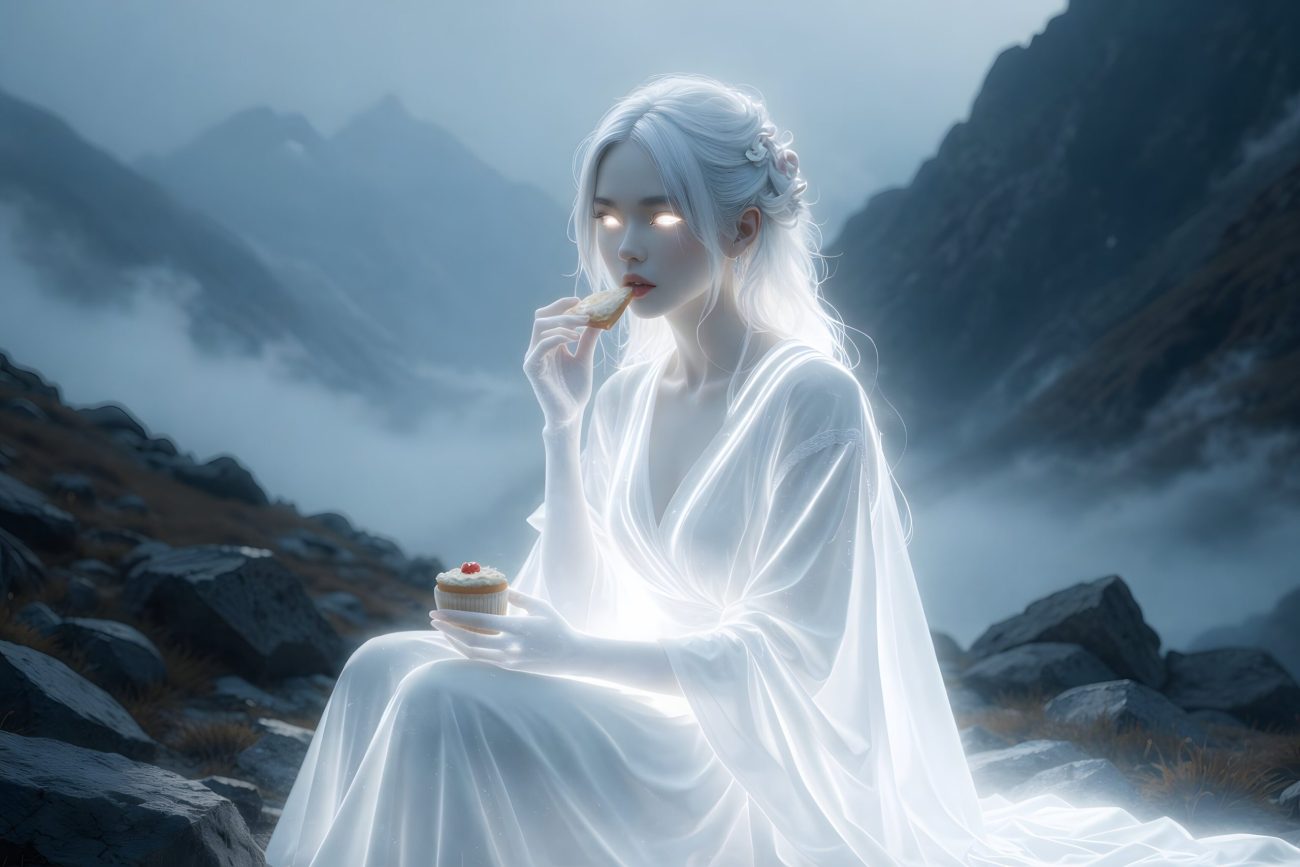
In older folklore that treats her as a nymph-like being, Bardha is said to resemble the zana e malit, the mountain nymph. She is described as pale and nebulous in form, sometimes appearing indistinct or ghostlike. In some traditions, she is believed to dwell beneath the earth rather than openly in forests or mountains.

To gain Bardha’s favor or avoid offending her, people would leave offerings such as sugar or small cakes on the ground. These gifts were meant to appease her and invite her goodwill, ensuring luck and protection rather than misfortune.

Through these traditions, Bardha is remembered as a gentle and auspicious spirit, moving quietly between the worlds of fate and nature, and watching over human lives with benevolent intent.