Tradition: Greek Mythology
Alternative Names: Silenus, Silenos, Sileni (plural)
Category: Sheep
The Myth
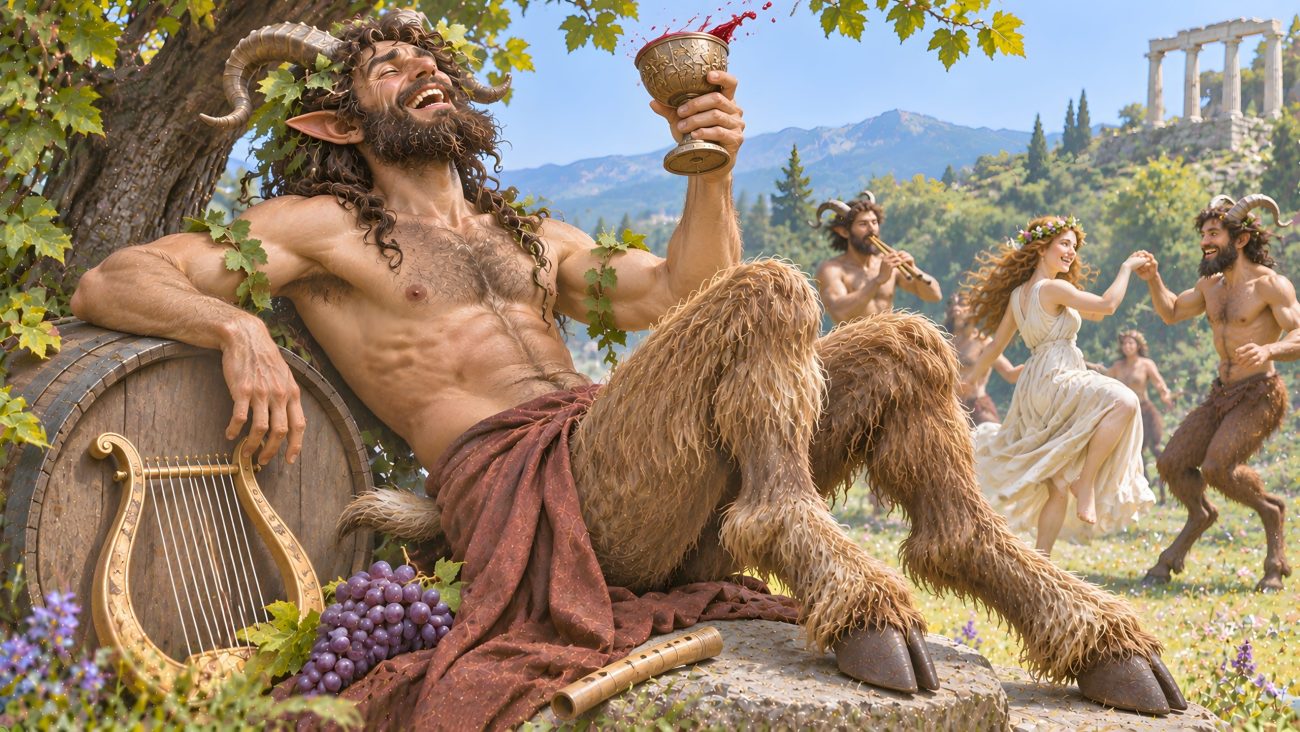
A satyr is a male nature spirit in Greek mythology, traditionally associated with the god Dionysus. Early depictions sometimes gave satyrs horse-like legs, ears, and tails, while later representations more often showed them with human legs. They were commonly portrayed as comically grotesque figures with mane-like hair, bestial faces, snub noses, and exaggerated sexual characteristics. Satyrs were associated with wine, music, dancing, and the pursuit of women. They inhabited remote places such as woodlands, mountains, and pastures, and frequently attempted to seduce or assault nymphs and mortal women.
Satyrs were prominent in ancient Greek theatre, where they formed the chorus of satyr plays, comic dramas known for their bawdy humour. Euripides’ Cyclops is the only complete surviving example of this genre, while a substantial portion of Sophocles’ Ichneutae also survives.
One of the best-known satyrs was Marsyas, who challenged the god Apollo to a musical contest after acquiring the aulos, a wind instrument associated with the goddess Athena. Apollo played the lyre, and the two agreed that the victor could do whatever he wished to the loser. When Apollo turned his lyre upside down and played it, Marsyas could not do the same with his instrument. Apollo was therefore declared the winner and flayed Marsyas alive for his hubris.
Another myth tells of a satyr from Argos who attempted to assault the nymph Amymone. She called upon Poseidon for help, and the god struck the satyr down with his trident. This episode became a popular subject in ancient Greek vase painting.
Despite their frequently ridiculous and unruly portrayal, satyrs were also believed to possess valuable knowledge. The satyr Silenus served as the tutor of the young Dionysus, while another story from Ionia describes a silenus who offered sound advice after being captured.
Ancient sources give conflicting accounts of the satyrs’ origins. One fragment of Hesiod’s Catalogue of Women describes them as descendants of the five granddaughters of Phoroneus, making them siblings of the Oreads and Kouretes. Other accounts provide different origins for individual satyrs, including Marsyas. Ancient Greeks also appear to have been uncertain whether satyrs were mortal or immortal, and how they reproduced, as no female satyrs are described in the surviving accounts.
Over time, satyrs became increasingly human in appearance and were sometimes given goat-like features through their association with Pan and the Pans. The Romans identified them with their own nature spirits, the fauns, and the distinction between the figures eventually disappeared. Since the Renaissance, satyrs have frequently been depicted with goat legs and horns. In modern fantasy and children’s literature, they are often represented as gentler, more domesticated figures and are commonly called fauns.
Sources
Wikipedia contributors. (n.d.). Satyr. Wikipedia. https://en.wikipedia.org/wiki/Satyr#Mythology