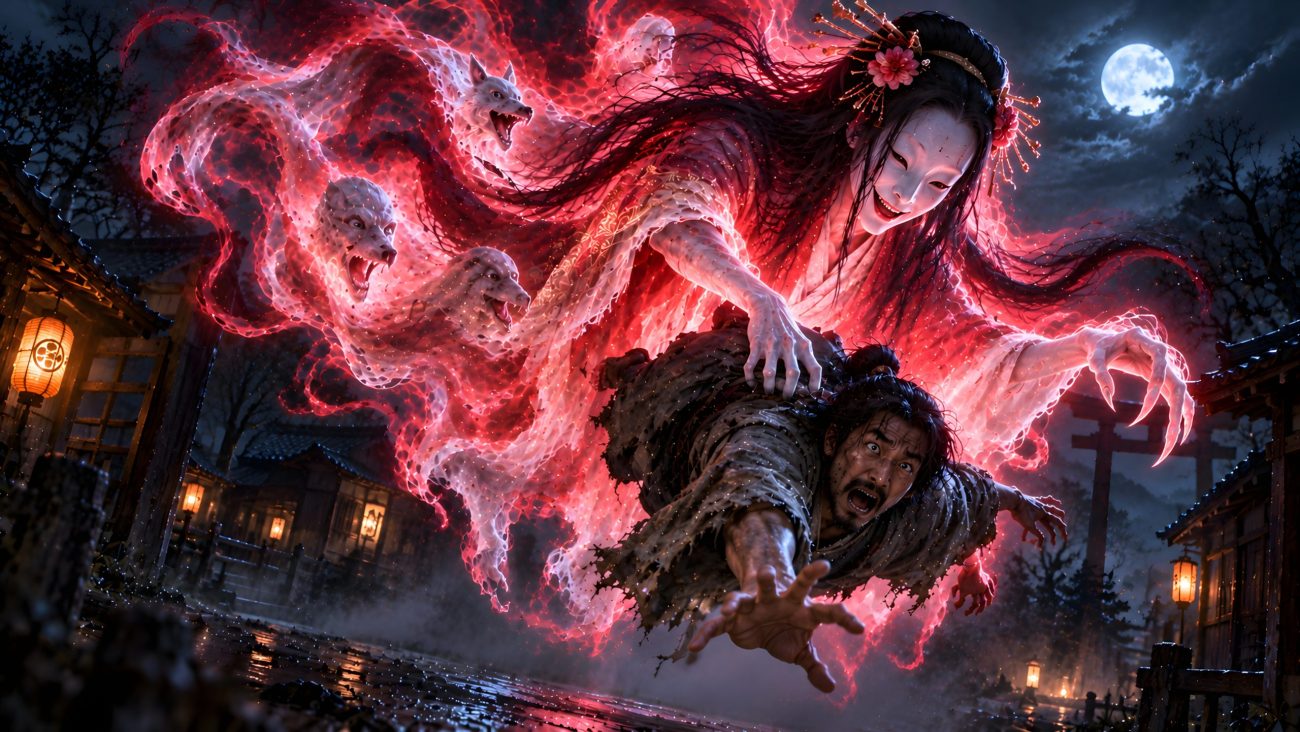
Tradition: Japanese Mythology
Alternative Names: Bakemono (化け物), お化け
Category: Ghost
The Myth
Obake and bakemono are terms used in Japanese folklore for supernatural beings associated with transformation and shapeshifting. Their names refer to things that change form. Although they are sometimes translated as ghosts, they primarily describe living creatures or supernatural entities that temporarily transform into different shapes. In a secondary sense, obake can also refer to the spirit of a deceased human, making it a synonym for yūrei.
The true form of an obake or bakemono may be an animal, a plant spirit, or even an inanimate object. Foxes known as kitsune, raccoon dogs called bake-danuki, badgers known as mujina, and supernatural cats called bakeneko are all associated with transformation. Plant spirits such as kodama may also fall within this broad category, while objects believed to develop souls are known as tsukumogami.
A bakemono may disguise itself as a human or appear in a strange and frightening shape. Examples include the one-eyed childlike hitotsume-kozō, the towering ōnyūdō, and the faceless noppera-bō. In common usage, obake and bakemono can refer to a wide range of bizarre apparitions and supernatural beings, making them broadly similar to the term yōkai.
The concept of obake also spread into Hawaiian local culture through the influence of Japanese communities. Japanese supernatural stories became part of local folklore, including tales of the water-dwelling kappa and faceless apparitions known as noppera-bō. In Hawaii, these faceless ghosts are also called mujina, a name confusion associated with a story by Lafcadio Hearn in which a badger transforms into a faceless being. Hawaiian folklorist Glen Grant further documented reports of supernatural incidents, including many involving Japanese-style obake.
Sources
“Obake.” Wikipedia: The Free Encyclopedia. Wikimedia Foundation. Accessed October 16, 2026. https://en.wikipedia.org/wiki/Obake