Tradition: Welsh Mythology
Alternative Names: Diawl, Cythraul, Diafol, Dera
Category: Object
The Myth
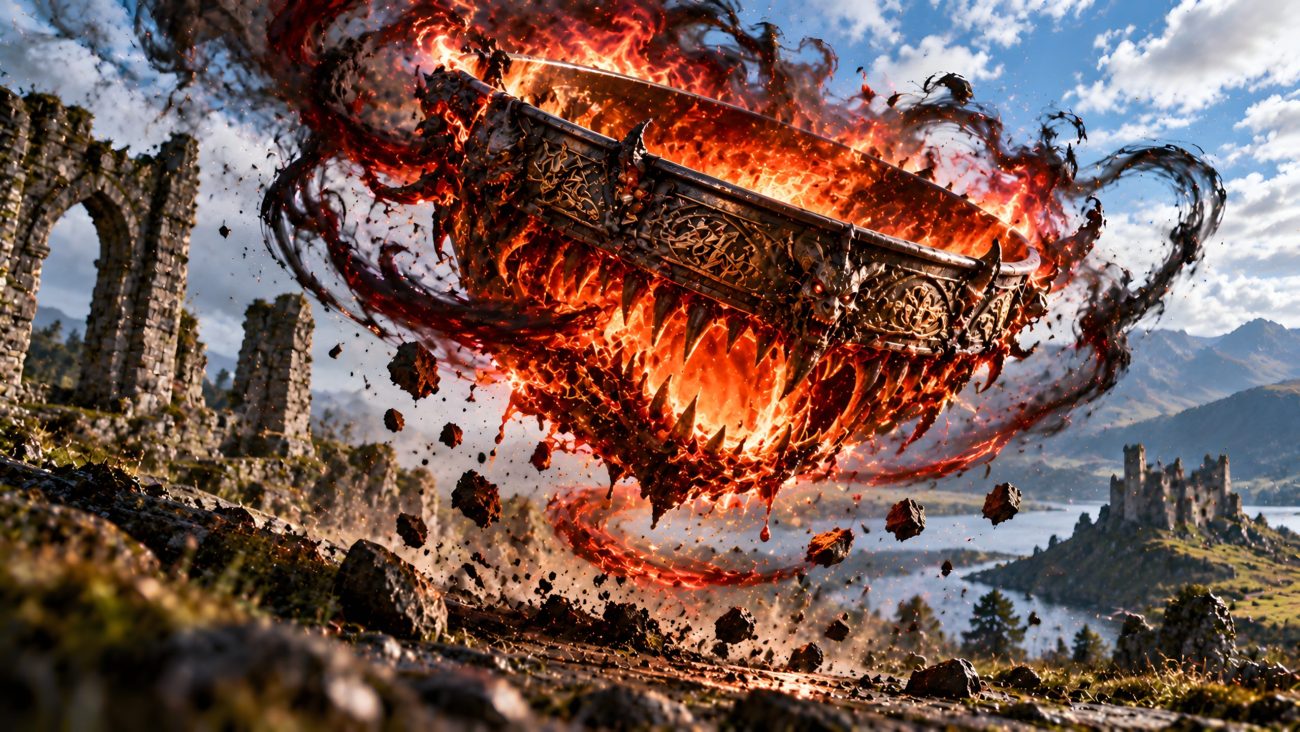
The Devil Bowl is a supernatural manifestation of the devil in Welsh tradition. Rather than appearing in the familiar form of a horned humanoid with cloven hooves and a tail, the devil may take countless different shapes when acting as a familiar spirit. These include a fiery ball, a donkey, a black calf, a round bowl, a dog, a roaring flame, a bull, a goose, or even an imp that enters a book. Such transformations reflect the devil’s reputed ability to change size and appearance at will. Similar traditions occur in many other cultures, with ancient parallels in Greek mythology and the Odyssey.
One account concerns Henry Llewelyn of Ystrad Defoc in Glamorganshire. While returning home on horseback at night with a load of religious books, including Bibles, Testaments, and children’s hymns, he encountered a strange living object moving back and forth across the road. It was round like a bowl, and Llewelyn concluded that it must be the devil. Rather than fleeing, he confronted the apparition, demanding to know what the foul creature wanted and commanding it to depart in the name of the Lord Jesus. At these words, the bowl vanished into the ground, leaving behind a sulphurous smell.
Other Welsh accounts describe the devil appearing in equally unusual forms. Near Narberth in Pembrokeshire, a mysterious black calf haunted a brook. Two peasants eventually caught it and locked it in a stable with other cattle, only to discover that it had disappeared by morning. In Risca, the devil appeared to William Jones as an enormous mastiff before transforming into a great roaring fire. At Merthyr Tydfil, two men encountered the fiend in the form of a gosling after recklessly attempting to conjure it while drinking at an inn; one of the men was blinded during the encounter.
These stories illustrate the varied forms attributed to the Welsh devil, whose appearances could range from ordinary animals to seemingly harmless household objects and terrifying supernatural phenomena. The Devil Bowl is particularly notable because it disguises a demonic presence as something mundane, revealing its true nature only when confronted with religious authority. The sulphurous smell left behind after its disappearance reinforces its identification with the devil.
Sources
Sikes, Wirt. British Goblins: Welsh Folk-Lore, Fairy Mythology, Legends and Traditions