Tradition: Japanese Mythology
Alternative Names: 鼠浄土, Nezumi no Jōdo, Mouse Paradise, Obusubi Kororin, Dango Kororin
Category: Rat
The Myth
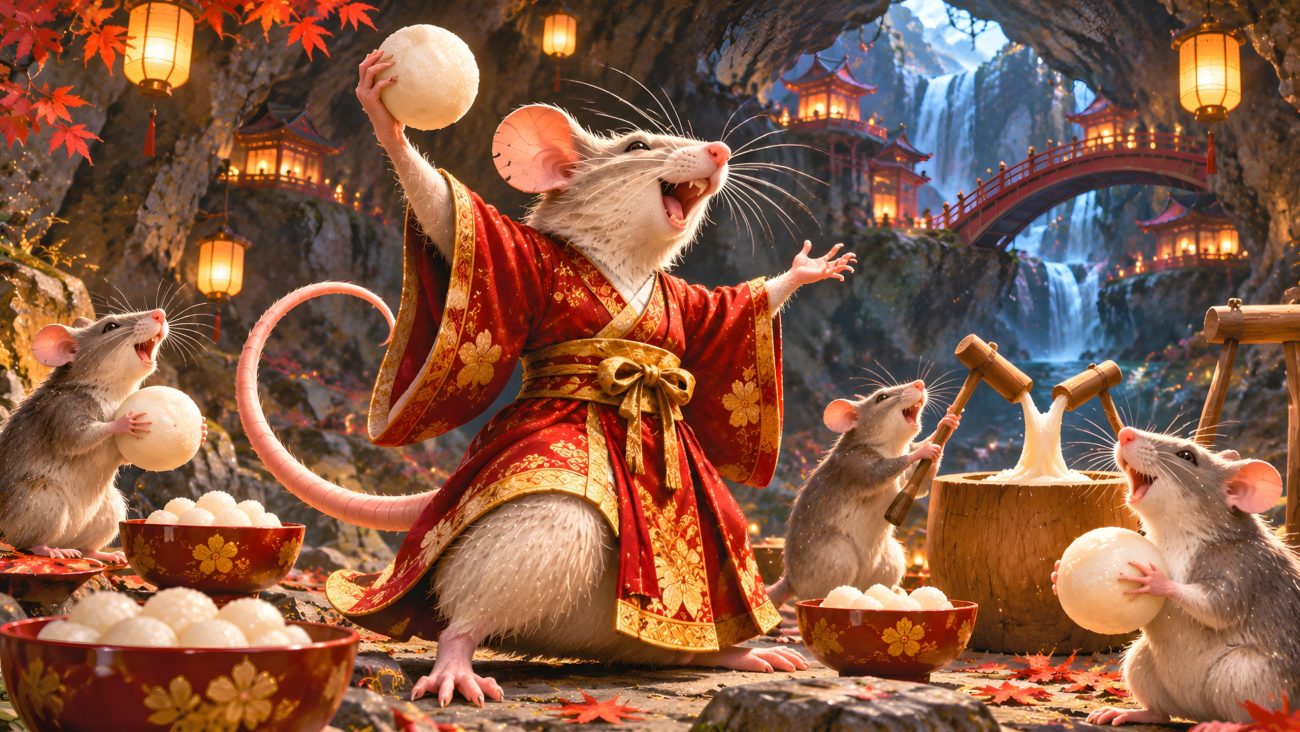
Nezumi Jōdo, meaning “Mouse Pure Land,” is a Japanese folktale in which an old man discovers a hidden underground paradise inhabited by mice. The story begins when his rice ball or dumpling rolls into a mouse hole while he is working in the mountains or fields. Following it underground, he discovers a wonderful world where mice sing, dance, and pound rice into mochi.
The mice welcome the old man because he has shared his food with them. In gratitude, they entertain him and send him home with rice cakes, food, gold, silver, and other treasures. His household becomes prosperous, making his envious neighbour determined to find the same riches. The greedy neighbour deliberately enters the mouse hole, hoping to obtain treasure for himself. However, he tries to frighten the mice by imitating a cat, causing them to turn against him. Depending on the version, he is bitten, suffers terrible misfortune, or even dies.
The tale is widely known in Japan, particularly through children’s stories titled Obusumi Kororin or Dango Kororin, named after the food that rolls into the mouse hole. It reflects the association of mice with prosperity and good fortune, partly through their connection with the deity Daikokuten. The underground mouse world also resembles the kakurezato, or hidden village: an isolated, peaceful place imagined as a land of abundance beyond ordinary human society.
Sources
“Nezumi Jōdo.” 新版TYZ 妖怪図鑑 (New TYZ Yokai Encyclopedia). https://tyz-yokai.blog.jp/archives/1077096659.html