Tradition: Japanese Mythology
Alternative Names: 霊猪, Divine Boar, Sacred Boar
Category: Pig
The Myth
Reicho, meaning “Sacred Boar” or “Divine Boar,” refers to the boars associated with the Japanese statesman Wake no Kiyomaro and worshipped as divine messengers. At Gōō Shrine in Kyoto, stone boars stand in place of the guardian dogs commonly found at Shinto shrines. Images of sacred boars can also be found at other shrines connected with Kiyomaro, including Wake Shrine in Wake, Okayama Prefecture, and Adachi Myōken Shrine in Kokura, Kitakyushu. These traditions commemorate legends in which wild boars came to Kiyomaro’s aid during times of danger.
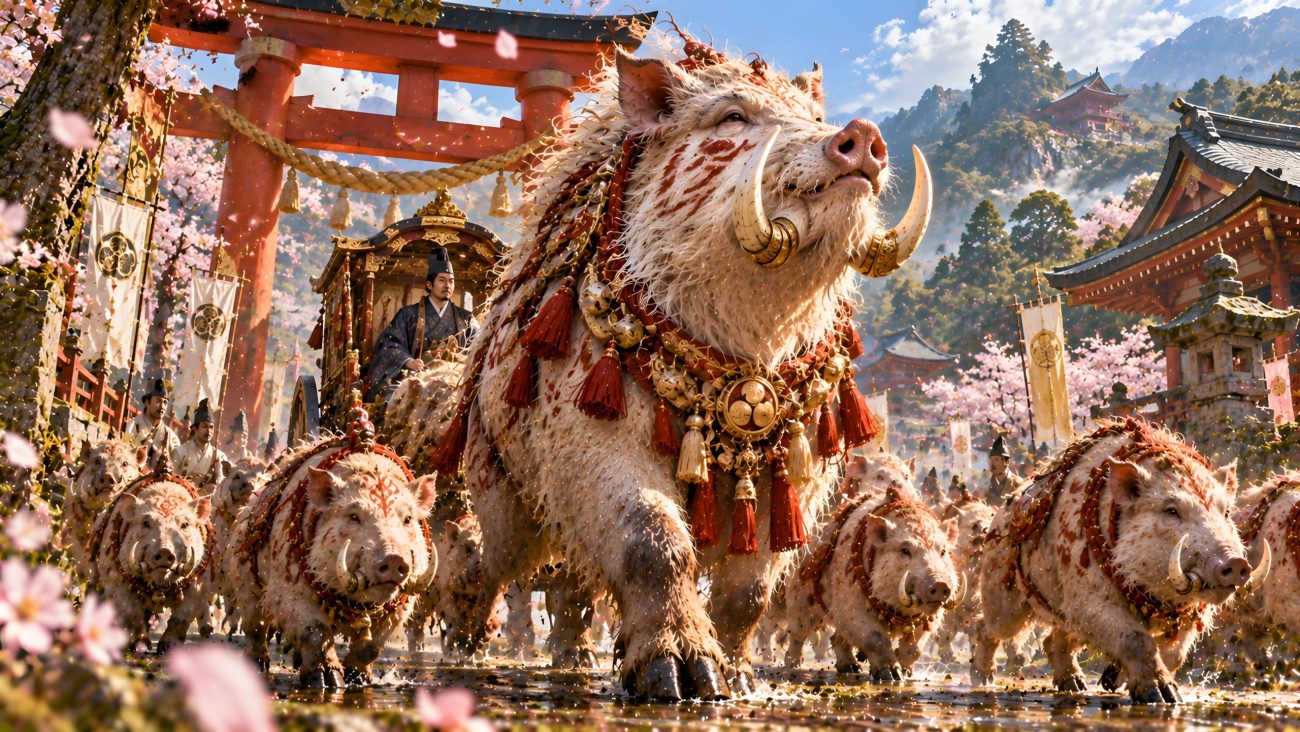
According to the Shoku Nihongi, Kiyomaro fell into conflict with the powerful monk Dōkyō and incurred the anger of Empress Shōtoku, who had placed great trust in Dōkyō. He was stripped of his name, renamed Himebe no Kegamaro, and exiled to Ōsumi Province. Dōkyō also sent assassins to kill him, but a thunderstorm prevented their attempt. After the empress died and Dōkyō lost his influence, Kiyomaro was rehabilitated under Emperor Kōnin and appointed governor of Buzen Province. Later, when Kiyomaro was unable to stand because of an affliction affecting his legs, he travelled by palanquin to worship the Hachiman deity in Usa District. A herd of approximately three hundred wild boars appeared, formed a procession, and guided him along more than ten ri of the journey before disappearing into the mountains. Witnesses were astonished, and Kiyomaro was reportedly able to stand and walk again on the day he visited the shrine.
Other versions place the boars’ intervention earlier in Kiyomaro’s life, during his mission to verify an oracle from Usa Hachiman Shrine concerning Dōkyō’s possible accession to the throne, or after assassins had severed the tendons in his legs while he was travelling to give thanks at the shrine. Although the details differ, the stories established a lasting association between Kiyomaro and the boar as a divine protector. From the Meiji period onward, statues of boars were dedicated to shrines connected with him. Boars also appeared on some ten-yen banknotes issued from the Meiji period until before the Second World War, alongside Kiyomaro’s portrait and Gōō Shrine. Certain designs featured boars on the reverse or within the decorative border, leading to the notes being popularly nicknamed “wild boars.”
Sources
“Reicho.” 新版TYZ 妖怪図鑑 (New TYZ Yokai Encyclopedia). https://tyz-yokai.blog.jp/archives/1073384916.html?utm_source=chatgpt.com