Tradition: Greek Mythology, Roman Mythology
Alternative Names: Skia, Shade
Category: Ghost
The Myth
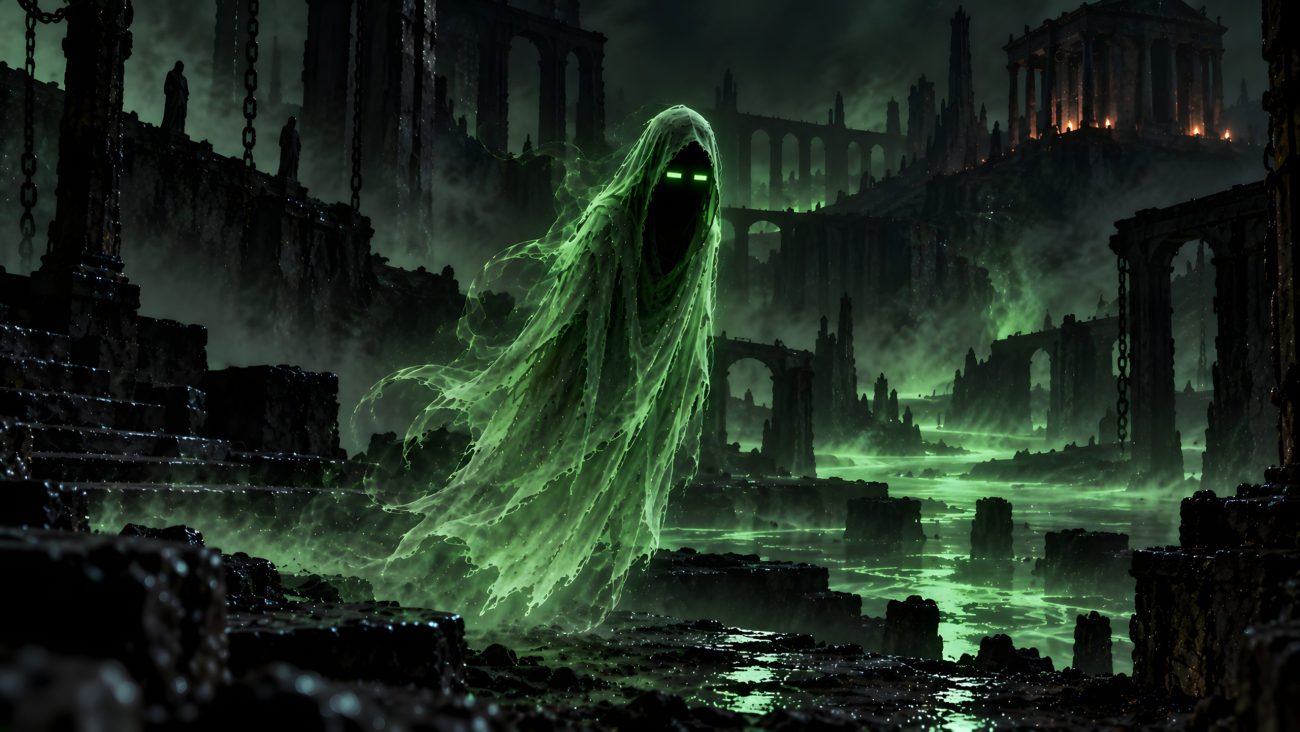
A Shade is the spirit of a deceased person who dwells in the underworld, existing as a shadowy remnant of their former life. Shades inhabit the realm of the dead, separated from the world of the living, where they linger in a diminished and shadow-like state. The concept also appears in ancient Near Eastern beliefs, where the dead were thought to dwell in a shadowy underworld. In Biblical Hebrew tradition, this realm was associated with Sheol, also described as the shadow of death.
Shades appear prominently in Greek and Roman mythology. In Homer’s Odyssey, Odysseus journeys into Hades and encounters the spirits of the dead, including the shade of the prophet Tiresias. In Virgil’s Aeneid, Aeneas descends into the underworld and encounters numerous shades of the departed. These spirits retain traces of their former identities and can be recognized by the living when encountered in the realm of the dead.
Not everyone was believed to remain a shade after death. Certain exceptional individuals could be elevated to the status of heroes and ascend to the divine sphere. According to Plutarch, Alexander the Great received an oracle confirming that his deceased companion Hephaistion had become a hero and attained divine status. Such beliefs distinguished ordinary shades, who remained in the underworld, from exceptional dead who were honoured as more than mortal spirits.
The image of the shade continued into later literature, including Dante Alighieri’s Divine Comedy, in which many of the dead encountered in the afterlife are described as shadows. The shade became a lasting symbol of mortality and the lingering presence of the deceased, representing the fragile boundary between the living world and the realm of the dead.
Sources
“Shade (mythology).” Wikipedia: The Free Encyclopedia. Wikimedia Foundation. Accessed October 15, 2026. https://en.wikipedia.org/wiki/Shade_%28mythology%29