Tradition: Japanese mythology
Alternative Names: Three-Headed Dragon, Three-Headed Dragon Mummy
Category: Dragon
The Myth
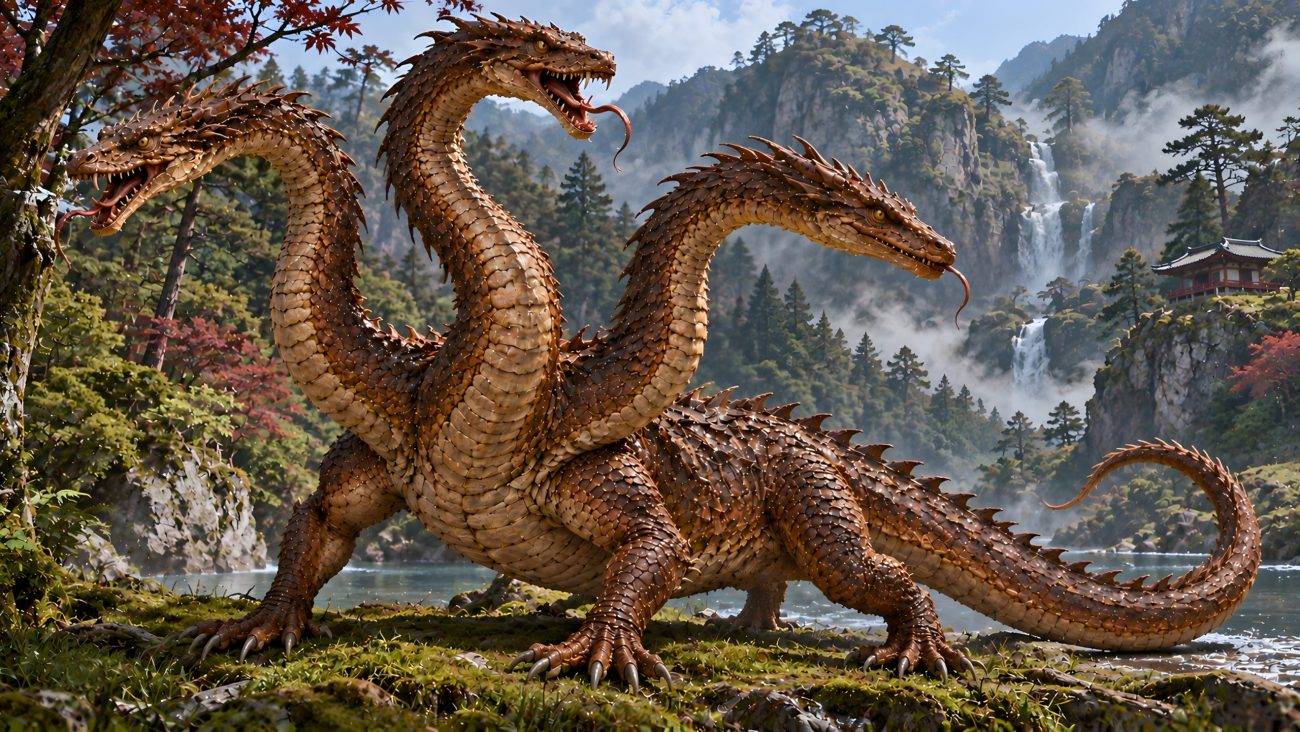
Santōryū is described as a strange three-headed dragon with a reptilian body and three long, slender necks extending from it, each ending in a head. The creature’s appearance resembles an artificial specimen made by combining the body of a small crocodile with three snakes.
Two objects described as “Three-Headed Dragon Mummies” are preserved among the yokai materials at the Japan Yokai Museum in Miyoshi, Hiroshima Prefecture. They were reportedly displayed as sideshow curiosities during the Shōwa period and later exhibited at various yokai exhibitions.
A sideshow flyer known as the “Great Yokai Exhibition” describes the creature as a “Gunma Prefecture Specialty Three-Headed Dragon,” presenting it alongside other supposed regional curiosities such as the “Tochigi Prefecture Specialty Cat Mermaid” and the “Ibaraki Prefecture Specialty Fox-Raccoon Dog.”
The true nature of the Santōryū, however, remains uncertain. There are no other documents or testimonies that objectively establish whether the sideshow described by the flyer actually took place, or whether the mummy and its associated materials were genuinely produced during the Shōwa period. The history of the Three-Headed Dragon therefore remains open to further investigation.
Sources
Takahashi, Toshihiro. “三頭竜 [さんとうりゅう] (Santōryū).” 新版TYZ 妖怪図鑑 (New TYZ Yokai Encyclopedia). October 21, 2024. https://tyz-yokai.blog.jp/archives/1082925945.html