Dead of the Gubel

Tradition: Swiss Mythology
Alternative Names: The Bleached Bones of the Gubel
Category: Skeleton


The Myth

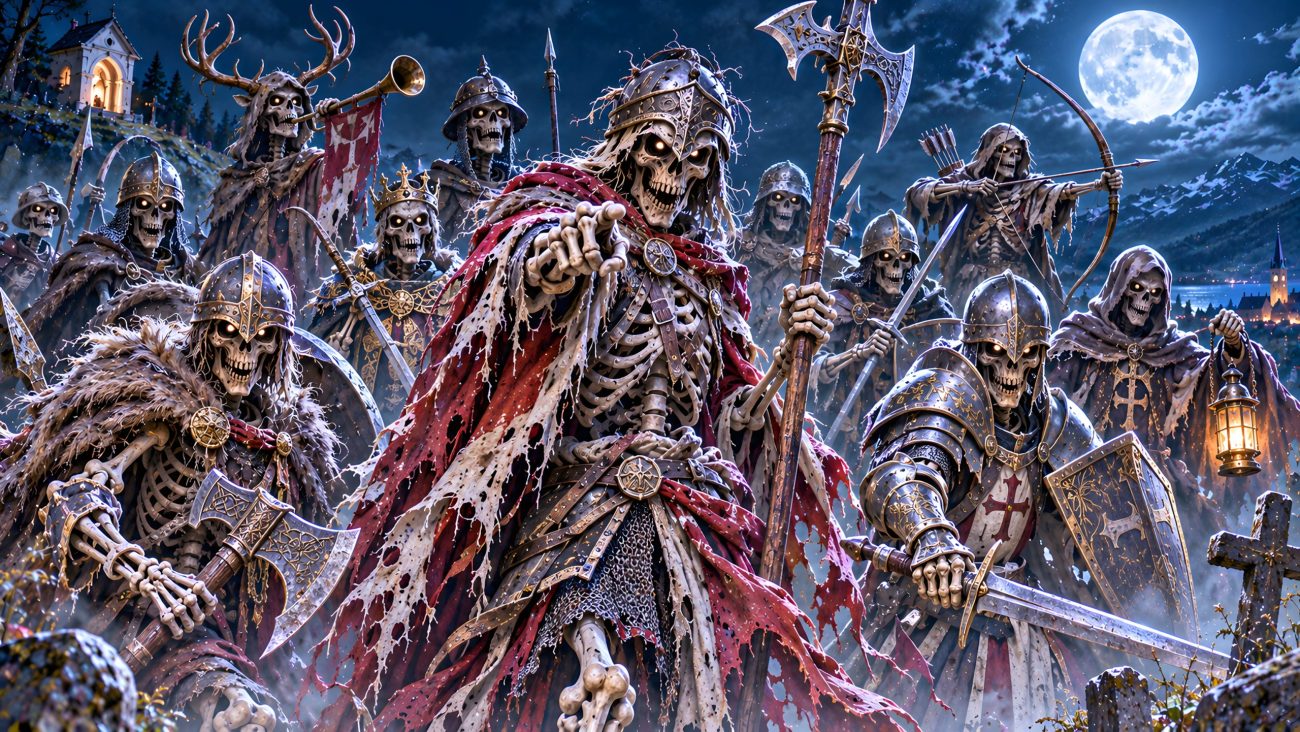
The Dead of the Gubel are the restless remains of fallen soldiers said to emerge from the earth every year near the Gubel, a hill in the Canton of Zug, Switzerland. Their legend is connected to the religious conflicts of the Reformation and a bloody battle fought there between troops from Zurich and a smaller force from Zug.

During the conflict, the people of Zurich marched against a Catholic place of pilgrimage in the dark forest. At the Gubel, they encountered a small but determined group of Zug soldiers commanded by Christian Iten from the Ägeri Valley. The defenders were said to have received miraculous assistance from the Virgin Mary of Einsiedeln, whose statue allegedly disappeared from its chapel and appeared to lead the outnumbered soldiers.

The battle left many men dead on the slopes of the Gubel. Their bodies were hastily buried, and not all the fallen received separate graves. According to local belief, the dead could not rest peacefully. Every year, white, bleached bones emerged from the soil, believed to belong to the Zug soldiers who had fallen defending their homeland.

A hermit who later lived on the Gubel heard of these strange appearances. The bones were believed to belong to men whose remains had been separated from their comrades and denied a peaceful resting place. The hermit gathered them and buried them in his own grave, allowing the fallen soldiers to rest together.


Sources

SAGEN.at. (n.d.). Restless Dead of Gubel. https://www.sagen.at/texte/sagen/schweiz/zug/gubel.html
Totenbein

Tradition: Swiss Mythology
Alternative Names: The Bone of the Dead, The Dead Man’s Bone
Category: Skeleton


The Myth

Totenbein is a Swiss legend about a human bone that exposes a murderer’s long-hidden crime. The story takes place in the Canton of Zug, during the time when Switzerland was governed by thirteen cantons.

Many years ago, a hot-tempered man from Zug murdered a fellow Swiss citizen and buried the body near a stone quarry. To conceal the grave, he rolled several heavy boulders over it. Fearing that his crime would eventually be discovered, he fled his homeland and enlisted as a mercenary abroad, hoping that years of military service would allow him to escape his past.

When he grew old and weary of warfare, the man felt an irresistible longing to return to his home village. On his journey, he passed the place where he had committed the murder. The landscape had changed considerably during his absence. The old quarry had become a green meadow, and a magnificent wild rosebush grew beside the road.

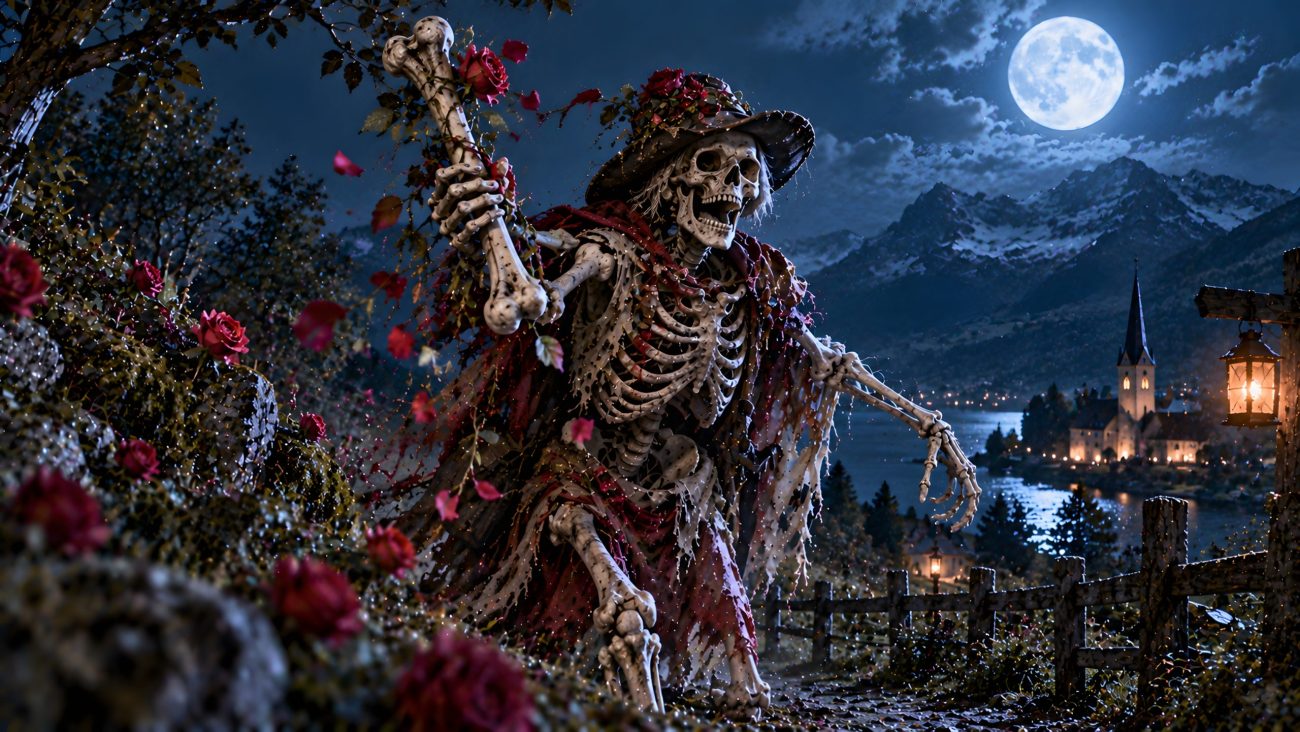
The former soldier plucked a flowering branch and placed it in his hat as an ornament. When he entered his village, however, he noticed that everyone looked at him with hostility and turned away in disgust. Unable to understand their behaviour, he eventually asked what was wrong. One villager pointed to the strange decoration on his hat. Laughing, the old man removed it to show them the rose he had picked.

To his horror, the flower had become a bleached human bone.

The revelation shattered the murderer’s denial, and he confessed to the crime he had committed decades earlier. He was arrested, tried, and sentenced to death, although he died in prison before the sentence could be carried out.

The villagers then dug beneath the rosebush at the former murder site and discovered the bones of the murdered man. They gave the remains a proper burial in consecrated churchyard soil.


Sources

SAGEN.at. (n.d.). Bone of Zug. https://www.sagen.at/texte/sagen/schweiz/zug/totenbein.html


Grateful Dead of Baar

Tradition: Swiss Mythology
Alternative Names: The Grateful Dead, The Army of the Dead
Category: Skeleton


The Myth

The Grateful Dead of Baar are a host of animated skeletons who rise from their graves to protect a living man who has shown kindness to the deceased. They are associated with the cemetery chapel in Baar, Switzerland, where a colourful painting depicts their miraculous appearance.

A deeply pious horseman once travelled regularly through a cemetery. Whenever he passed among the graves, he offered a small prayer for the souls of the dead, asking God to show them mercy. Although these acts of devotion seemed insignificant, the departed would eventually repay his kindness.

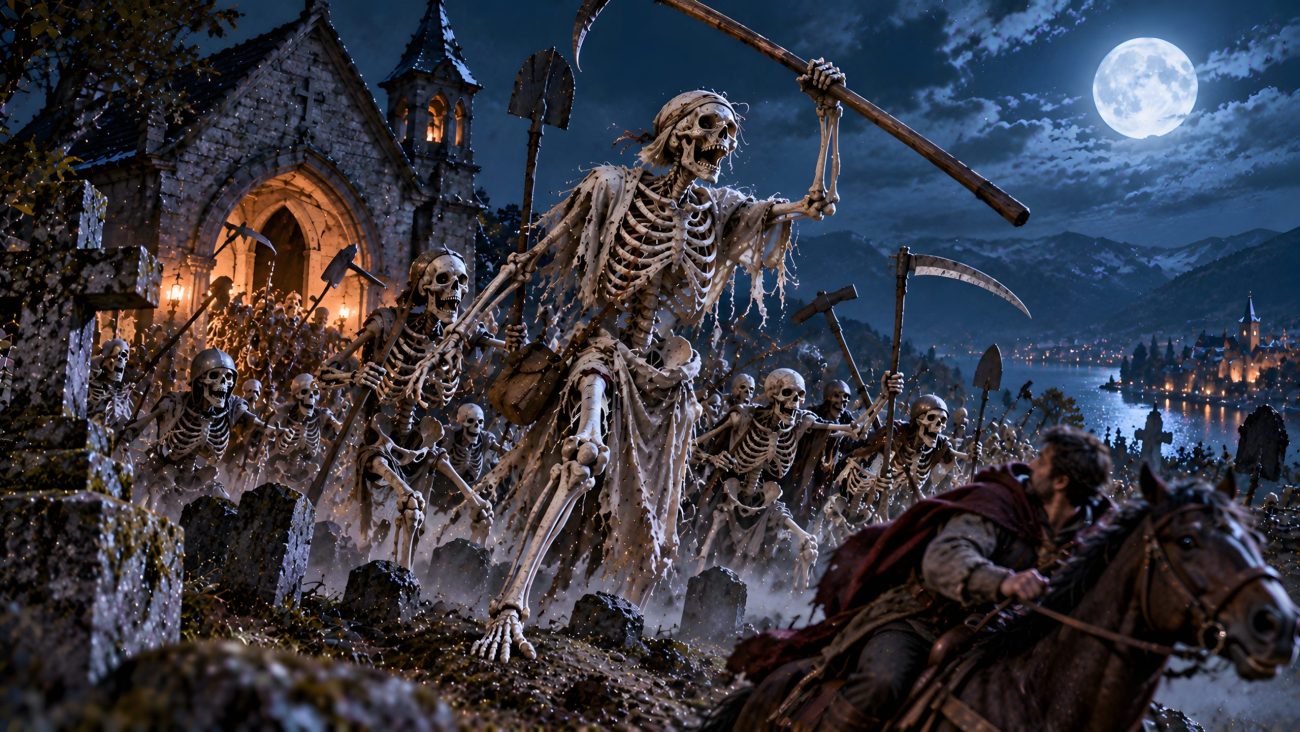
One day, the horseman was travelling alone when three sinister highwaymen lay in wait for him. When they began pursuing him, he fled towards a cemetery, hoping to find refuge near its ossuary. He dismounted and tried to enter, but the building was locked. Meanwhile, the three robbers tethered their horses to the cemetery wall and prepared to seize him.

Suddenly, the dead rose from their graves. Terrifying skeletons emerged, brandishing whatever tools they could find, including scythes, pickaxes, shovels, hammers, tongs, and threshing implements. An enormous crowd of bony warriors poured from the ossuary, led by a master baker carrying a long wooden pole.

Confronted by this unexpected army, the three highwaymen were overcome with terror and fled. The horseman was saved by the very souls for whom he had so often prayed.


Sources

SAGEN.at. (n.d.). Grateful Dead Skeleton. https://www.sagen.at/texte/sagen/schweiz/zug/baar.html