Ginseng

Tradition / Region: Japanese Mythology
Alternate Names: Ninjin no Kami, Ginseng Deity
Category: Plant, Deity


The Myth

In old illustrated books of curious gods, there is mention of a strange deity known simply as the Carrot.

This being was said to have come from Korea and to dwell in the form of a precious medicinal root. It was believed that the true plant possessed great power, able to cure even illnesses thought impossible to heal. Apothecaries prized it, and those who obtained it treated it almost like a divine object.

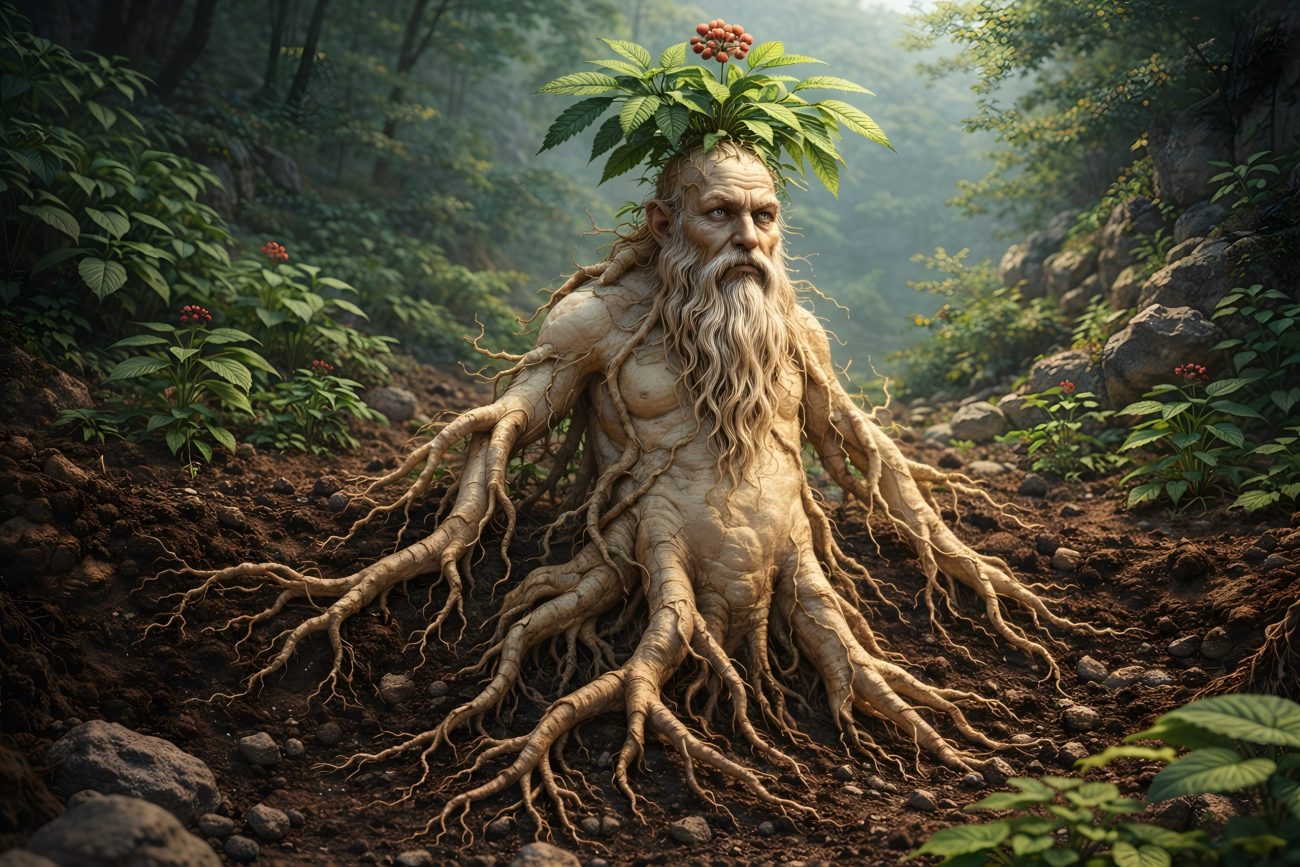
The deity was imagined with a human face bearing a foreign beard, while its body was formed from roots. Bundles of carrot-like tendrils served as its arms and legs, giving it the appearance of a spirit grown directly from the soil.

People also spoke of another plant with the same name found at ordinary greengrocers. This one, however, had no power at all. Though it looked similar, it was merely a vegetable and brought no blessings to those who ate it.

Thus the Carrot Deity was remembered as a spirit of the rare medicinal root — a being whose strength lay hidden in the earth, revered when genuine, but easily mistaken for the humble plant that shared its name.


Sources

Tyz-Yokai Blog. (n.d.). Ginseng. Retrieved March 1, 2026, from https://tyz-yokai.blog.jp/archives/1076296170.html
Devouring Gourd

Tradition / Region: Bantu Mythology, Congo Mythology
Alternate Names: Man-Eating Gourd, Usambara Gourd
Category: Plant


The Myth

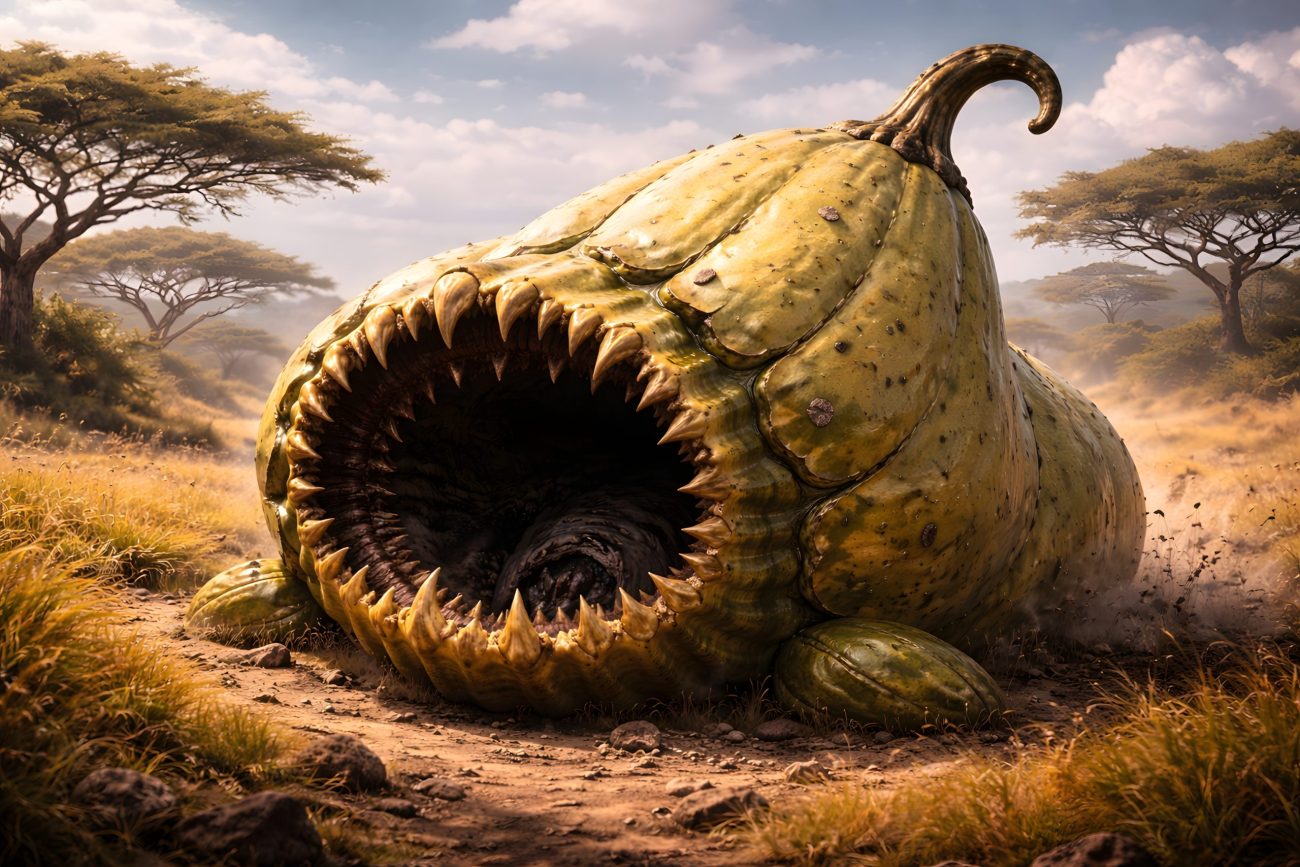
In some lands it is said that when a powerful sorcerer or ogre dies, the earth where they fall may grow strange plants. From that soil can rise gourds and pumpkins that are no longer harmless crops, but living beings with hunger and will.

One such gourd once grew in Usambara. A group of boys playing nearby noticed it swelling larger and larger. One of them laughed and said, “Look at how big that gourd is getting!”
To their shock, the gourd answered, “If you pluck me, I’ll pluck you!”

The boys fled and told their mother, but she did not believe them. Their sisters went to see for themselves and repeated the same words. This time the gourd remained silent, and the girls returned home mocking their brothers.

Since no one dared pick it, the gourd kept growing. It swelled until it was as large as a house. Then one day it tore itself free from the earth and began to move. Rolling through the village, it swallowed everyone it found, devouring men, women, and children alike. When no one remained, it rolled into a nearby lake and settled beneath the water.

Only one woman survived, and she was with child. She gave birth to a son, and the two lived alone among the empty huts. When the boy grew older, he asked about his father. His mother told him that the man had been swallowed by the great gourd now lying in the lake.

The boy vowed to avenge him. He went to the shore, where parts of the monster could be seen above the water, and shouted insults to provoke it.

“Gourd, come out!”

Angered, the creature rose from the lake and rolled toward him. But the boy was ready. He shot arrow after arrow into its body. When the tenth arrow struck, the gourd gave a thunderous roar that echoed across the land and fell dead. The boy cut it open, and all the villagers came out alive from inside it. In time he became a great leader among his people.

Other tales speak of similar plants. A pumpkin once grew over the grave of a wicked shapeshifter and echoed every word spoken to it until it swallowed those who came to cut it down. Among the Ronga, poisonous fruits are said to walk with arms and legs, carrying spears and shields.

Thus in these stories, the quiet plants of the earth may hide something terrible — and when they grow from places touched by evil, they may rise not to feed people, but to devour them.


Sources

A Book of Creatures. (n.d.). Devouring Gourd. Retrieved March 1, 2026, from https://abookofcreatures.com/?s=Devouring+Gourd


Muirdris

Tradition / Region: Irish mythology
Alternate Names: Sea Bramble, Sea Briar, Sínach / Sinech
Category: Plant,


The Myth

Fergus mac Léti, king of Ulster, loved the water more than any man of his land. He swam in rivers, lakes, and the sea, and none could match his strength beneath the waves.

One day, while he slept beside the shore, water spirits known as lúchorpáin crept upon him and tried to carry him into the sea. The chill of the water woke him, and he seized three of them before they could escape. To buy their freedom, the sprites granted him a wish. Fergus demanded the power to breathe underwater in seas, lakes, and pools.

They gave him enchanted earplugs and a tunic to wrap about his head, granting him the power he desired. But they warned him of one thing: he must never use these gifts at Loch Rudraige in his own land.

Fergus ignored the warning.

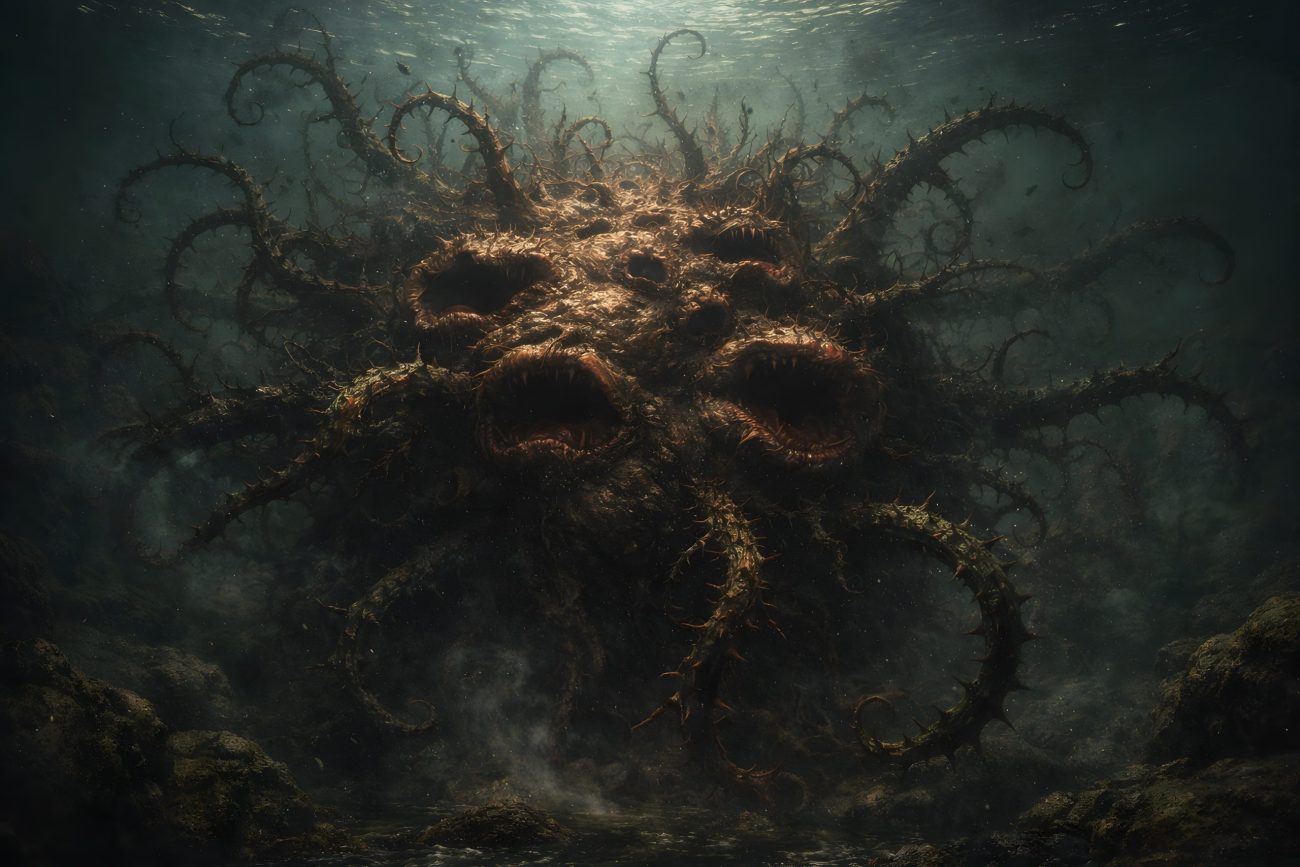
At Loch Rudraige he plunged beneath the surface, proud of his new power. There, in the dark water, he encountered a horror unlike any creature of land or sea. It was called the Muirdris — the Sea Bramble.

The monster loomed vast and shapeless, swelling and shrinking like a bellows. Its form bristled like a thornbush, covered in stings and branching growths. Its very appearance carried deadly power. When Fergus beheld it, the sight alone twisted his body, leaving him horribly disfigured. His mouth shifted to the back of his head, and he emerged from the water changed.

His court hid the truth from him for years, knowing that a king marked by such a blemish could not rule. They kept mirrors from him and guarded the secret until, after many years, the truth was finally revealed.

Enraged and shamed, Fergus returned alone to the loch to face the creature that had cursed him.

For a full day and night the waters churned as he battled the Muirdris beneath the surface. The lake boiled like a great cauldron. At last Fergus killed the monster with his bare hands and rose from the water holding its head in triumph.

But the struggle had taken all his strength. No sooner had he reached the shore than he fell and died, his victory won at the cost of his life.

Thus the Muirdris remained in story as a terror of the deep waters — a bramble of the sea whose mere sight could break a king, and whose defeat cost the hero everything.


Sources

A Book of Creatures. (n.d.). Muirdris. Retrieved March 1, 2026, from https://abookofcreatures.com/2016/09/23/muirdris/


Guā Jīng

Tradition / Region: Chinese Mythology
Alternate Names: Melon Spirit, Melon Essence
Category: Plant


The Myth

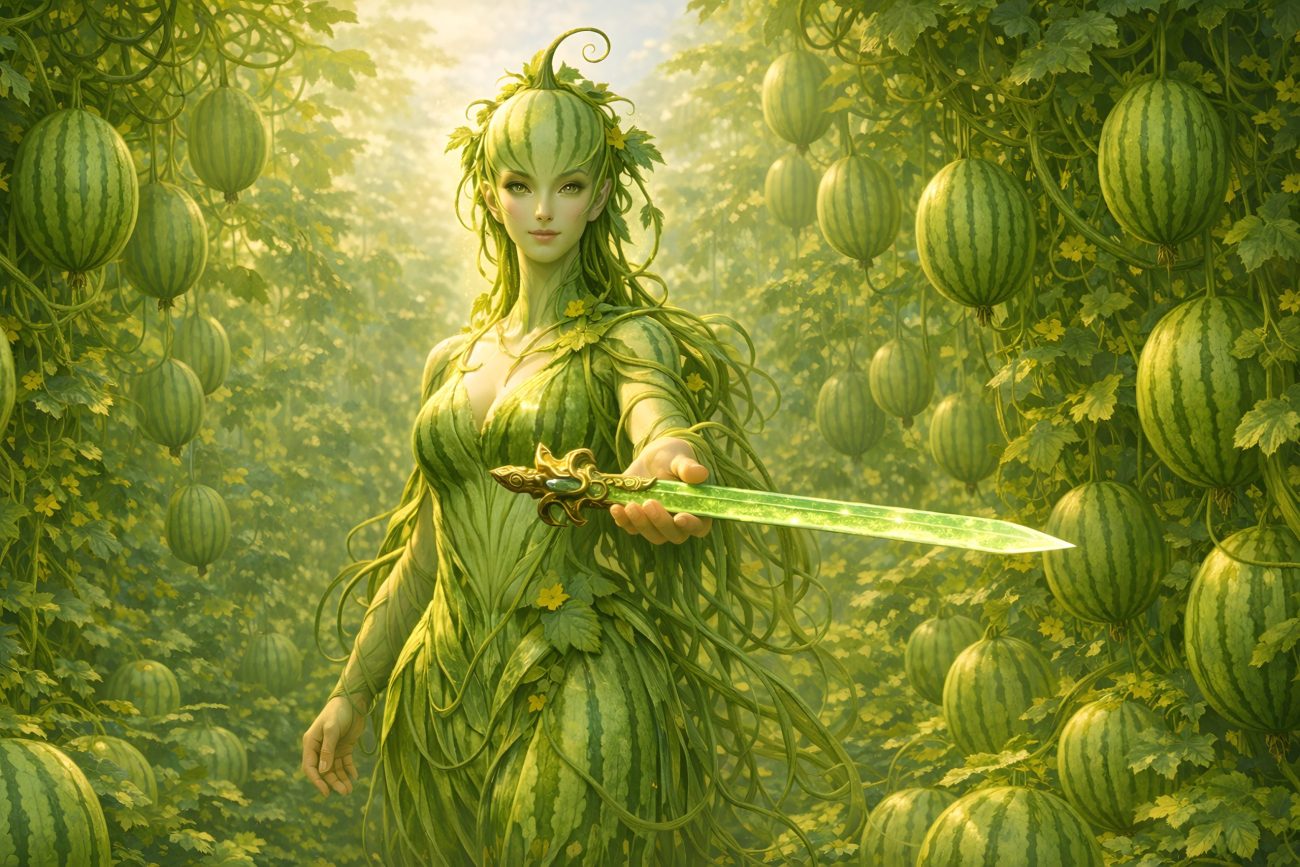
In old stories performed on the stage, there is mention of the Guā Jīng, the spirit of a melon that had taken on life and will of its own.

When Liu Zhiyuan and Li Sanniang were separated by hardship and intrigue, enemies plotted against Liu Zhiyuan and sent him into a melon garden. There he was told that a dangerous melon spirit lived among the vines and that he must destroy it.

Liu Zhiyuan went to the garden prepared for battle, expecting a monster to emerge from the plants. But the being he encountered was not what he had been led to believe. The melon spirit revealed itself as a creature transformed by heavenly powers, not a demon seeking harm.

Instead of fighting him, the spirit aided him. It brought armor for his protection and stood beside him in the trials that followed. For ten days it fought in the unseen realms, moving between the world of men and the world below, until at last it departed into the earth.

Before leaving, the Guā Jīng left behind a military book and a sword. With these gifts, Liu Zhiyuan gained the knowledge and strength he needed to face his enemies and continue his path.

Thus the melon spirit was remembered not as a creature of danger, but as one of hidden purpose — a plant transformed by heaven, appearing at a turning point to guide a man toward his destiny.


Sources

Wikipedia contributors. (n.d.). 瓜精. In Wikipedia. Retrieved March 1, 2026, from https://zh.wikipedia.org/wiki/%E7%93%9C%E7%B2%BE


The Silver Tree

Tradition / Region: Swiss Mythology
Alternate Names: Silver Mountain Tree
Category: Plant, treasure tree, hidden wonder


The Myth

On the steep rock face above the valley between Bärschis and Tscherlach, where the cliff falls sheer into the depths below, there runs a narrow line of damp stone. From a crevice on the western side of the wall, water sometimes seeps out, leaving a long, dark trail down the rock.

Long ago, a traveler from Venice passed along Lake Walen on his way from Weesen. Seeing the strange mark upon the cliff, he stopped and took out a mountain mirror. For a long time he studied the rock face through it, watching the place where the water emerged.

At last he lowered the mirror and spoke with certainty. Behind that wall, he said, not far from where the water flows, there stands a gigantic tree made entirely of pure silver. Whoever could reach it and claim it would gain immeasurable wealth.

Yet the cliff is steep, the way uncertain, and the place difficult to reach. No one has ever found the path that leads behind the stone. And so the silver tree is said to remain there still, hidden within the mountain, waiting for the one who dares to seek it.


Sources

SAGEN.at. (n.d.). Der silberne Baum. Retrieved March 1, 2026, from https://www.sagen.at/texte/sagen/schweiz/st_gallen/silberne_baeume.html


Appelman

Tradition / Region: Dutch Mythology
Alternate Names: Appelmannetje, Appleman
Category: Plant


The Myth

In the orchards of Limburg, people once warned children and adults alike not to eat too many apples. If someone grew greedy and devoured more than their share, they were told, “The Appelman will get you,” or, “The Appleman will come to collect what is owed.”

The Appelman was believed to be the spirit of the apple tree itself, a quiet presence watching over the orchard. He was not often seen, but people felt that he noticed when someone showed too much hunger or greed. Those who ignored the warning risked misfortune, illness, or some other small punishment sent by the spirit of the tree.

A similar belief was known in England, where people said the final apple on a tree should never be picked. That fruit was left behind as the share belonging to the Appleman. To take it would be to rob the spirit who guarded the tree, and doing so might bring bad luck upon the household.

Thus the Appelman was remembered as a guardian of balance in the orchard — a spirit who reminded people that the fruits of the earth should be taken with moderation, and that greed might awaken the watchful soul of the tree.


Sources

Abe de Verteller. (n.d.). Van aardmannetje tot zwarte juffer: Een lijst van Nederlandse en Vlaamse elfen en geesten. Retrieved March 1, 2026, from https://abedeverteller.nl/van-aardmannetje-tot-zwarte-juffer-een-lijst-van-nederlandse-en-vlaamse-elfen-en-geesten/


Sansho-birashi

Tradition / Region: Japanese Mythology
Alternate Names: Sansho Kurage
Category: Demon


The Myth

Among the women divers of Shima, who for generations descended into the sea to gather abalone and seaweed, there were stories of a feared presence beneath the water known as the Sansho-birashi.

When the divers worked along the reefs, they sometimes felt a sudden sting, sharp as a needle. At first it was only a small pain, but soon it spread through the body, tightening the chest and making it hard to breathe. Some said the shock could even cloud the mind, leaving the diver confused or helpless in the water.

In earlier times, such attacks were believed to be the work of a demon that lurked among the reefs. The creature was said to be small and difficult to see, nearly transparent, hiding where the seaweed cast shadows. It struck silently and vanished just as quickly.

Because of this, divers took precautions. They crushed the leaves of the sanshō plant and smeared the sharp-scented juice across their skin before entering the sea. Others tucked sprigs of sanshō into their hair as charms, believing the plant’s power would repel the unseen attacker.

Another creature feared in the same waters was called the Sansho Kurage, a jellyfish-like being said to drift beneath seaweed beds. Its sting was said to bring burning pain and fever, and it too became part of the stories told among the divers before they slipped beneath the waves.

Even as time passed and people learned ways to treat the stings, the name Sansho-birashi remained, a reminder that the sea was never empty, and that unseen things could still wait among the rocks for those who entered their realm.


Sources

Tyz-Yokai Blog. (n.d.). Sanshō-birashi. Retrieved March 1, 2026, from https://tyz-yokai.blog.jp/archives/1056156792.html


Basho no Sei

Tradition / Region: Chinese Mythology, Vietnamese Mythology
Alternate Names: Basho Essence, Banana Spirit, Plantain Ghost
Category: Plant


The Myth

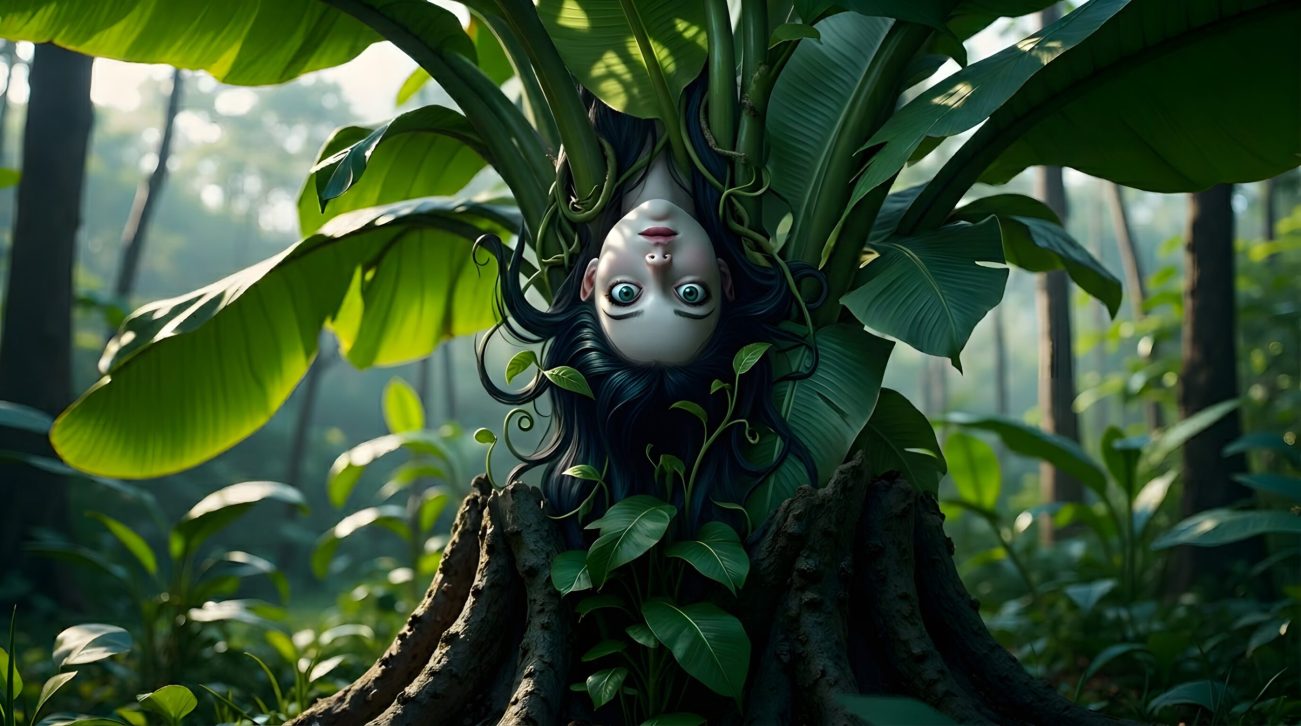
In old stories it is said that even plants may awaken into spirits if they endure long enough in the world. Among the most well known of these is the Basho no Sei, the spirit of the bashō, or plantain tree.

When a banana plant grows old and stands for many years, people believed it could gather strange energy from wind, rain, and moonlight. Over time, this energy would give rise to a spirit within the trunk and leaves. At last, the tree might shed its stillness and take on a ghostly life of its own.

Such spirits were said to appear most often in the form of a woman. In Chinese tales, the banana essence sometimes took human shape to approach travelers or householders at night. Some versions say it deceived people with beauty and soft speech, only to bring harm once it had drawn close.

One story tells of a young monk studying late into the night in a quiet temple in Shinshu. As he read, a beautiful woman entered and spoke gently to him, trying to charm him with her presence. The monk sensed something unnatural and grew angry. Grasping a short blade, he struck at her, and she fled into the darkness, leaving a trail of blood.

At dawn, the monk followed the drops of blood into the courtyard. There he found that the temple’s plantain tree had been cut deeply into its trunk, and its sap ran down like the blood he had seen. From this he understood that the visitor of the night had been the spirit of the bashō itself.

Such tales spread across lands and generations, and people came to say that the banana plant, though soft and harmless in appearance, might hide a spirit if it lived long enough. For this reason, groves of old plantains were sometimes regarded with caution, as places where a quiet tree might one day step into the world in human form.


Sources

Wikipedia contributors. (n.d.). 菟菟鬼. In Wikipedia. Retrieved March 1, 2026, from https://zh.wikipedia.org/wiki/%E8%8A%AD%E8%95%89%E9%AC%BC


Hayauri-dokke

Tradition / Region: Japanese Mythology
Alternate Names: Poisoned Melon of Seimei, Snake Melon
Category: Plant, Snake


The Myth

On the first day of the fifth month, during a time of ritual austerity for the regent Fujiwara no Michinaga, several notable men were gathered in seclusion. Among them were the onmyōji Abe no Seimei, a learned monk, a court physician, and the warrior Minamoto no Yoshiie.

That day, a tribute arrived from Nara — a gift of early melons. Yet because the court was observing strict ritual purity, doubt arose about whether the offering should be accepted. Michinaga ordered that the matter be divined, and Seimei was asked to determine whether the fruit was safe.

After examining the melons, Seimei declared that one among them carried danger. To confirm this, the monk began to chant prayers over the fruit. As his voice continued, one of the melons began to move on its own, swaying slightly as if something inside it stirred.

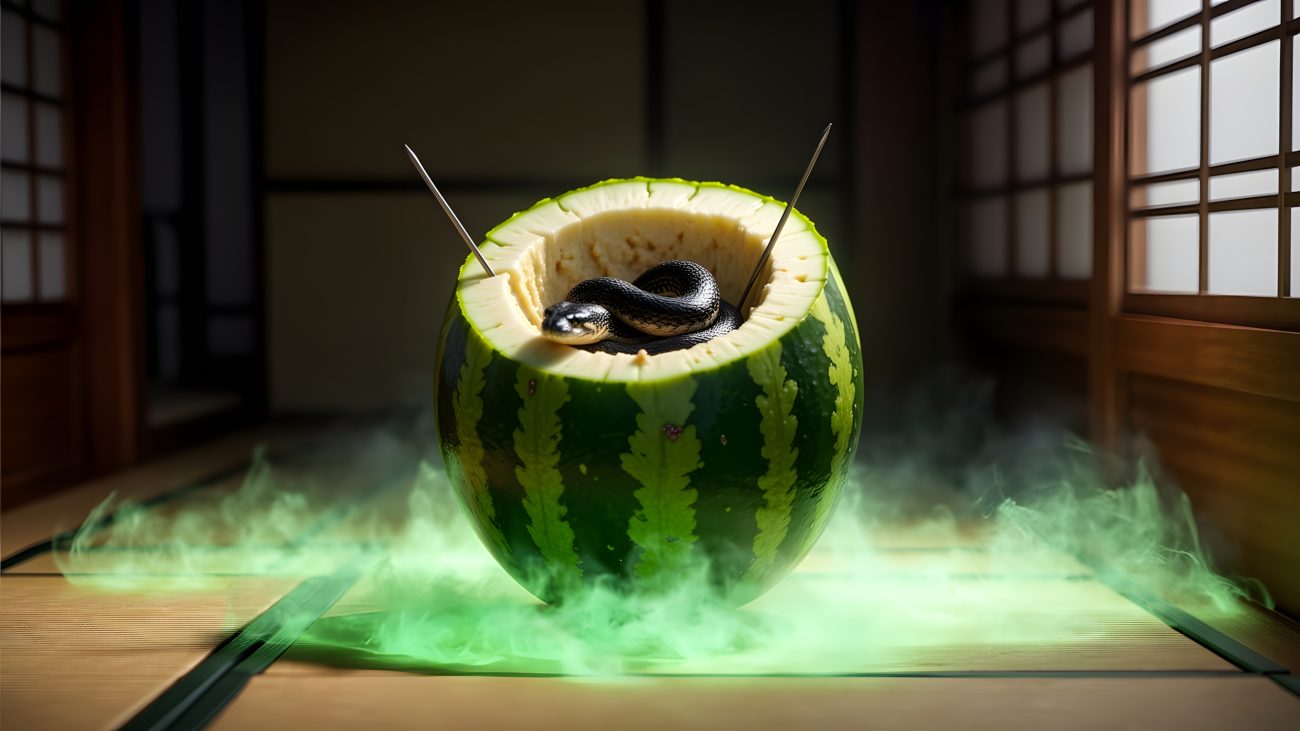
The physician was then ordered to treat the melon. He lifted it, studied it carefully, and without a word inserted two needles into its rind. At once the movement ceased.

Finally, Minamoto no Yoshiie was told to open it. Drawing his sword, he split the melon cleanly in two. Inside, coiled tightly in the flesh, was a small snake. The needles had pierced both of its eyes, and Yoshiie’s cut had neatly severed its neck.

The gathering understood that the fruit had concealed a hidden danger, and that only careful divination, prayer, and skill had revealed and destroyed it.

Another tale tells of a similar event at the imperial court, when melons sent from Yamato were examined by Seimei, a physician, and a monk. They too sensed an unnatural force within the fruit. As prayers were spoken, one melon split open, and a snake longer than a foot burst forth, dying at once.

Such stories spread widely, and the strange melons became known as signs that even the simplest offering from the earth might hide unseen forces within it, revealed only by wisdom, ritual, and a steady hand.


Sources

Tyz-Yokai Blog. (n.d.). Hayauri-dokke. Retrieved March 1, 2026, from https://tyz-yokai.blog.jp/archives/1084458875.html


Hitogataimo

Tradition / Region: Japanese Mythology
Alternate Names: Ningyoimo, Doll Potato
Category: Plant


The Myth

Among the foods said to nourish those who walk the path of immortality, there is a mysterious root known as the Hitogataimo, the Doll Potato. It was counted among the natural foods favored by hermits and ascetics who lived in the mountains and sought long life beyond the ordinary span of humans.

These seekers of immortality gathered their sustenance from the wilderness — nuts, herbs, mushrooms, and roots — believing that untouched natural foods carried the pure strength of heaven and earth. Among these, some were said to take on strange and meaningful shapes. One such wonder was the Doll Potato.

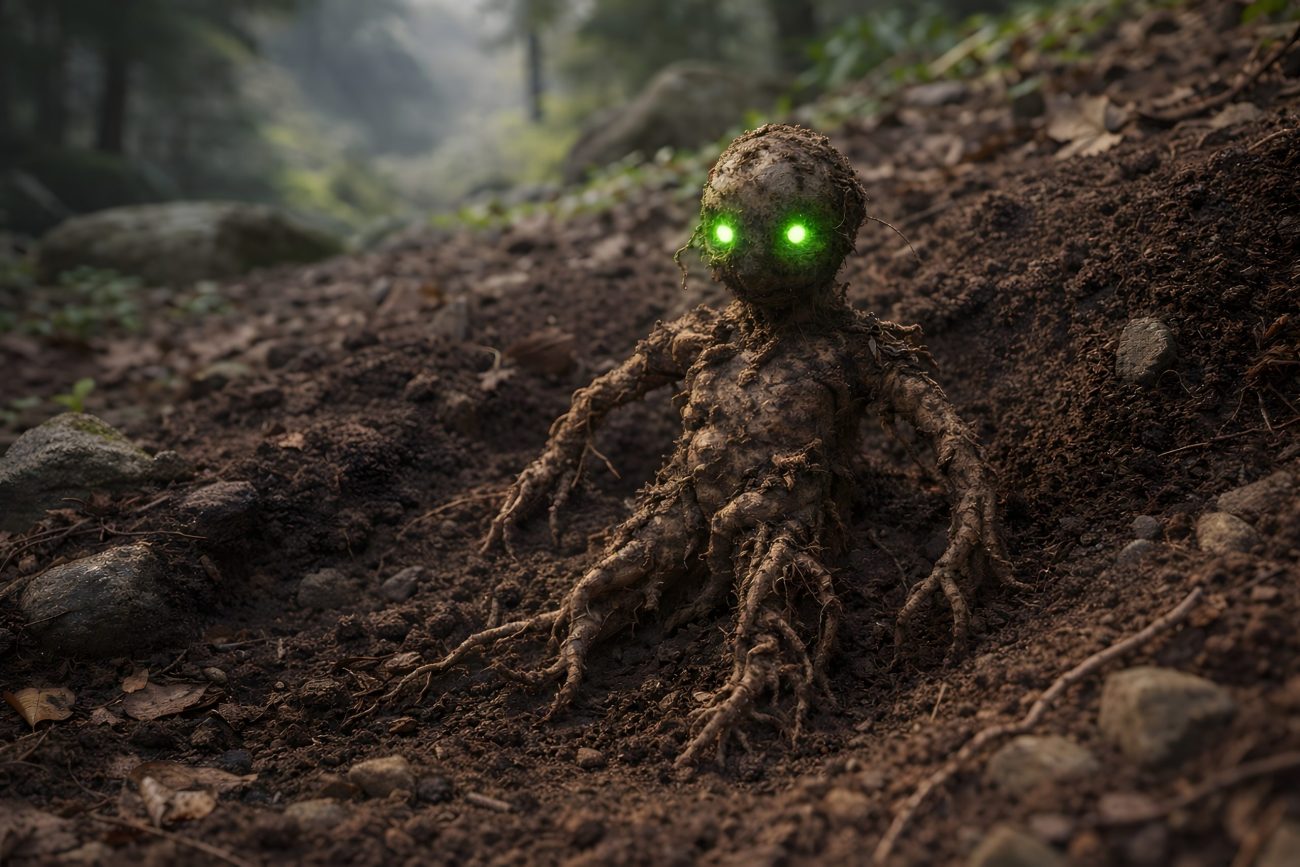
The root was said to resemble a tiny human figure, as though the earth itself had shaped it in the likeness of a person. Because of this form, it was thought to hold unusual vitality. Those who found it treated it with care, believing that it was not an ordinary food but something touched by the same mysterious forces that grant long life to immortals.

Stories say that hermits who discovered such a root would dry it, preserve it, or consume it in ritual fashion. Eating it was believed to strengthen the body, purify the spirit, and bring one closer to the hidden state of transcendence sought in the mountains.

Thus the Hitogataimo remained known as one of the secret foods of the immortals — a root shaped like a person, growing unseen in the earth, waiting for the one destined to find it.


Sources

Tyz-Yokai Blog. (n.d.). Hitogataimo. Retrieved March 1, 2026, from https://tyz-yokai.blog.jp/archives/1074589195.html