Tradition: Luxembourg Mythology
Alternative Names: Dragon of the Burgbrunnen, Dragon of the Castle Well
Category: Dragon
The Myth
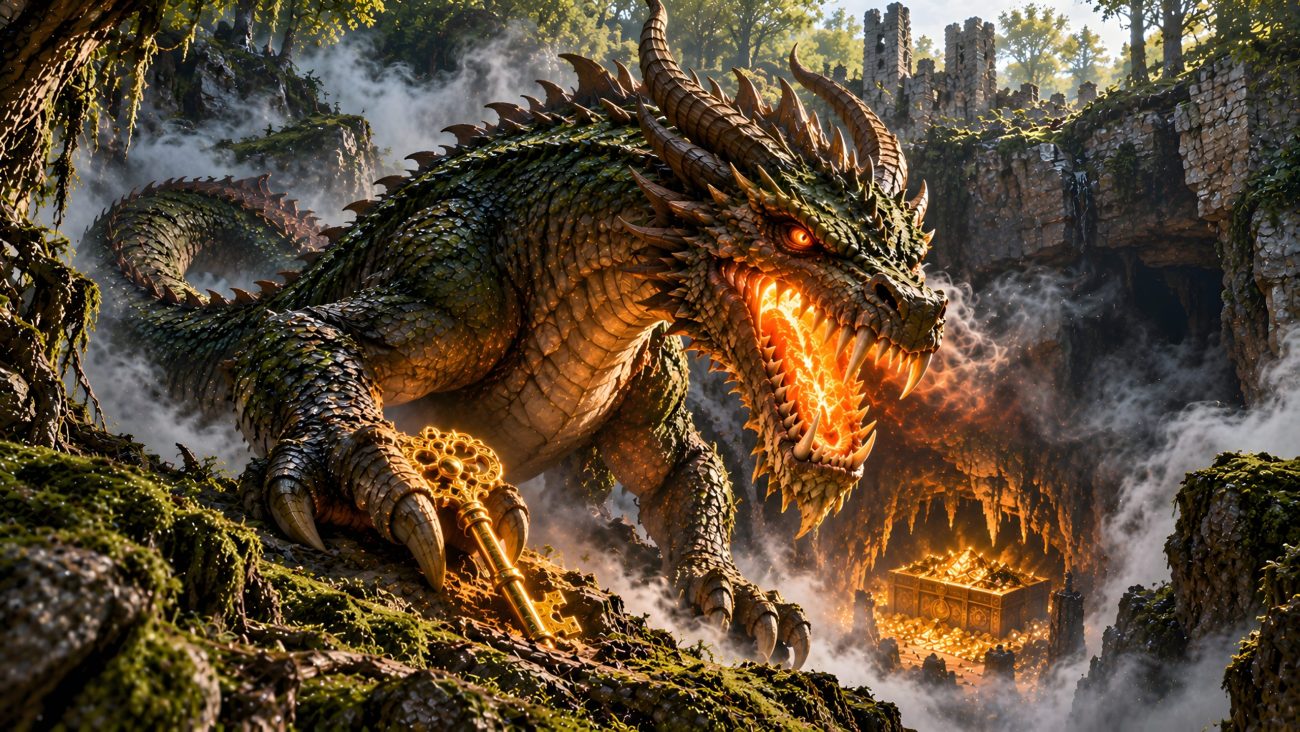
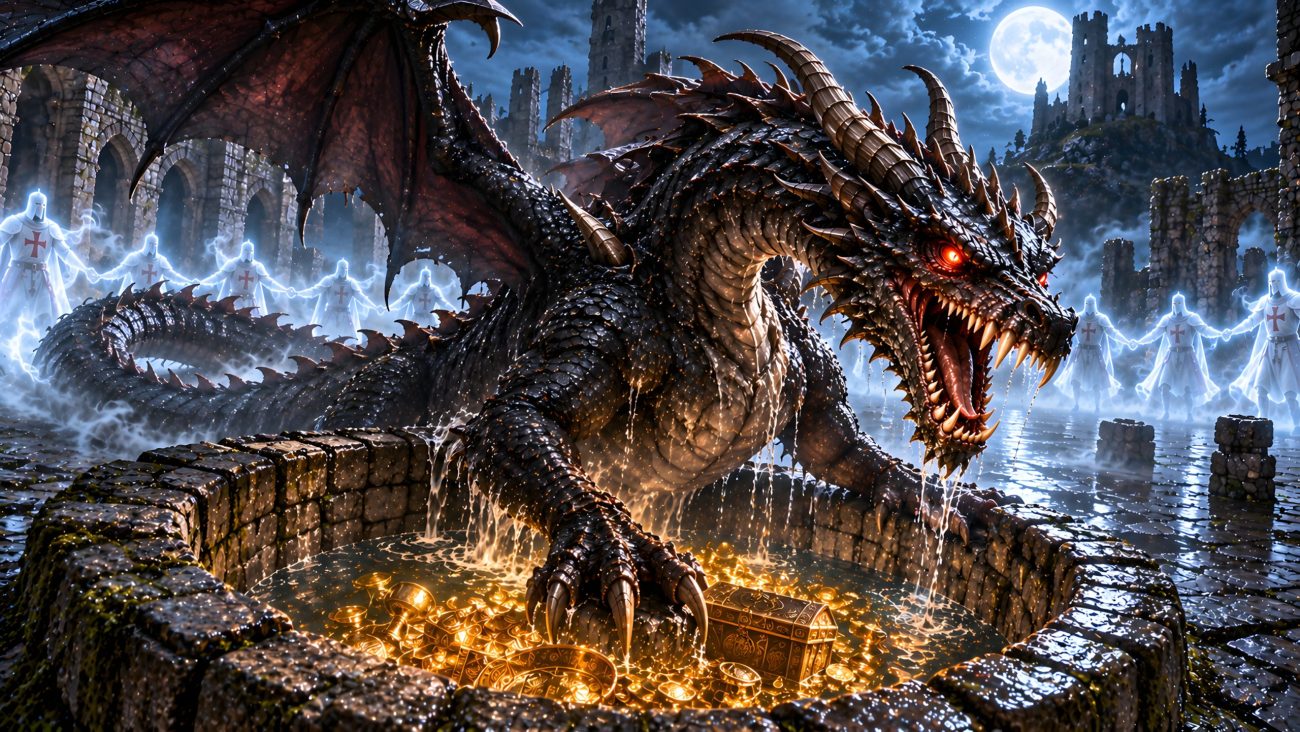
The dragon of the Burgbrunnen is the transformed spirit of a treacherous castle bailiff who guards a treasure at the bottom of the castle well. He appears as a supernatural guardian of the dark shaft, emerging from its depths on Good Friday at midnight.
On a dark and stormy night, the lady of Fels sat beside the cradle of her sleeping infant. Her thoughts wandered between her beloved child and her husband, who was away from the castle. Suddenly she heard the rattling and creaking of the drawbridge being lowered.
Believing that her husband had returned, she rushed to the window, hoping to see him through the darkness. Instead, a terrible uproar erupted in the courtyard. The sounds of clashing weapons, curses, and the groans of dying warriors filled the castle. A flash of lightning briefly illuminated the scene, revealing the truth: the Templars of Heringen, bitter enemies of her house, had seized the fortress and were already storming toward her chambers.
The woman seized her infant and fled toward a secret passage. But when she reached the courtyard, another flash of lightning revealed her pursuers closing in. With no escape left, she commended her soul to God and threw herself into the castle well with her child rather than allowing them to fall into the hands of the enemy.
Even the brutal victors were shaken by the courage of the mother. They pulled the bodies of the woman and her infant from the water. Then, seeking to shift the blame for the deaths of the innocent victims, they seized the castle bailiff—the man who had betrayed the fortress to them through bribery—and threw him into the same well.
The bailiff’s spirit was transformed into a dragon. Deep within the wet shaft of the castle well, he was condemned to guard the gold that had been the price of his betrayal.
Yet the dragon does not remain below forever. Every year, at midnight on Good Friday, he rises from the depths. On the deserted castle grounds, the Templars gather around the well and dance a hellish procession, led by the dragon who once betrayed the fortress.
Sources
La Fontaine, Edmond de. Luxemburger Sagen und Legenden. Luxemburg: Jos. Beffort, 1882.