Tradition / Region: German mythology
Alternative names: –
Category: Lion
The Myth
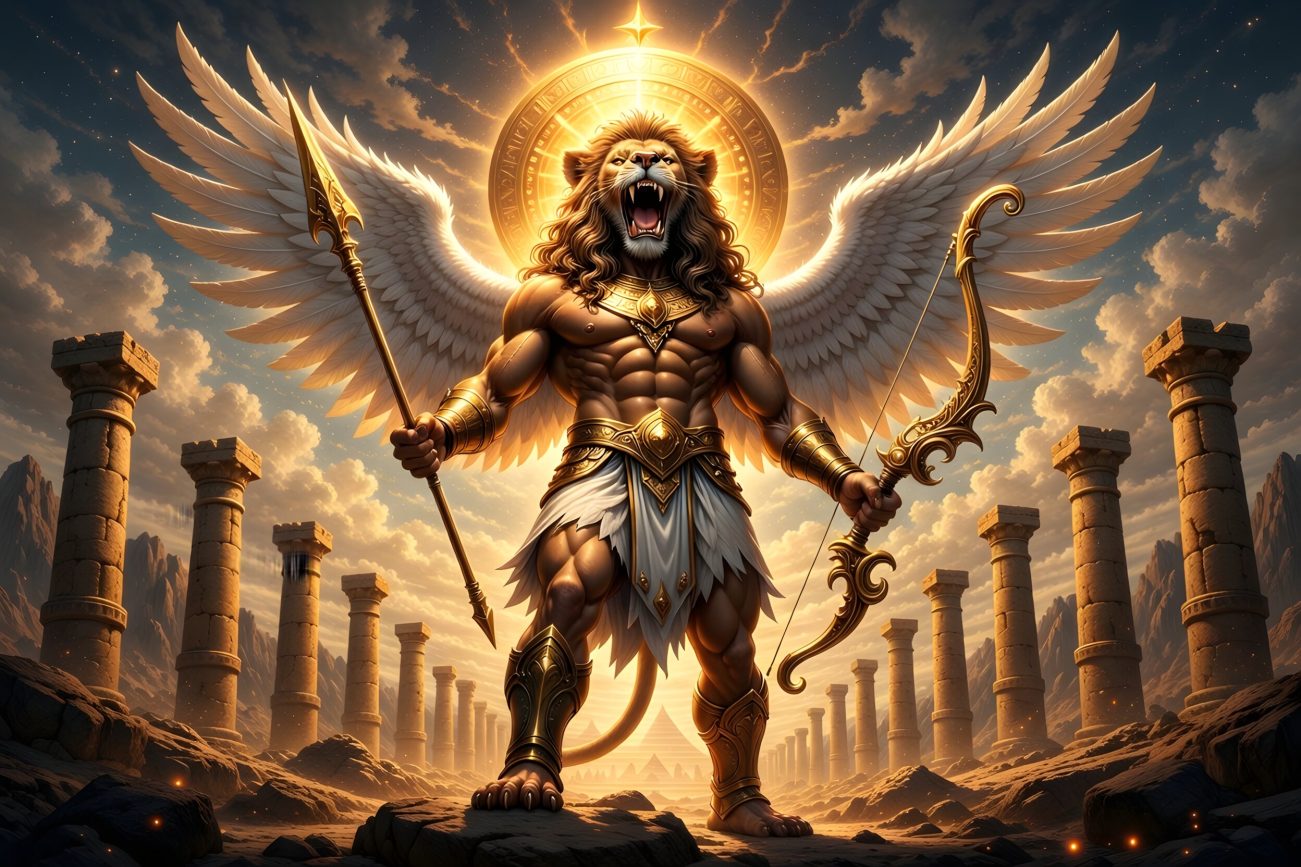
The Brunswick Lion is not merely a statue or heraldic emblem, but a moral creature shaped by medieval imagination. In the Heinrichssage, the lion emerges as an independent symbolic actor whose meaning extends far beyond the human figures around it. It embodies ideal loyalty, righteous strength, and natural justice—virtues medieval society believed could exist in animals in purer form than in people.
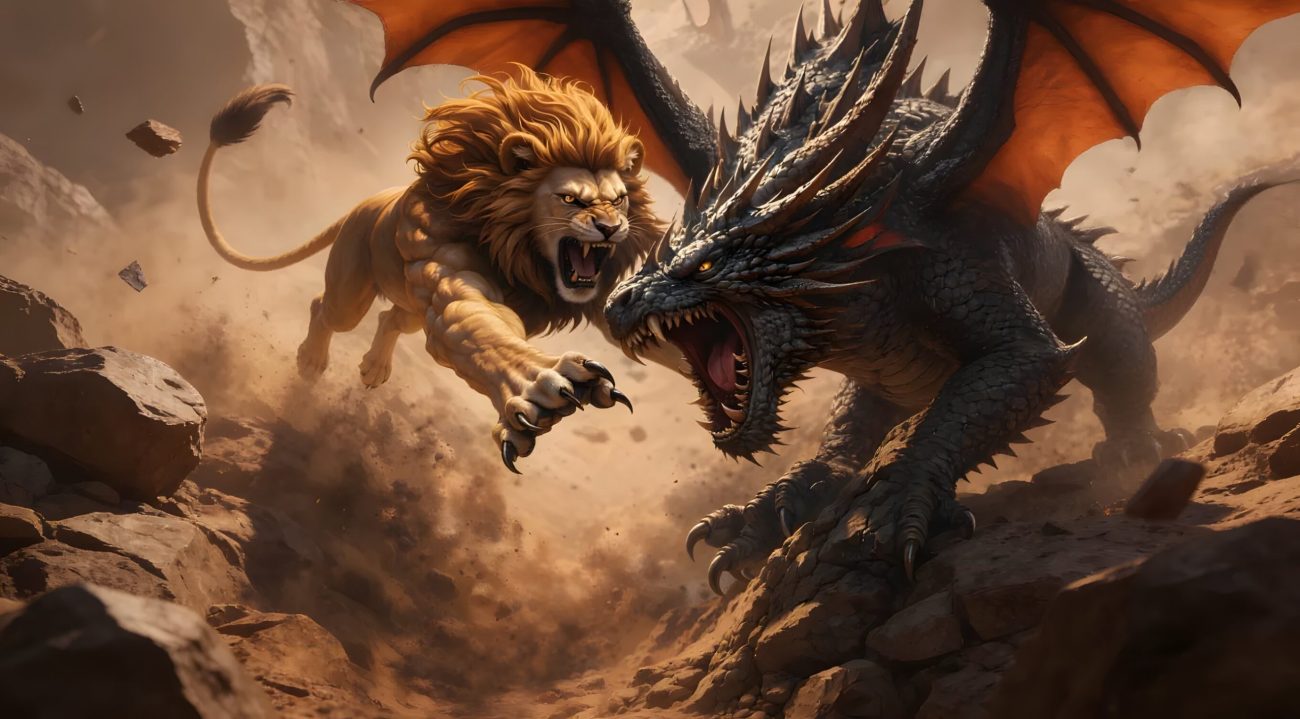
The lion first appears as a combatant against a dragon, a creature universally understood in medieval Europe as a manifestation of chaos, destructive violence, and spiritual corruption. By confronting the dragon, the lion positions itself as a defender of cosmic order. Unlike the dragon’s blind destruction, the lion’s violence is purposeful. It fights not from hunger or rage, but from an instinct aligned with justice, establishing it as a moral warrior.
After the dragon’s defeat, the lion’s role shifts from warrior to companion. Crucially, it is not subdued or enslaved; it chooses companionship. In medieval thought, such voluntary loyalty was the highest form of fidelity. The Brunswick Lion thus represents free allegiance—the idea that true authority is recognized rather than imposed. The lion follows not out of fear, but from recognition of shared virtue.
The legend’s defining moment comes after the death of its companion. The lion refuses food and withers away upon the grave, choosing death over a life without the bond it has sworn. This act transforms the lion into a symbol of absolute constancy. Its death is not weakness but proof of unwavering devotion, a loyalty that transcends reward, command, or survival. Medieval audiences would have read this as a moral judgment: true virtue is measured by sacrifice, not power.
Erected as a statue in the heart of Brunswick, the lion assumes an apotropaic role. Like guardian lions across Eurasia, it protects not through violence but through symbolic authority. Its stillness signifies permanence; its posture, vigilance. It stands as a reminder that strength must be restrained by virtue and power justified by loyalty.
Ultimately, the Brunswick Lion represents an ideal moral order in which courage serves fidelity and strength answers to devotion. It is remembered not as a slayer, but as a guardian; not as a conqueror, but as a witness—holding humanity to a standard it could rarely meet.
Interpretive Lenses
Religious Readings
Philosophical Readings
Psychological Readings
Esoteric Deep Dive
- Hermetic Deep Dive