Akaei

Tradition: Japanese Mythology
Alternative Names: 赤えい; あかえい
Category: Sea dweller


The Myth

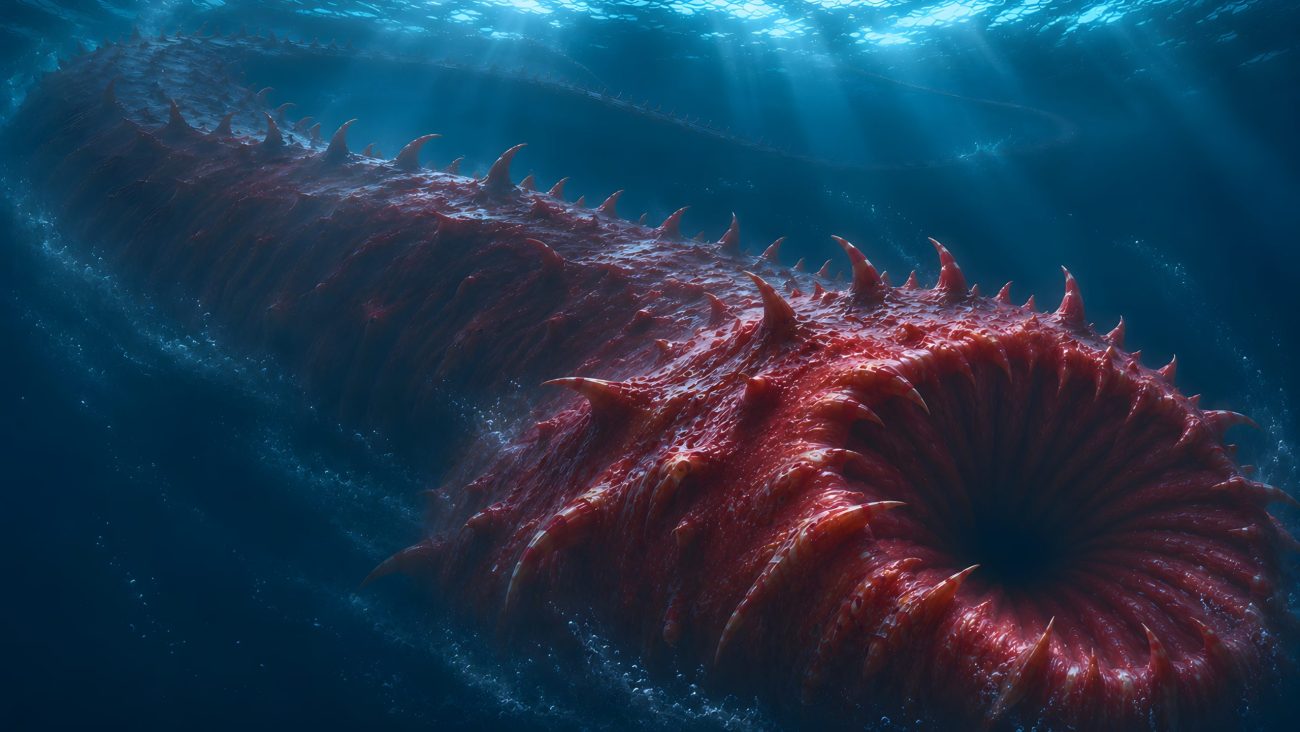
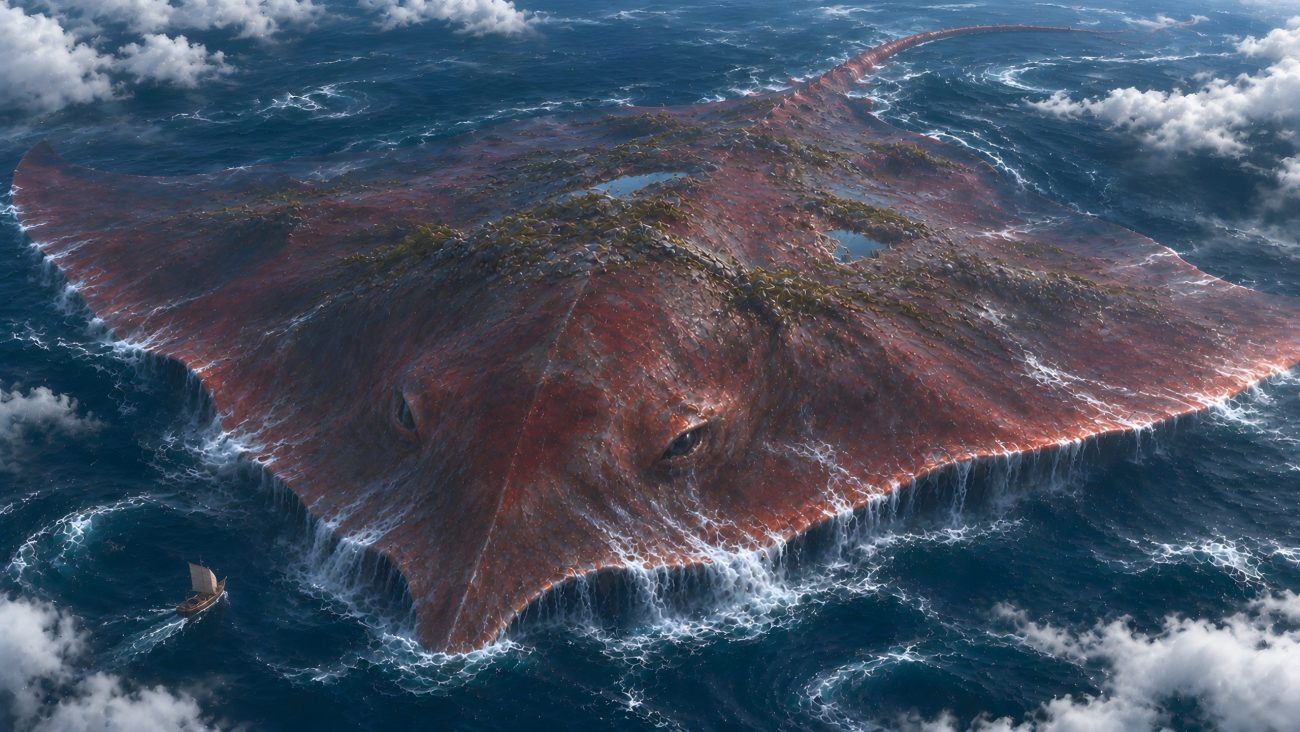
The Akaei, meaning “red stingray,” is a gigantic sea creature resembling an enormous stingray. It inhabits the Pacific Ocean and is said to grow between 10 and 12 kilometres in length, making it so immense that it can easily be mistaken for an island.

The Akaei spends most of its life resting on the ocean floor. Occasionally, it rises to the surface to shake off the sand and rocks accumulated on its back. Its enormous movements displace vast quantities of water, creating powerful whirlpools and maelstroms. Ships caught nearby risk being destroyed by the waves or dragged beneath the water when the creature sinks again.

A ship departing from Awa, at the southern tip of present-day Chiba Prefecture, is once blown off course by a violent typhoon. Although the sailors survive the storm, their vessel is badly damaged, forcing them to search for an island where they can make repairs.

After the storm passes, they discover what appears to be an uninhabited island and go ashore. There are no buildings or people, and the vegetation is strange, with algae covering the branches of trees and bushes. Pools of seawater containing various kinds of fish fill the cracks and crevices among the rocks.

The sailors explore the island for hours but find no sign of human habitation. When they attempt to drink from its ponds, they discover that the water is salty. Abandoning their search for repairs, they return to their ship and depart.

As soon as they leave, the island sinks beneath the sea. The sailors had unknowingly spent hours walking on the back of a gigantic Akaei.


Sources

Yokai.com. (n.d.). Akaei. https://yokai.com/akaei/

Umi Bōzu

Tradition: Japanese Mythology
Alternative Names: Umi Nyūdō, Umi Hōshi
Category: Sea dweller


The Myth

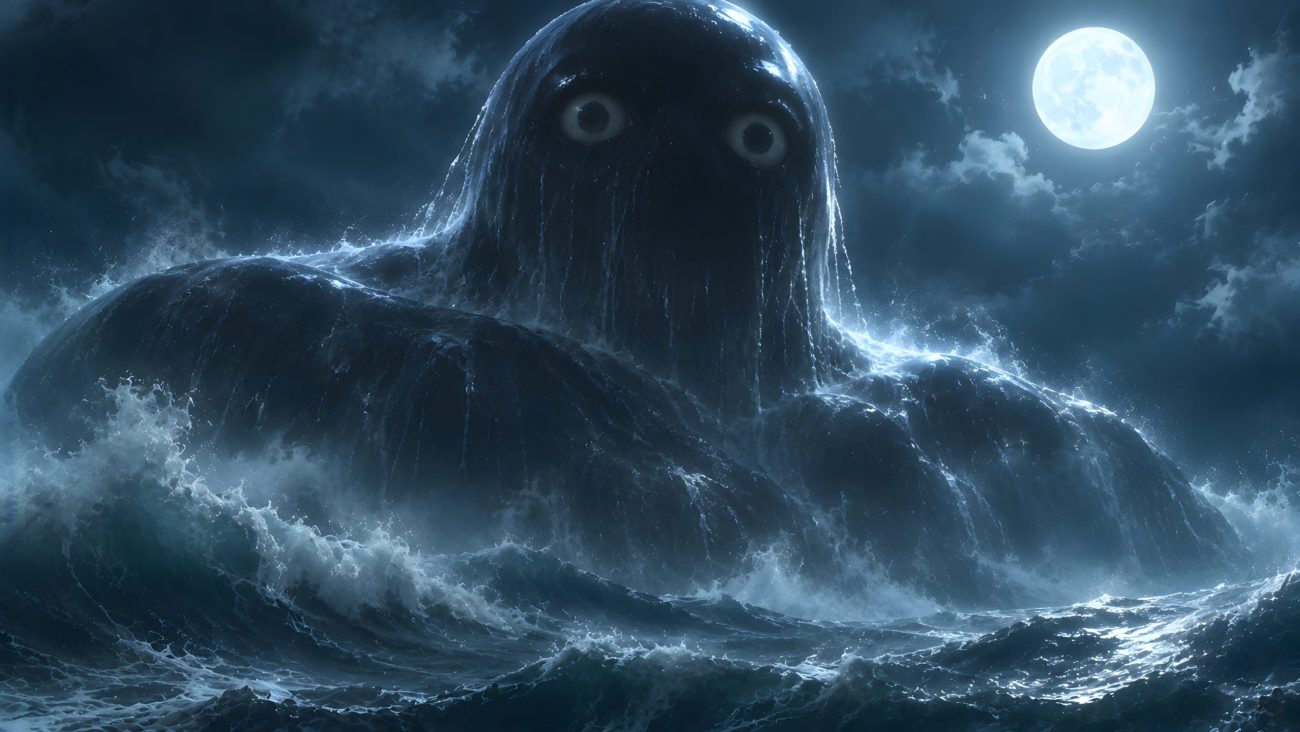
The Umi Bōzu, meaning “sea monk,” is a gigantic humanoid yōkai said to appear in the seas, oceans, and bays around Japan. Its true form is unknown, as witnesses generally see only its upper body emerging from the water. It has smooth, inky-black skin, a round, bald head resembling a monk’s scalp, and large, round eyes. Its size varies between accounts, with some describing it as only slightly larger than a ship, while others claim that its enormous head towers above the waves.

Umi Bōzu appear on seemingly calm nights. Without warning, the weather turns violent, and enormous waves rise around nearby vessels. The creature then emerges from the water and attacks ships, sometimes smashing their hulls with a single blow or gradually destroying them.

Some accounts describe the Umi Bōzu as a serpentine creature, while others portray it as a ghostly being resembling the ship spirits known as funayūrei. Like those spirits, certain Umi Bōzu demand that sailors hand over a barrel. They use it to scoop up seawater and pour it onto the ship, eventually sinking the vessel. Sailors can escape by offering a barrel with its bottom removed. Unable to collect any water, the creature repeatedly attempts to fill it, allowing the crew time to flee.

Some traditions claim that Umi Bōzu are the spirits of priests drowned at sea by angry villagers. Their deaths transformed them into terrifying ghosts. Other accounts describe them as ancient sea monsters dwelling in the depths of the Seto Inland Sea and regard them as ancestors of other aquatic yōkai.


Sources

Yokai.com. (n.d.). Umi bōzu. https://yokai.com/umibouzu/


Atuikakura

Tradition: Japanese Mythology
Alternative Names: Atsuuikakura; Atuy Kakura
Category: Sea dweller


The Myth

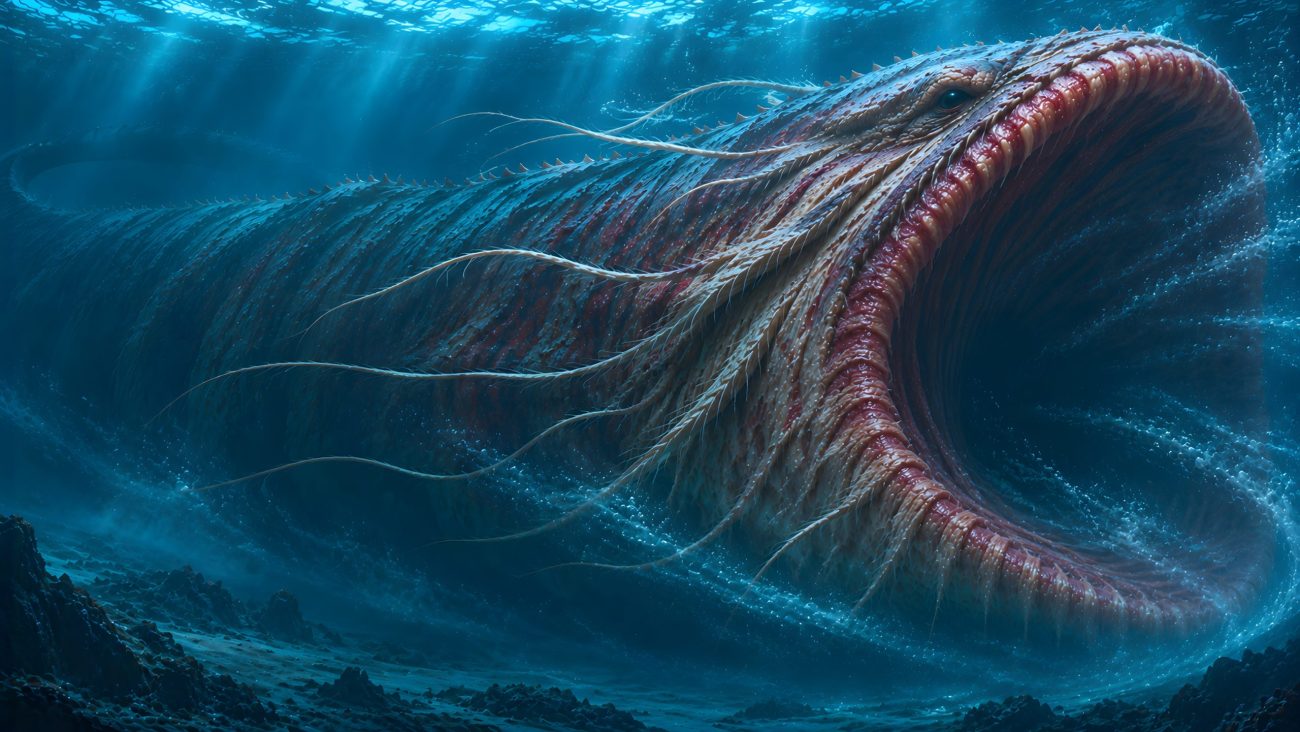
Atuikakura is an enormous sea cucumber said to live deep beneath the waters of Uchiura Bay in Hokkaido, Japan. Its name is the Japanese transcription of the Ainu term atuy kakura: atuy means “sea,” while kakura means “sea cucumber.”

Atuikakura is rarely seen because it spends most of its time underwater. Occasionally, it attaches itself to pieces of driftwood and floats to other parts of the bay. It is mainly a scavenger, although it is also said to consume ships.

Despite its elusive nature, Atuikakura can be dangerous to vessels. When startled, it thrashes wildly, smashing or capsizing nearby ships. It may also mistake a wooden boat for driftwood, attach its mouth to the vessel, and drag it beneath the waves.

According to local legend, Atuikakura originated from a mouru, the traditional undergarment worn by Ainu women. After a mouru washed down a river and into Uchiura Bay, it settled on the seabed and transformed into a gigantic sea cucumber.


Sources

Yokai.com. (n.d.). Atuikakura. https://yokai.com/atuikakura/


Atui Koro Ekashi

Tradition: Japanese Mythology
Alternative Names: Old Man of the Sea
Category: Sea dweller


The Myth

Atui Koro Ekashi, meaning “Old Man of the Sea,” is a monstrous creature mentioned in tales from the Ainu people of Hokkaido, Japan. It resembles an enormous bag and possesses a powerful suction force generated by its mouth, allowing it to swallow whales and ships into its swollen body.

One tale describes a boat that encountered the creature and was drawn towards its gaping mouth. To escape, one of the sailors threw his loincloth into the monster’s mouth. The Atui Koro Ekashi was apparently repulsed by the offering, causing it to release the boat and allowing the sailors to escape.


Sources

A Book of Creatures. (2016, December 16). Atui Koro Ekashi. https://abookofcreatures.com/2016/12/16/atui-koro-ekashi/


Ushi-oni

Tradition: Japanese Mythology
Alternative Names: Ushioni, Ushi-oni (牛鬼)
Category: Sea dweller, Cow


The Myth

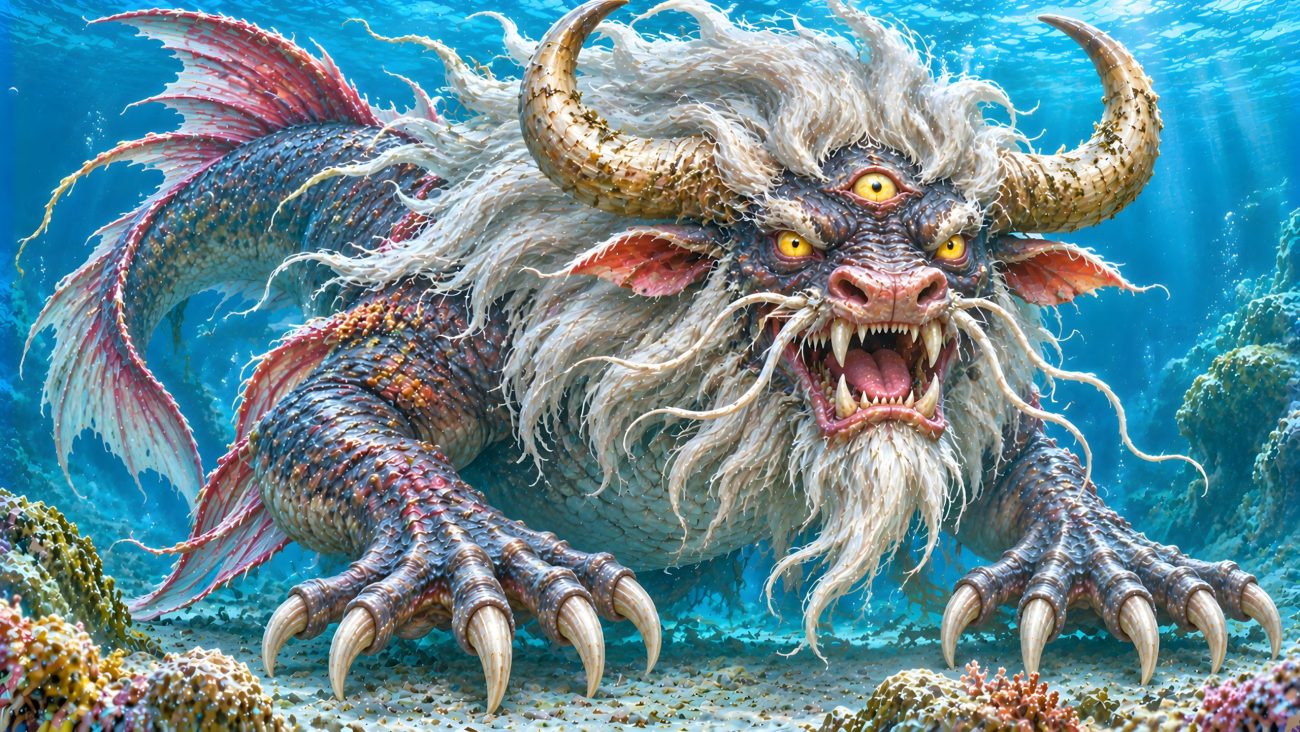
The Ushi-oni is a sea monster associated with the Iwami region, particularly the coastal area around Yunotsu in Shimane Prefecture. One depiction shows it as a beast-like creature with three eyes and a thick mane.

The Ushi-oni sleeps on the seabed during the day and emerges at night to pursue fishing boats. It devours the fish caught by the fishermen, and if these are not enough to satisfy its hunger, it attacks nearby homes. However, the creature is said to flee when someone displays a protective amulet.


Sources

Tyz-Yokai. (n.d.). Ushi-oni. https://tyz-yokai.blog.jp/archives/1078437625.html


Nurarihyon

Tradition: Japanese Mythology
Alternative Names: Nurarihyon (海坊主 variant)
Category: Sea dweller


The Myth

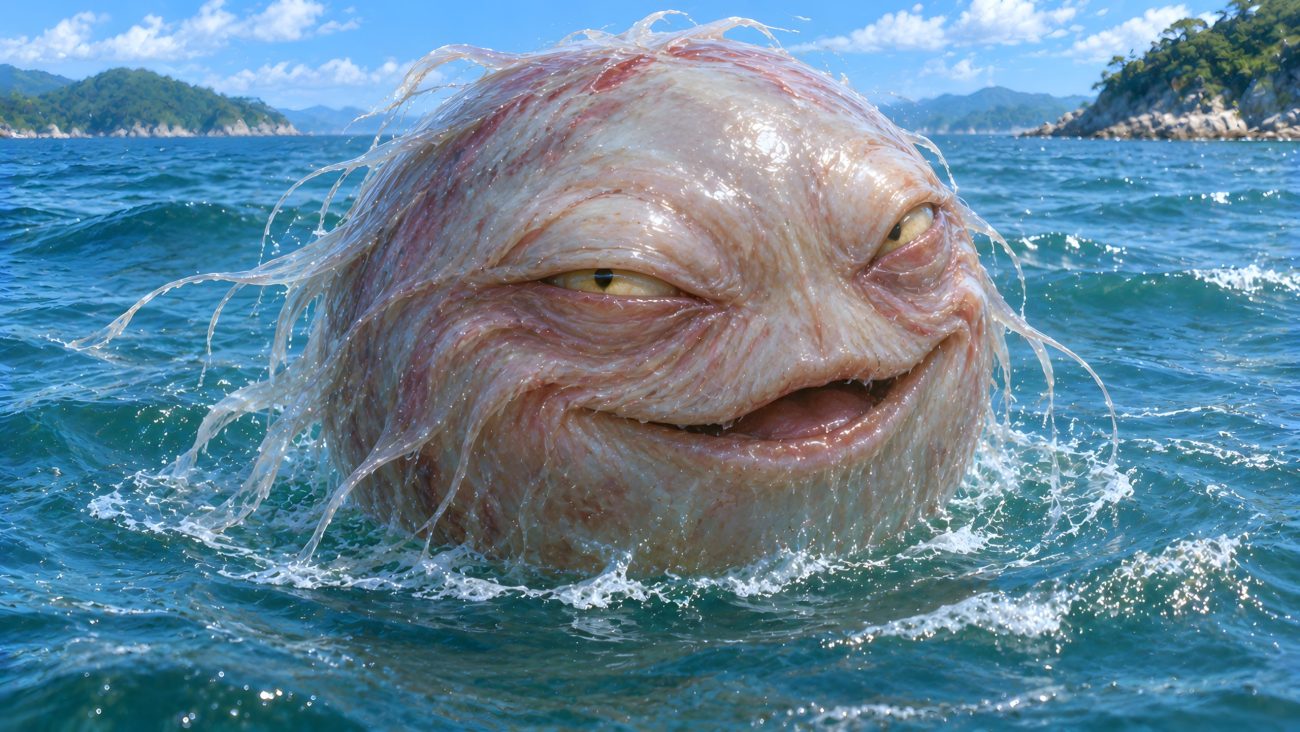
The Nurarihyon is a strange sea yokai found in the Seto Inland Sea, particularly around the Bisan Strait between Okayama and Kagawa Prefectures. It appears as a round ball approximately the size of a human head, floating on the surface of the water.

When sailors approach in their boats and attempt to catch it, the ball slips smoothly out of their grasp and sinks beneath the waves. Moments later, it resurfaces nearby, repeatedly evading capture and seemingly teasing those who pursue it.


Sources

Tyz-Yokai. (n.d.). Nurarihyon. https://tyz-yokai.blog.jp/archives/1064308285.html


Hanamō no Kai

Tradition: Japanese Mythology
Alternative Names: 無鼻の怪
Category: Sea dweller


The Myth

Hanamō no Kai is a supernatural phenomenon recorded in the Irou Setsuden, a collection of Ryukyuan legends. It is associated with a coastal location in Uesato, Kiyanu Village, Shimajiri District, Okinawa Prefecture.

At the foot of the area known as Arasaki, a narrow point of land extended approximately seven or eight ken into the sea. This place was commonly called Hanafugī Ibe.

According to the legend, anyone who insultingly shouted “Hanamō, Hanamō” at this location would immediately provoke a terrifying disturbance. Enormous waves would swirl around the coast, thunder would roar, and lightning would flash across the sky.

Some people doubted the story and called out the insult to test whether anything would happen. However, they reportedly experienced the same frightening phenomenon described in the legend.

The term hanamō means “without a nose” or “missing a nose” and appears to have been used mockingly toward people with nasal disfigurement, including those suffering from syphilis.


Sources

Tyz-Yokai. (n.d.). Hanamo-kai. https://tyz-yokai.blog.jp/archives/1010655073.html


Samebito

Tradition: Japanese Mythology
Alternative Names: Kōjin (鮫人)
Category: Sea dweller


The Myth

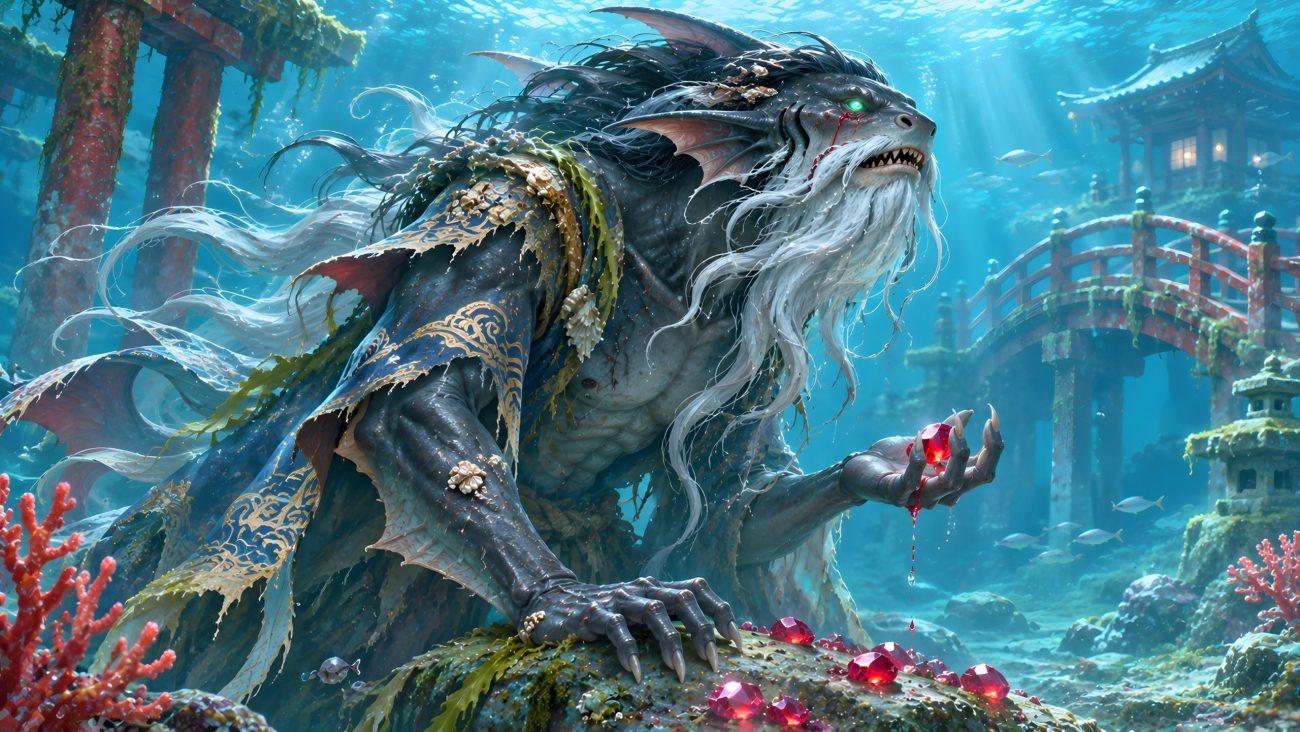
The Samebito is a shark-like humanoid with inky black skin, emerald-green eyes, a frightening face, and a beard resembling that of a dragon.

In the story, a man named Tōtarō encounters the creature beneath a bridge. Despite its terrifying appearance, the Samebito is gentle. It explains that its former master, Ryūjin, banished it from the sea as punishment for a minor fault. Tōtarō takes pity on the creature and allows it to live in a deep pond in his garden.

Later, Tōtarō falls in love with a beautiful woman, but her family demands ten thousand jewels as a betrothal gift. Unable to afford them, he becomes gravely ill from despair. When the Samebito learns of his condition, it begins to weep tears of blood. Each tear transforms into a precious ruby when it touches the ground. The jewels allow Tōtarō to marry the woman.

After the Samebito has finished weeping, the dragons pardon it, and it is welcomed back into the sea.

Other accounts describe the Kōjin as aquatic beings resembling merfolk who inhabit the South China Sea. They are said to spend their time weaving at looms, and their tears turn into precious jewels.


Sources

Wikipedia contributors. (n.d.). Samebito. Wikipedia. https://en.wikipedia.org/wiki/Samebito


Rashima

Tradition: Japanese Mythology
Alternative Names: Rasima, Rosma, Rashime
Category: Sea dweller


The Myth

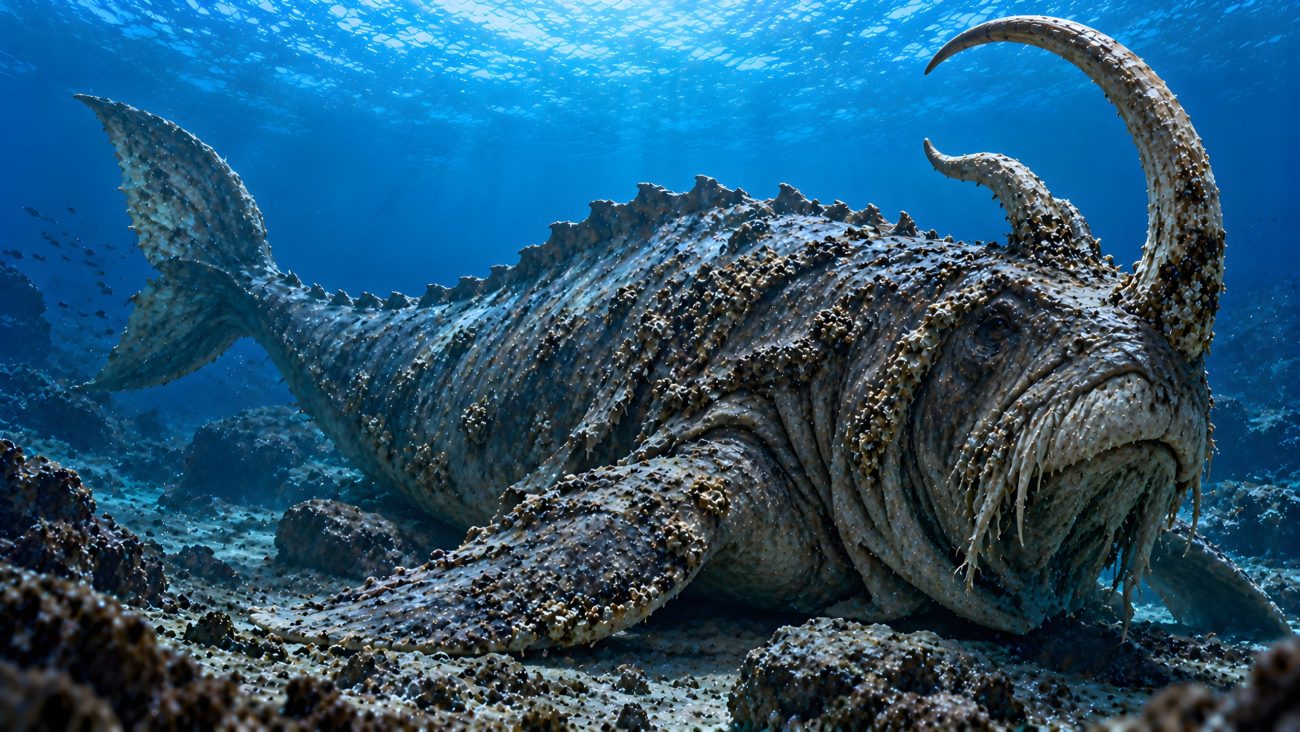
Rashima is a large sea creature measuring approximately four jō in length. It has a short tail, extremely tough skin that cannot be pierced, and a hooked horn growing from its forehead. It usually lives on the seabed and rarely comes to the surface.

Occasionally, Rashima comes ashore to sleep. It hooks its horn onto a coastal rock and remains asleep throughout the day.

An illustration of Rashima depicts it with two horns on its head and a fish-like lower body ending in a tail fin.


Sources

Tyz-Yokai. (n.d.). Rashima. https://tyz-yokai.blog.jp/archives/1070581548.html


Kaijin

Tradition: Japanese Mythology
Alternative Names: —
Category: Sea dweller


The Myth

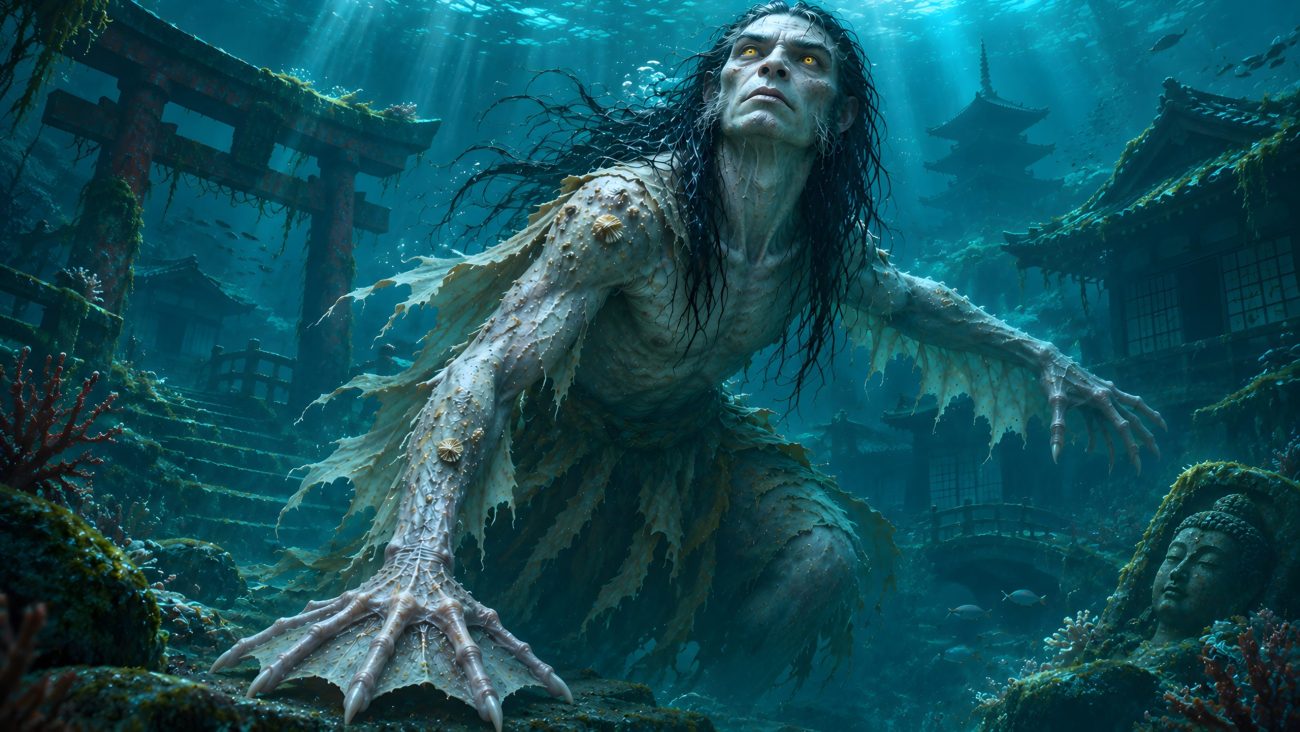
The Kaijin is a humanoid creature said to live beneath the sea. It closely resembles a human, with hair, sideburns, and eyebrows, but has webbing between its fingers like a waterbird. Its flesh and skin hang loosely around its waist, forming a shape resembling a pair of traditional Japanese trousers called hakama.

The Kaijin cannot speak and refuses to eat or drink, even when food and drink are offered. Despite this, it can survive for several days after coming ashore.


Sources

Tyz-Yokai. (n.d.). Kaijin. https://tyz-yokai.blog.jp/archives/1010654246.html