Tradition: Icelandic Mythology
Alternative Names: Shell Monster; Fjörulalli (a smaller variant)
Category: River dweller
The Myth
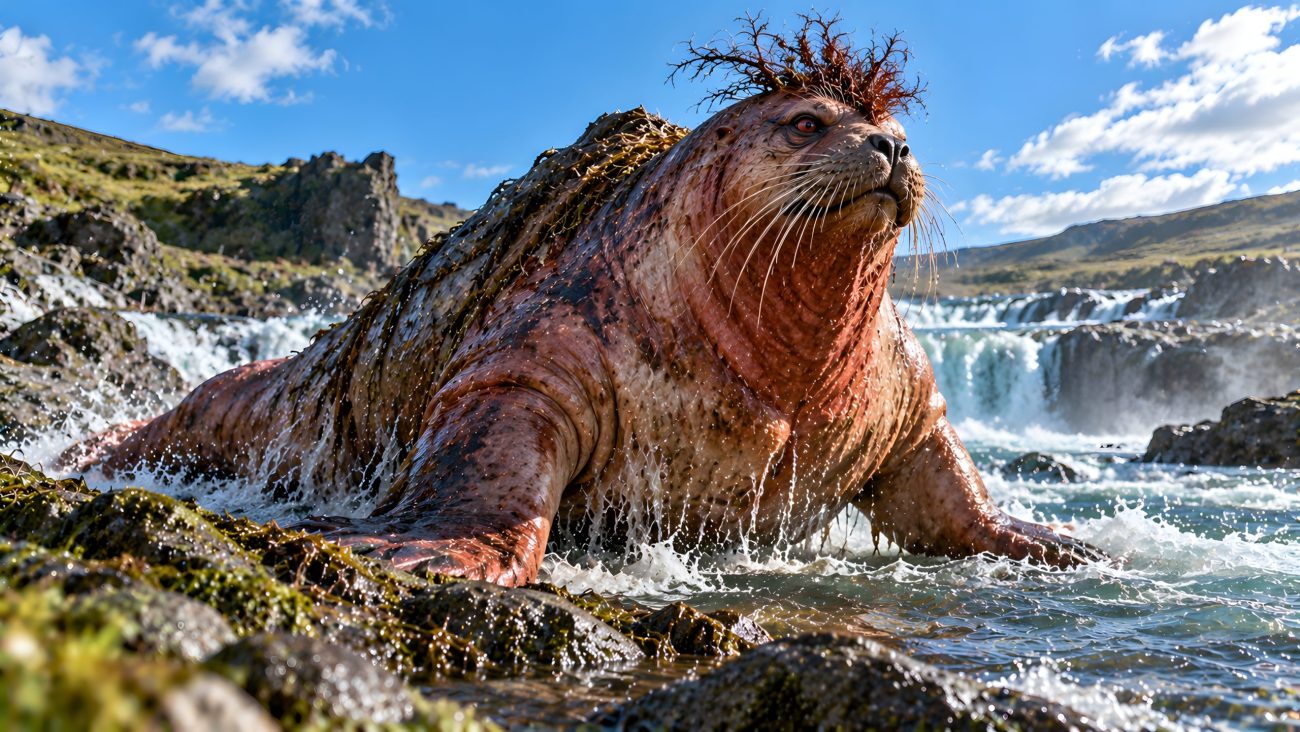
The Skeljaskrímsli, meaning “shell monster,” refers to a group of creatures in Icelandic folklore associated with beaches and shorelines. Accounts consistently describe a hump on the creature’s back and a coat of shells that rattles as it walks. Sightings have been reported along the coasts of all the main regions of Iceland, although one account from Glúmsstaðir farm in Fljótavík, Hornstrandir, describes a freshwater specimen.
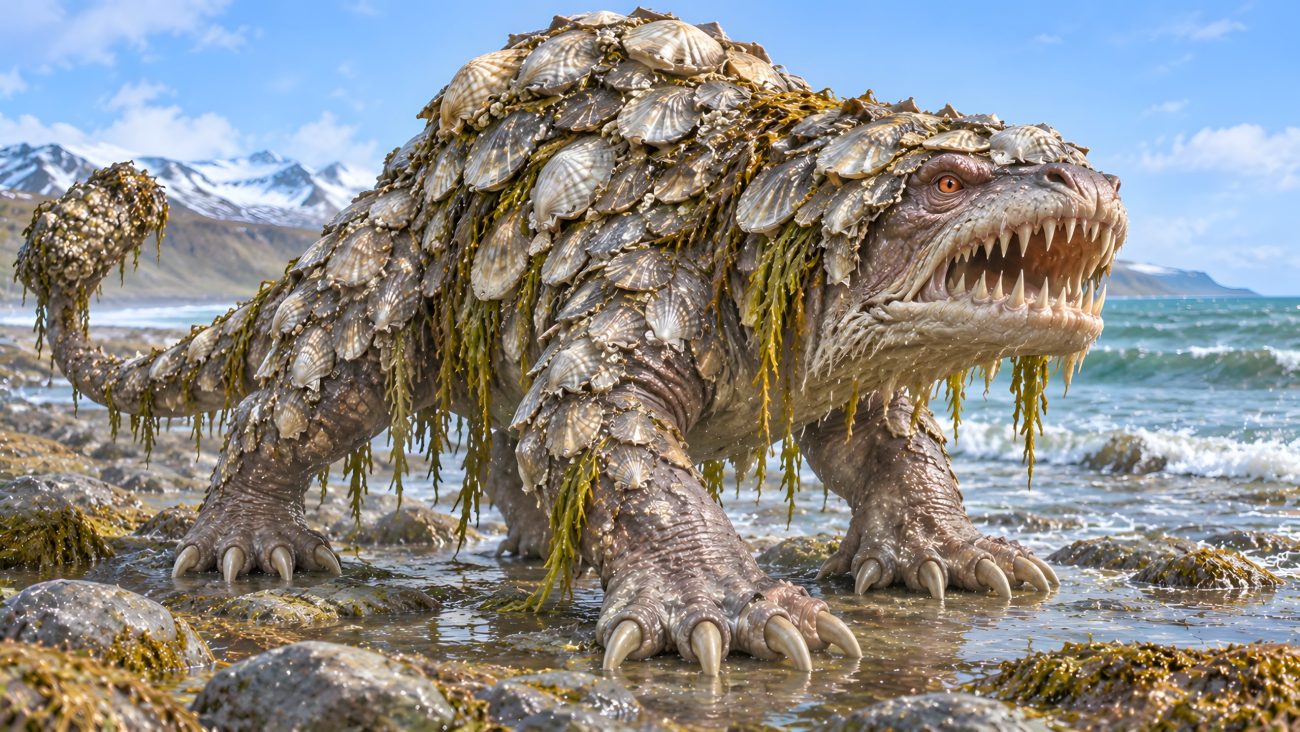
According to Hlidberg and Aegisson, the Skeljaskrímsli is a bulky, powerfully built, four-legged marine creature, approximately the size of a yearling bull calf or a huge horse. It has a broad neck, impressive jaws and teeth, reddish eyes, and sometimes a phosphorescent glow coming from its mouth. Its long tail ends in a lump, while its short, strong legs have circular feet armed with large claws.
Its body is covered in a thick, reflective coat of shells or flaky scales that rattle and scrape against one another as it moves. The creature also has a powerful stench, and its blood is poisonous.
Skeljaskrímsli live in the sea and crawl onto shore during dark, moonless nights in the northern winter. They are often seen before or after periods of bad weather and storms. Attracted to light, they leave deep gouges in farmhouse doors. Most weapons are ineffective against their defenses.
One farmer fought a Skeljaskrímsli until it tired and returned to the sea, but the farmer subsequently developed leprosy. Another farmer managed to wound one, only to be struck by its poisonous blood, which caused his agonizing death. According to tradition, the creature can be injured or killed by firing silver buttons, grey willow catkins, or lamb droppings from a gun.
The Fjörulalli is the best-known variant of the Skeljaskrímsli. It is generally described as being the size of a yearling bull calf, although some accounts compare it to a dog. Its tail may be absent, and its head is a small, rounded outgrowth. Its body is covered with shells or fragments of lava that scrape together as it moves.
Unlike the larger shell monsters, Fjörulalli are usually harmless. However, they are said to tear the udders off sheep. Pregnant women are warned to avoid them because of the belief that encounters could negatively affect their unborn children.
Sources
A Book of Creatures. (2019, April 12). Skeljaskrímsli. https://abookofcreatures.com/2019/04/12/skeljaskrimsli/