Cretan Bull

Tradition / Region: Greek Mythology
Alternate Names: Marathonian Bull
Category: Cow


The Myth

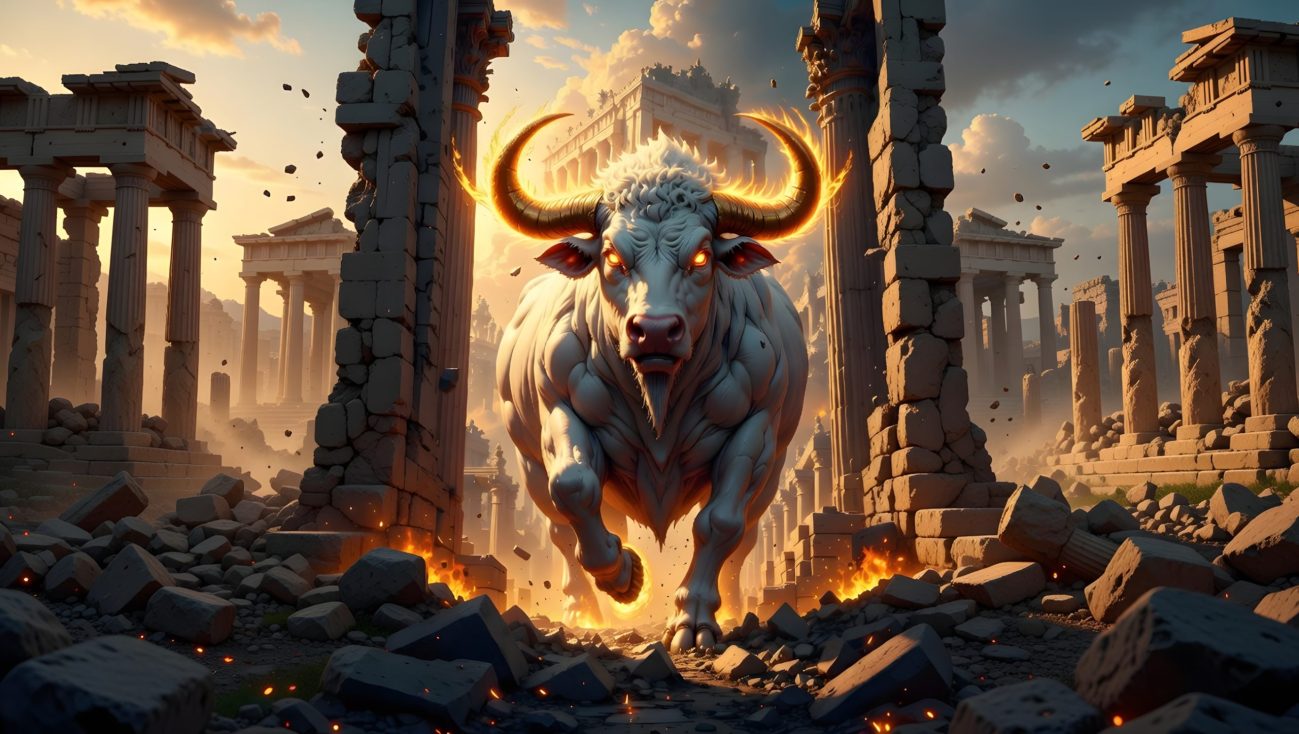
In the time when the gods still intervened openly in the affairs of men, Poseidon sent a magnificent snow-white bull from the sea to King Minos of Crete. The god meant this beast to confirm Minos’ right to rule, on the condition that the king would sacrifice the animal in honor of the god.

But when Minos saw the bull, he judged it too splendid to lose. Instead of offering it to Poseidon, he sacrificed another, lesser animal and kept the divine bull for himself.

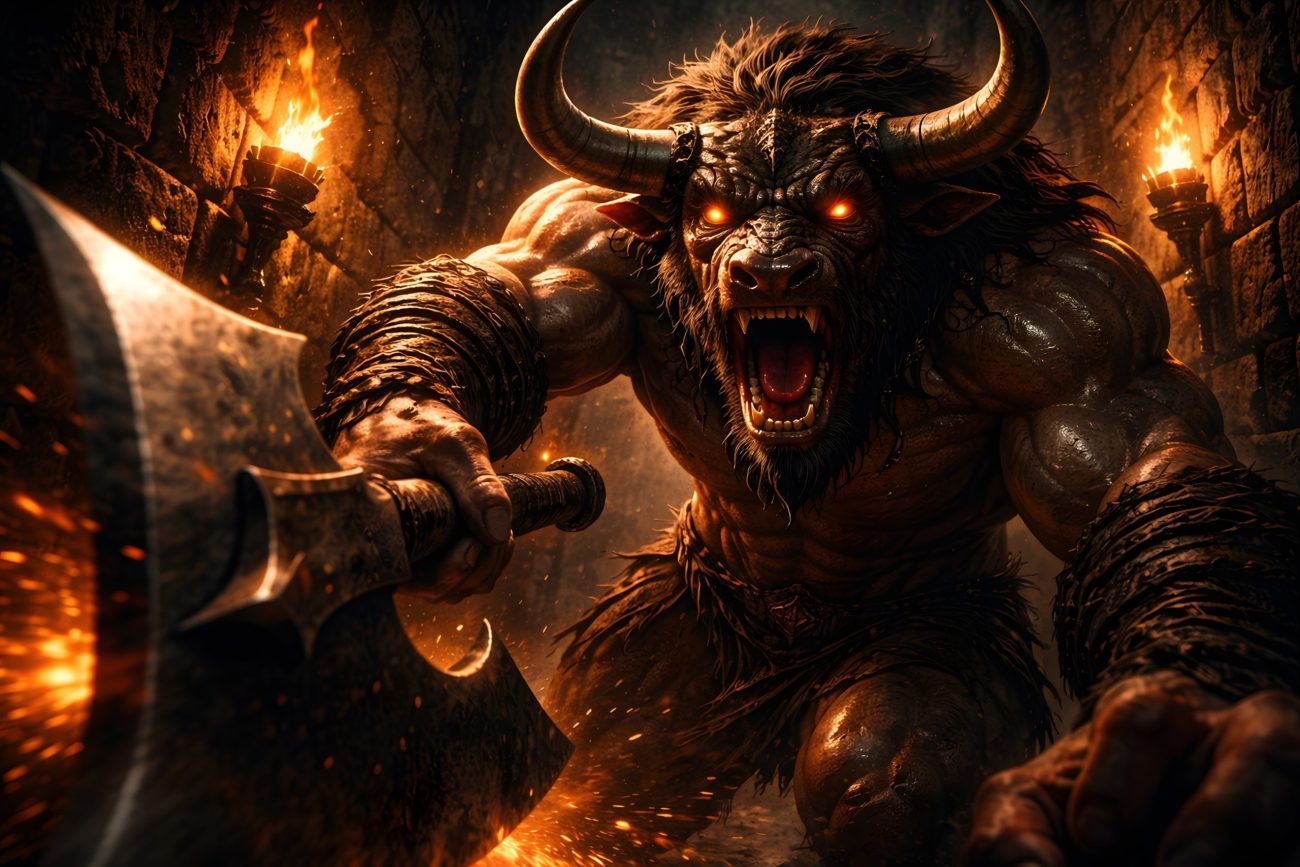
The god saw the deception and grew angry. As punishment, he caused Minos’ wife, Pasiphaë, to be seized by a strange and terrible desire for the bull. From their union was born the Minotaur, half man and half bull. To hide the monster, Minos ordered the craftsman Daedalus to build the Labyrinth, a vast and winding maze in which the creature was shut away.

Meanwhile the bull itself fell under the god’s curse. It grew wild and furious, rampaging across Crete, tearing up crops and destroying orchards, and no one could subdue it.

At last the hero Heracles was commanded by King Eurystheus to capture the beast as one of his labors. Minos allowed him to take it, and Heracles wrestled the bull into submission and carried it across the sea to Tiryns. Later the animal escaped again and wandered into the land of Marathon, where it continued to terrorize the countryside.

The bull’s fate crossed again with that of heroes. It was said to have caused the death of Androgeus, Minos’ son, which in turn led to the tribute of Athenian youths sent to Crete for the Minotaur. Eventually the hero Theseus captured the bull near Marathon and brought it to Athens, where it was sacrificed to the gods.

Thus the Cretan Bull became known as a creature sent by a god, the sire of the Minotaur, and a beast whose fury shaped the deeds of kings and heroes alike.


Gallery


Sources

Wikipedia contributors. (n.d.). Cretan Bull. In Wikipedia, from https://en.wikipedia.org/wiki/Cretan_Bull


Interpretive Lenses

Religious Readings
  • Christian Ascetic Deep Dive
Philosophical Readings
  • Nietzschean Deep Dive
Psychological Readings
  • Jungian Deep Dive
Esoteric Deep Dive
  • Hermetic Deep Dive
Political / Social Readings
  • Marxist Deep Dive

Catoblepas

Tradition / Region: Greek Mythology
Alternate Names:
Category: Cow


The Myth

In ancient times, in the distant lands of Africa near the sources of great rivers and marshes, there lived a dreadful creature called the Catoblepas.

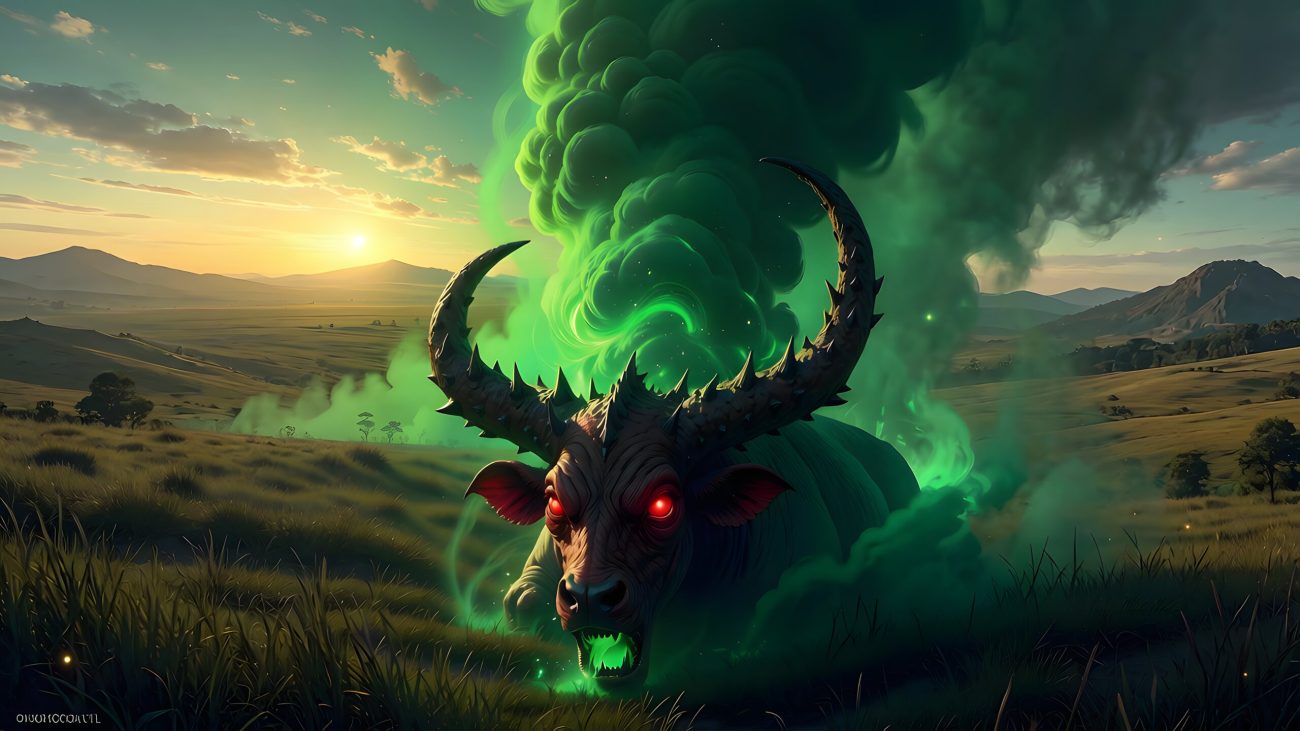
It was shaped somewhat like a bull, though more monstrous and misshapen. Its limbs were heavy, and its head was enormous, so large that it could scarcely lift it from the ground. Because of this weight, the beast always walked with its gaze turned downward. This was considered a mercy, for its eyes were said to bring instant death to any who met them.

Its face was grim and terrible. A mane like that of a horse hung over its head, and its eyes were small, red, and bloodshot. It fed only on poisonous plants that grew in the marshes, and the foulness of its food filled its breath with deadly vapor. When angered or disturbed, the creature released a noxious breath that poisoned the air itself, so that animals and men who inhaled it lost their strength, their voice, and their life.

Because of this, all creatures avoided the places where it dwelled, and even hunters feared to approach its marsh.

Stories were told of travelers and soldiers who unknowingly came near it. Some died from its gaze, others from its breath, until at last men armed with long spears managed to kill the monster from a distance. Its hide was said to have been taken as a trophy and placed in a temple dedicated to a mighty hero.

Yet the terror of the Catoblepas lived on in tales, for it was remembered as a beast so foul and dangerous that even its mere presence could bring death, a creature that kept its head forever bowed, as though the world itself could not bear its sight.


Gallery


Sources

George of Pisidia. Hexaemeron, p. 29

Bestiary.us, Katoblepas. Retrieved May 28, 2025, from https://www.bestiary.us/katoblepas

Pliny the Elder. Natural Histories, Book VIII, Chapter 32, p. 209–210.


Interpretive Lenses

Religious Readings
  • Christian Ascetic Deep Dive
Philosophical Readings
  • Nietzschean Deep Dive
Psychological Readings
  • Jungian Deep Dive
Esoteric Deep Dive
  • Hermetic Deep Dive
Political / Social Readings
  • Marxist Deep Dive