Tradition: Chinese Mythology
Alternative Names: Chen, Shen
Category: Mollusc
The Myth
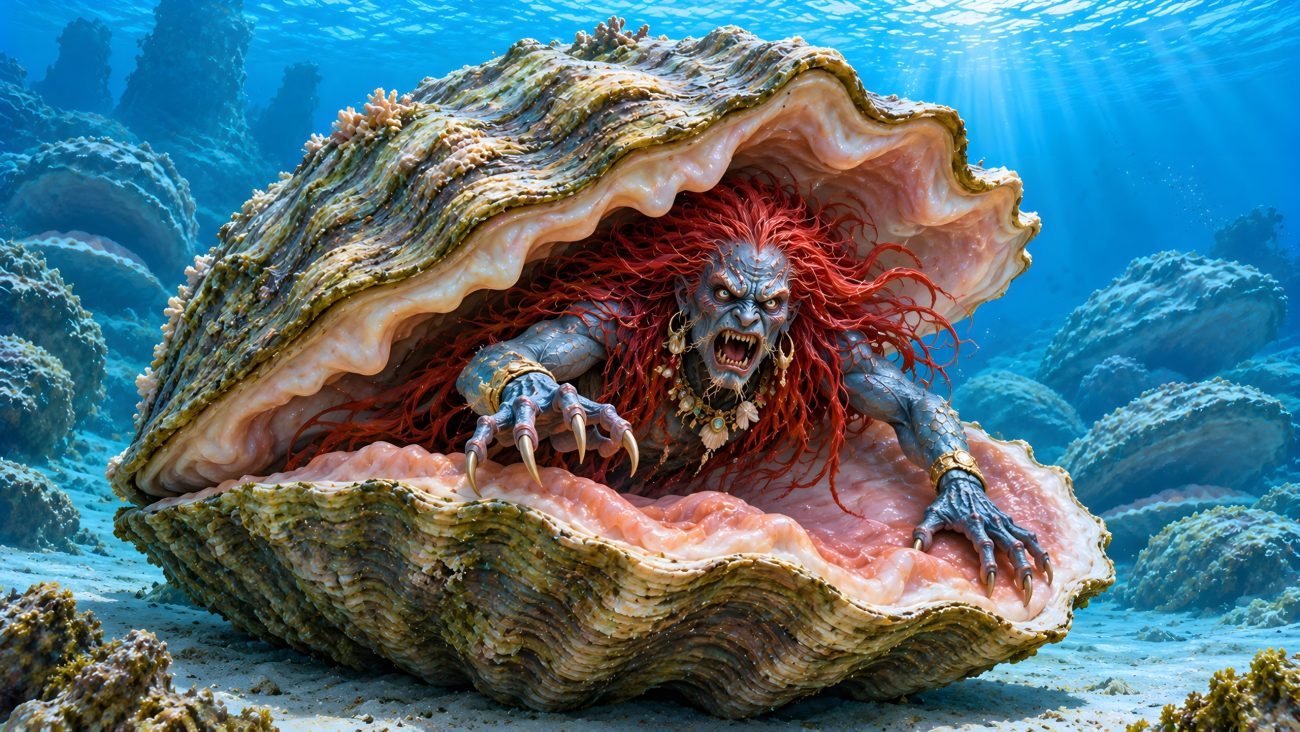
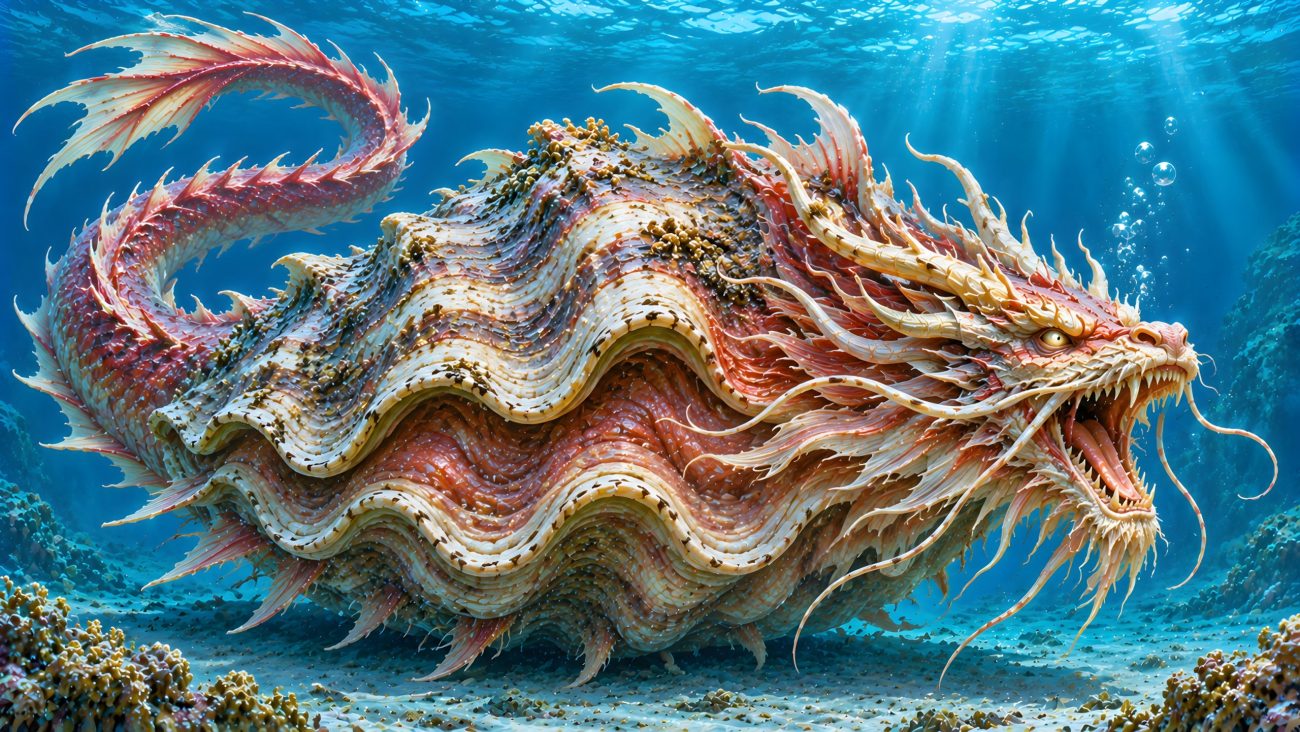
The Shen, also called Chen, is a creature from Chinese mythology associated with large shellfish and aquatic monsters. Originally referring to a large mollusc, the term later came to describe a shapeshifting sea monster, sometimes endowed with dragon-like characteristics. The Shen is particularly associated with the creation of mirages at sea.
Early Chinese texts describe the Shen as a large shellfish, variously identified as an oyster, mussel, scallop, or giant clam. Its shells were used to make tools and containers, while shell-derived lime was employed in funerary practices, including the construction of mausoleum walls. The creature was also associated with royal sacrifices and burial customs.
Over time, the Shen developed into a more fantastical creature. By the early medieval period, it was imagined as a monster lurking in underwater caverns, sometimes possessing the attributes of a dragon or the Indian nāga. It was said to expel bubbles and frothy masses from the sea. These formations could take the shape of buildings, appearing to astonished sailors as magnificent structures floating on the water. Such apparitions became associated with mirages.
Sources
Wikipedia contributors. (n.d.). Shen (clam-monster). Wikipedia. https://en.wikipedia.org/wiki/Shen_(clam-monster)