Bull Demon King

Tradition / Region: Chinese mythology
Alternate Names: Niú Mówáng
Category: Cow


The Myth

The Bull Demon King was one of the greatest demon lords of the age, feared across mountains and valleys for his immense strength and terrifying presence. He ruled from his cavern on Thunder-Accumulating Mountain, commanding legions of lesser demons and living as a sovereign in his own right. He was the husband of Princess Iron Fan and the father of Red Boy, a fearsome child-demon whose power rivaled that of seasoned warriors.

In the days before Sun Wukong’s rebellion against Heaven, the Bull Demon King stood among a brotherhood of seven mighty demon kings. Together they swore oaths of loyalty, each proclaiming himself a ruler equal to Heaven. Among them, the Bull Demon King was the eldest and most respected, a figure of authority even the Monkey King acknowledged.

Later, when Tang Sanzang and his disciples journeyed westward, they came upon the Flaming Mountains, where fire burned endlessly and blocked their path. To extinguish the flames, Sun Wukong sought the Banana Leaf Fan, a powerful artifact owned by Princess Iron Fan. Trickery and persuasion failed, and the conflict drew out the Bull Demon King himself.

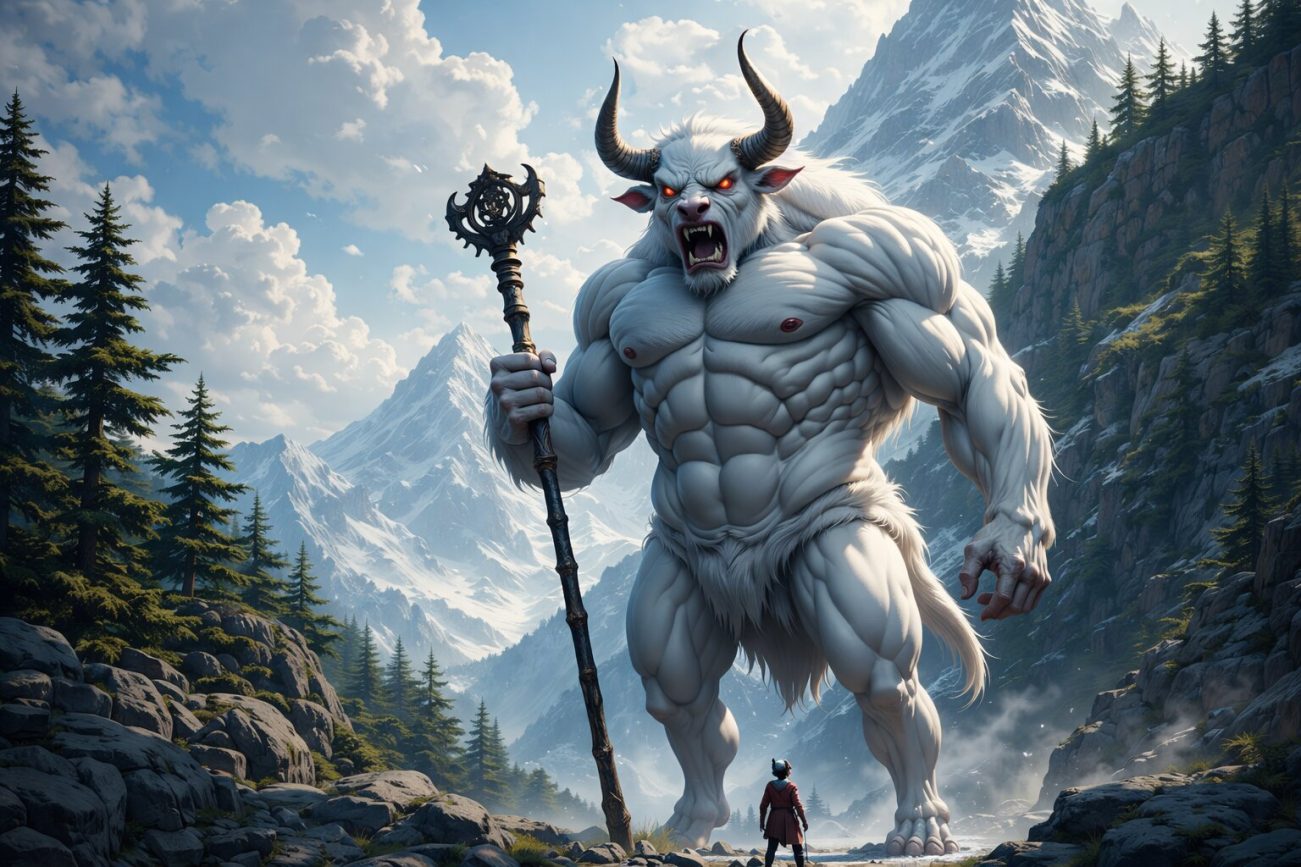
When he entered battle, the Bull Demon King revealed his true form: a colossal white bull, towering hundreds of feet tall, shaking the land with each step. He fought Sun Wukong with overwhelming force, wielding weapons and magic alike. Like the Monkey King, he could change his shape, using disguise and deception to outwit his enemies, even taking on the form of others to reclaim what was taken from him.

The struggle between the two shook mountains and skies, but even the Bull Demon King’s strength was not limitless. At last, the heavens intervened. Celestial generals descended, surrounding him and breaking his resistance. Bound and subdued, the Bull Demon King was taken away to face judgment under higher divine authority.

Thus ended the reign of one of the greatest demon sovereigns of the age—a being of immense power and pride, whose clash with Sun Wukong became one of the most fearsome and unforgettable trials on the journey to the West.


Gallery


Sources

Cheng’en, W. (1987). Journey to the West.
Wikipedia contributors. (2025a, August 14). Bull Demon King. Wikipedia. https://en.wikipedia.org/wiki/Bull_Demon_King#cite_ref-1


Interpretive Lenses

Religious Readings
  • Christian Ascetic Deep Dive
Philosophical Readings
  • Nietzschean Deep Dive
Psychological Readings
  • Jungian Deep Dive
Esoteric Deep Dive
  • Hermetic Deep Dive
Political / Social Readings
  • Marxist Deep Dive
Other
  • How to Invite The Bull Demon King

Aoyin

Tradition / Region: Chinese mythology
Alternate Names:
Category: Cow, Mountain dweller


The Myth

Far to the west, beyond the reach of familiar roads, rises Three-Dangers Mountain, a place long feared by travelers. The mountain spans a hundred li around, and its three peaks are known to shelter beings both strange and deadly.

There lives a monster called Aoyin.

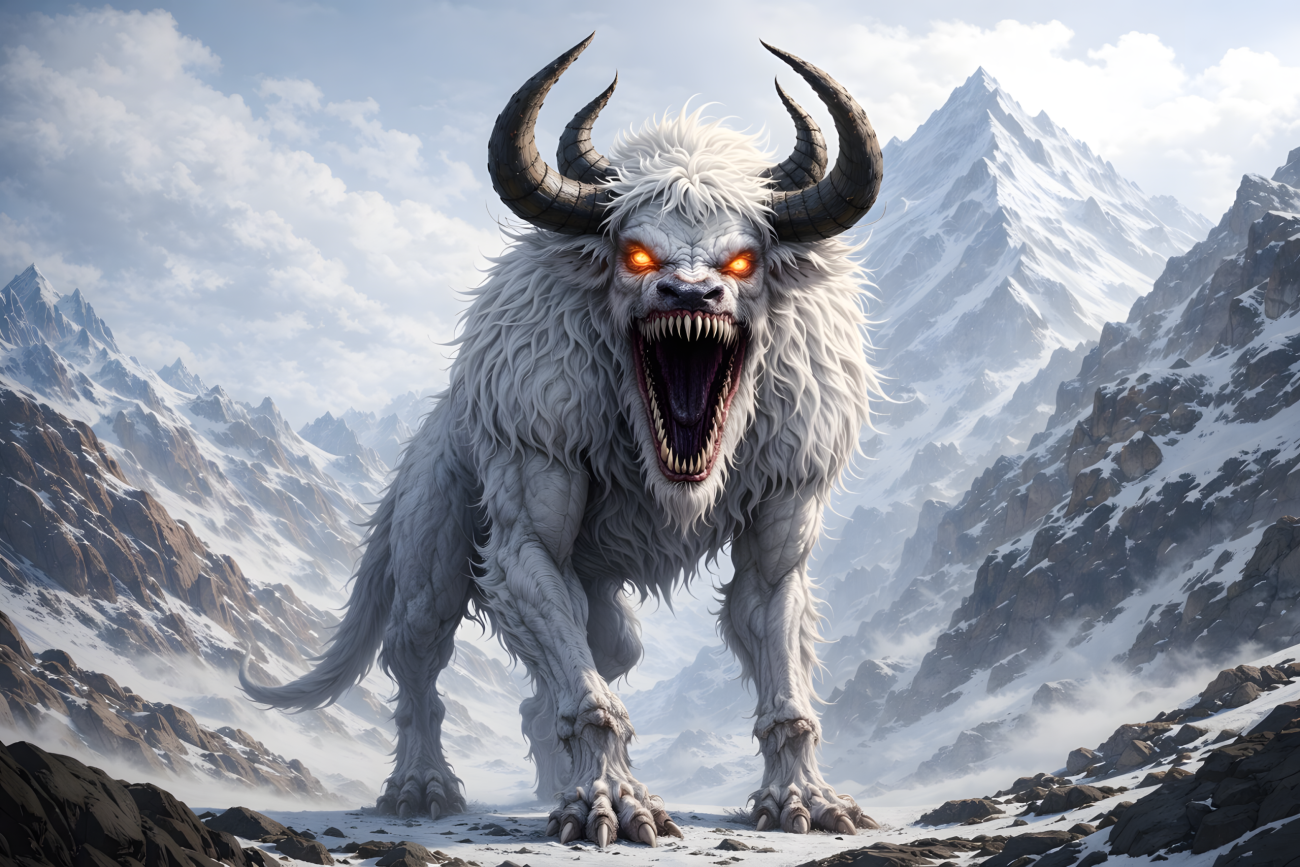
Its body is shaped like that of an ox, yet its hide is white as bone. Four horns rise from its head, and its body is covered in long, coarse hair like straw woven into rain capes. Though it bears the form of cattle, Aoyin is no gentle beast. It feeds on human flesh, preying on those who cross the mountain or linger too long beneath its peaks.

Three Green Birds are also said to dwell upon Three-Dangers Mountain. In later times they would be known as divine messengers, but here they share the heights with the man-eating Aoyin, marking the mountain as a place where sacred forces and mortal peril exist side by side.

Some say that Three-Dangers Mountain was also a land of exile. After rebelling against the ancient ruler Shun, the Three-Sprouts People were driven there and cast out to the edge of the world. Surrounded by barren land and deadly creatures, they disappeared from history.

Thus Aoyin became the living terror of Three-Dangers Mountain—a white, four-horned ox-beast that devours humans, standing as a warning that not all creatures shaped like cattle are meant to sustain life.


Gallery


Sources

Strassberg, R. E. (2002). A Chinese bestiary: Strange Creatures from the Guideways Through Mountains and Seas. Univ of California Press, p. 112.


Interpretive Lenses

Religious Readings
  • Christian Ascetic Deep Dive
Philosophical Readings
  • Nietzschean Deep Dive
Psychological Readings
  • Jungian Deep Dive
Esoteric Deep Dive
  • Hermetic Deep Dive
Political / Social Readings
  • Marxist Deep Dive
Other
  • How to Invite The Aoyin