Yohualtepoztli

Tradition / Region: Aztec Mythology, Mexico Mythology
Alternate Names: Night Axe Spirit, Night Hatchet Phantom
Category: Plant


The Myth

In the mountains and lonely paths of Mexico, travelers sometimes hear a dull and dreadful sound in the night.

Thud. Thud. Thud.

It echoes through the darkness like an axe striking wood. Those who hear it know that the Yohualtepoztli is near — a spirit of the night sent to test the courage of those who wander after sunset.

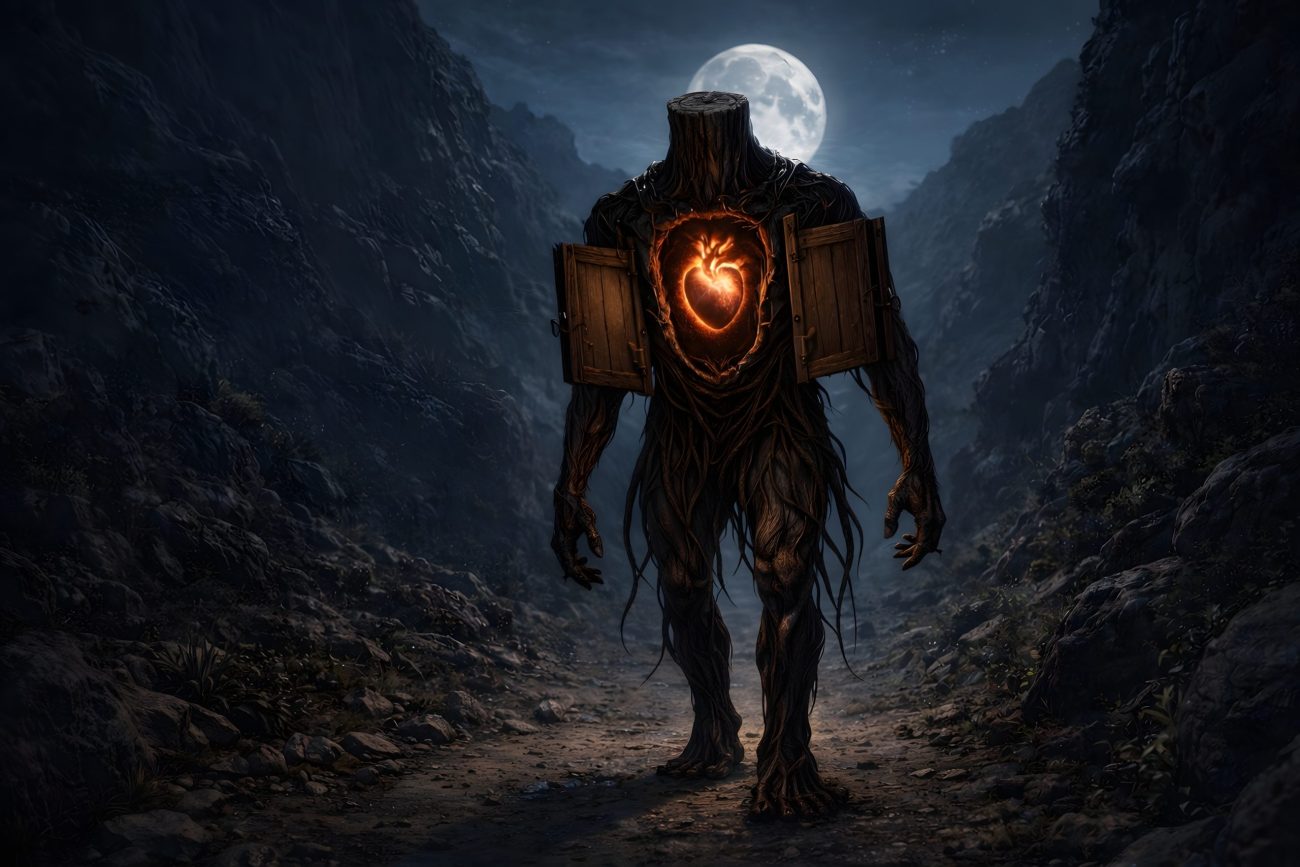
The being appears in a terrifying form. It resembles a man’s body, yet where its head should be there is only a stump, like the trunk of a tree cut clean through. Its chest is hollow, the heart exposed inside, and on either side hang small door-like flaps. As the creature walks, these doors swing and strike together, making the heavy, wooden blows that echo through the night.

When the sound begins, fear urges travelers to flee. Yet those who run from the noise gain nothing, and misfortune may follow them home. The brave know that they must instead approach the spirit.

If a warrior, priest, or fearless person dares to confront it, they must seize the exposed heart and hold it tight, threatening to tear it free. Only then will the Yohualtepoztli bargain for its release. It offers gifts in return — agave thorns that promise success in war, renown, strength, and riches.

The spirit may try to escape by offering only one thorn, but the wise hold firm until several have been given.

Some, too frightened to bargain, may tear out the heart and flee. If the heart is wrapped and left overnight, it may transform by morning into bird down, cotton, or agave thorns, signs of good fortune. But if it turns into coal or rags, it foretells bad luck.

Thus the Yohualtepoztli wanders the night roads, its hollow chest echoing like an axe on wood, waiting for those who will face it. For the fearless, it may grant rewards. For the timid, it leaves only dread and misfortune in its wake.


Gallery


Sources

A Book of Creatures. (n.d.). Yohualtepoztli. Retrieved March 1, 2026, from https://abookofcreatures.com/2017/05/19/yohualtepoztli/


Interpretive Lenses

Religious Readings
  • Christian Ascetic Deep Dive
Philosophical Readings
  • Nietzschean Deep Dive
Psychological Readings
  • Jungian Deep Dive
Esoteric Deep Dive
  • Hermetic Deep Dive
Political / Social Readings
  • Marxist Deep Dive

Ahuizotl

Tradition / Region: Aztec Mythology, Mexican Mythology
Alternate Names: Water Dog
Category: Dog


The Myth

The Ahuizotl was a feared creature of the lakes and waters in the lands of the Aztecs.

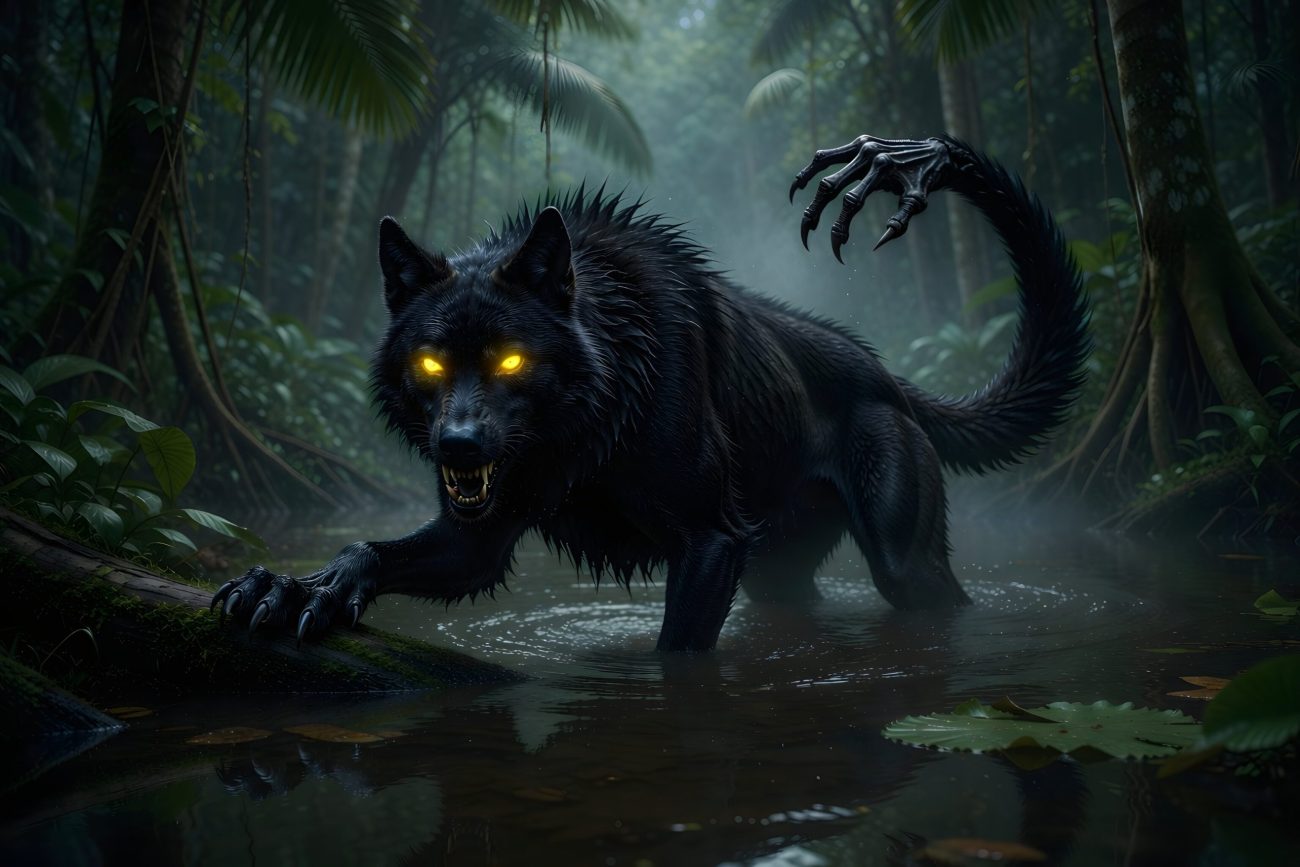
It was said to live in deep pools, caverns, and the shores of great lakes. The creature was about the size of a small dog, with dark, smooth fur that shone like wet stone. Its ears were small and pointed, and its body sleek and slippery. Most terrifying of all, it possessed hands like those of a monkey, not only on its forelimbs but also at the end of its long tail.

The Ahuizotl was believed to serve the rain gods, especially Tlaloc and Chalchiuhtlicue. Some said it guarded the waters and the fish within them. Others believed it was sent by the gods to gather souls they favored, taking them from the world of the living and bringing them to the paradise of Tlaloc.

People feared going near certain waters because of it. The creature was said to hide below the surface, waiting for someone to approach. When a victim came too close, it would seize them with the hand at the end of its tail and drag them beneath the water.

Some tales say the creature ate only certain parts of its victims — the eyes, nails, and teeth — leaving the rest behind. Because of this, the dead were believed to belong to the gods, and only priests were permitted to handle their bodies.

The Ahuizotl was also said to lure its prey. It could cry like a human baby, drawing compassionate people toward the water’s edge. At other times it caused fish and frogs to leap to the surface, tempting fishermen closer until they were within reach.

Thus the Ahuizotl was remembered as a servant of the rain gods and a terror of the lakes — a dark, dog-shaped water spirit whose unseen hand could reach from the depths and pull the living into the world of the gods.


Sources

Wikipedia contributors. (n.d.). Ahuizotl (mythology). In Wikipedia, from https://en.wikipedia.org/wiki/Ahuizotl_(mythology)


Centzon Tōtōchtin

Tradition / Region: Aztec Mythology, Mexcian Mythology
Alternate Names: Centzontōtōchtin (“Four Hundred Rabbits”)
Category: Rabbit, deity


The Myth

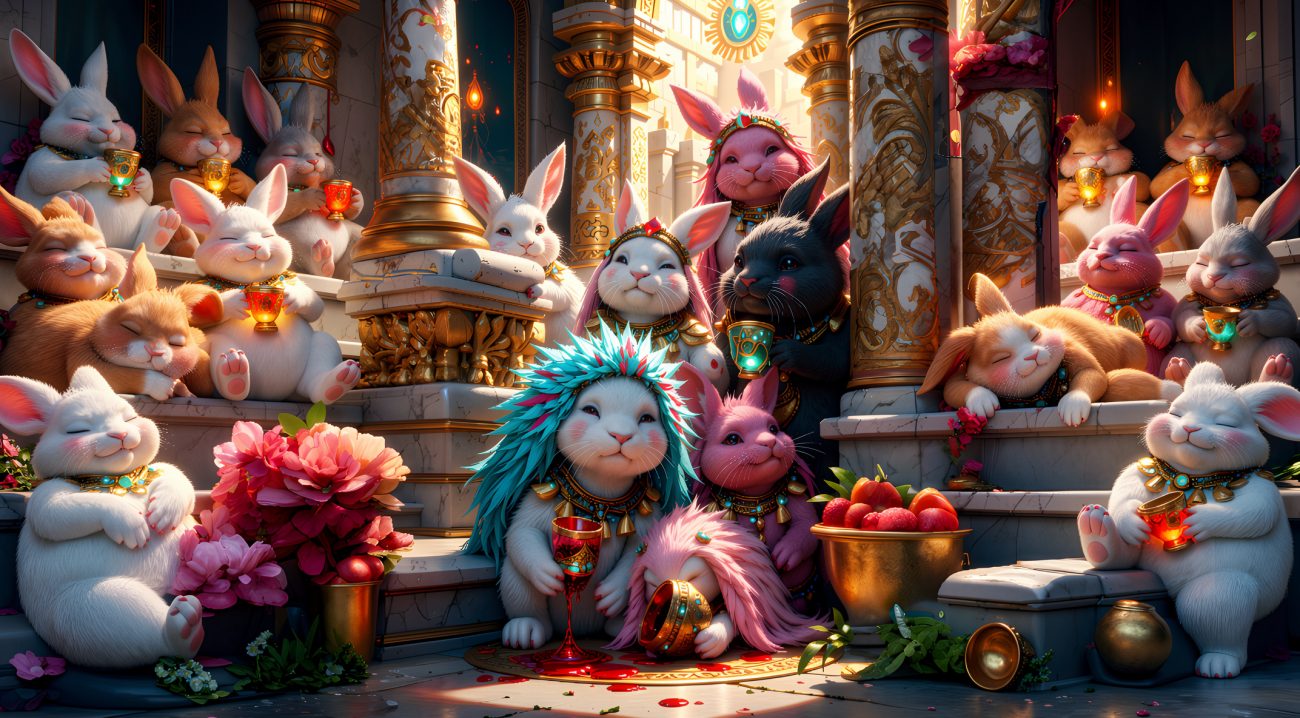
In Mexica mythology, the Centzon Tōtōchtin are a great company of divine rabbits known as the Four Hundred Rabbits. They are gods associated with pulque, the fermented drink made from the maguey plant, and they are said to gather frequently for feasts and drunken celebrations. The number four hundred does not signify a precise count, but rather an uncountable multitude.

The Centzon Tōtōchtin are the children of Mayahuel, the goddess of the maguey plant, and Patecatl. Mayahuel was believed to nourish her children with the sap of the maguey, which became pulque. Through this parentage, the rabbits are bound to the plant and its intoxicating drink.

Each of the Centzon Tōtōchtin embodies a different aspect of drunkenness and behavior brought on by pulque. Among them are Tepoztecatl, Texcatzonatl, Colhuatzincatl, and Macuiltochtli, whose name means “Five Rabbit.” Tepoztecatl is often described as their leader and is closely associated with ritual calendars and sacred festivals.

The rabbits are said to assemble together, drinking pulque and celebrating noisily. In these gatherings, they represent the many forms intoxication can take, from joy and laughter to disorder and excess. Their presence explains why different people react differently when they drink, each one being touched by a different rabbit god.

The Centzon Tōtōchtin appear in myths surrounding the discovery and ritual use of pulque. In some stories, a rabbit is involved in revealing the maguey’s hidden properties, linking the animal directly to the sacred drink. Shrines and temples, including those dedicated to Tepoztecatl, honored these gods through offerings of pulque during festivals and ceremonies.

Thus, the Centzon Tōtōchtin remain remembered as a divine multitude of rabbit gods, born from the maguey, gathering endlessly in celebration, and inseparably bound to pulque and its effects among gods and humans alike.


Interpretive Lenses

Religious Readings
Philosophical Readings
Psychological Readings
Esoteric Deep Dive
Political / Social Readings
Other