Tradition / Region: Japanese Mythology
Alternative names: Boaya
Category: Crocodile
The Myth
Hoaya is a fearsome river monster described in the Edo-period works Nankai Kibun and Hyōryū Tenjiku Monogatari, which recount the travels of the sailor Sontaro after he drifted to foreign lands. The creature was said to inhabit the rivers of Banjarmasin in southern Borneo, where the local people greatly feared it and believed that killing one would inevitably bring misfortune.
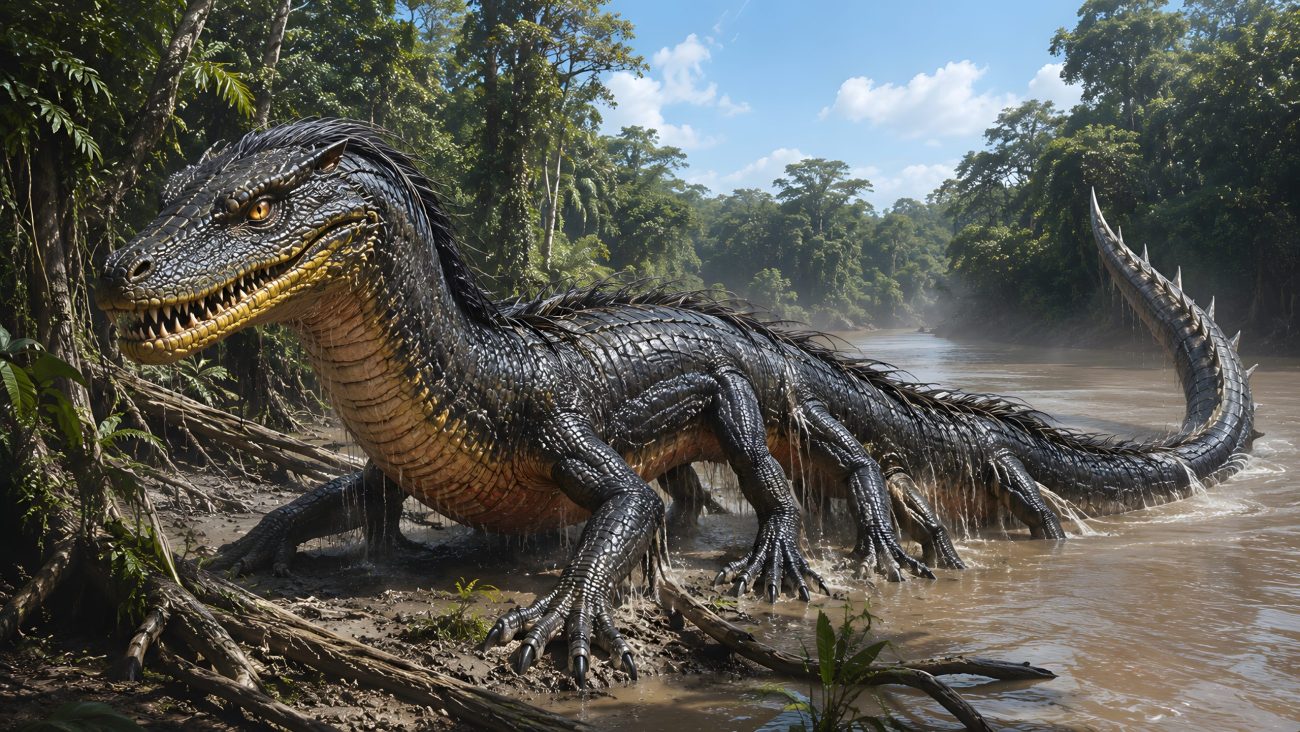
The monster was described as resembling a hornless dragon, with a stern face, long manes and ears, four arms, four legs ending in four claws each, and a body measuring between six and thirteen fathoms in length. It often clung to passing boats, frightening those aboard. In another account, its body is said to have been pale black with a yellow belly and lips, extremely hard scales, and a pointed tail ending in three ridges.
According to local belief, Hoaya climbed into the mountains each spring to lay thirty-six eggs, each about the size of a temari ball. After the young hatched and entered the rivers, the parent relentlessly pursued and devoured them until only one remained. That final offspring was then raised by the parent. Boats avoided Hoaya with their young, as they were believed to become especially aggressive.
One night, a Hoaya broke through the decaying fence surrounding a riverside bathing area and attacked a night watchman, biting off one of his legs. The creature became trapped inside the enclosure, where dozens of people eventually killed it after gunfire failed to penetrate its thick scales. The wounded watchman died the following day. Although the Hoaya’s body was thrown back into the river, no further misfortunes followed, despite the widespread belief that killing one of the creatures would bring disaster.
In Nankai Kibun, the creature is identified as Boaya, which is explained to be a crocodile, although its appearance and behavior are described in a far more legendary manner. The account also suggests that the hornless river dragons described in stories from Siam may have been the same creature.
Sources
Landtman, G. (1970). The Kiwai Papuans of British New Guinea; a nature-born instance of Rousseau’s ideal community. New York: Johnson Reprint Corp., p. 302.