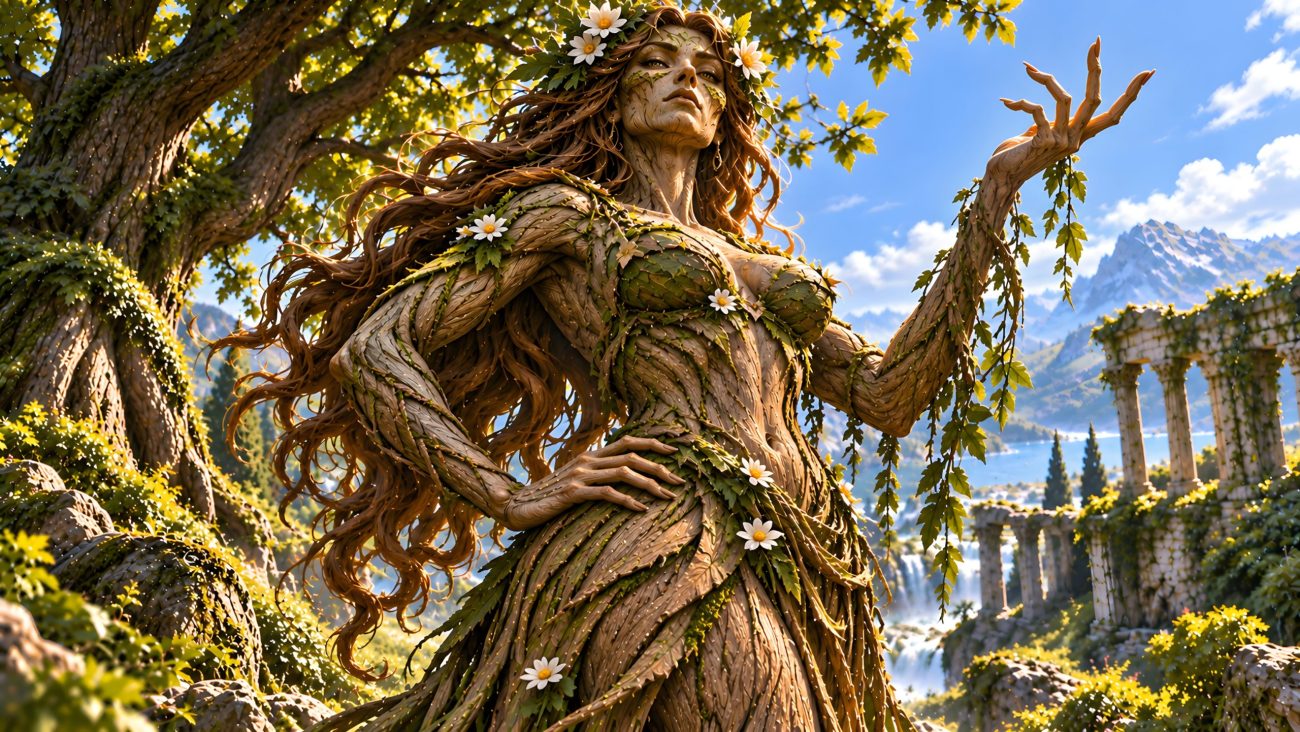
Tradition: Greek mythology
Alternative Names: Dryas (singular); Hamadryads, Meliae, Daphnaiai (related types of tree nymphs)
Category: Nymph
The Myth
The Dryads were tree nymphs in Greek mythology, originally associated especially with oak trees. Their name derives from the ancient Greek word drys, meaning “tree” and, more specifically, “oak.” Over time, the term dryad came to be used more broadly for female spirits associated with trees and woodlands.
Like other nymphs, most Dryads were believed to live extraordinarily long lives. However, a particular group known as the Hamadryads shared a much closer bond with the natural world. Each Hamadryad was inseparably connected to an individual tree, and her life depended upon its survival. If her tree died, she died with it. This sacred connection meant that harming trees could have supernatural consequences. According to myth, Dryads and the Greek gods punished mortals who damaged trees without first appeasing the spirits associated with them.
Different kinds of tree nymphs were associated with particular species. The Meliae were nymphs of ash trees. According to Hesiod’s Theogony, they were born from Gaia after she was made fertile by the blood of Uranus following his castration. The Meliae also played a role in the infancy of Zeus, with the sisters caring for the young god in Rhea’s cave on Crete.
The Daphnaiai were nymphs associated with laurel trees. Their existence reflects the Greek tendency to imagine individual trees and kinds of vegetation as inhabited or protected by divine female spirits.
Through their intimate connection with trees, the Dryads embodied the life and sacredness of the forest. Their stories warned mortals that the natural world was not merely a resource to exploit, but a realm inhabited by powerful beings whose lives could be bound to the trees themselves.
Sources
Wikipedia contributors. (n.d.). Dryad. In Wikipedia, from https://en.wikipedia.org/wiki/Dryad