Tradition: Greek Mythology
Alternative Names: Lamiai, Mormo, Gello
Category: Nymph
The Myth
Lamia was once a beautiful queen of Libya who caught the attention of Zeus, the king of the gods. The two became lovers and had children together, but Zeus’s wife, Hera, discovered their affair and took revenge on Lamia. In different versions of the myth, Hera kidnapped Lamia’s children, killed them, or drove Lamia to kill them herself. Overwhelmed by grief, Lamia descended into madness and began hunting and devouring other people’s children. Her beauty faded as she became a terrifying monster, forever associated with the loss of children and a mother’s unbearable sorrow.
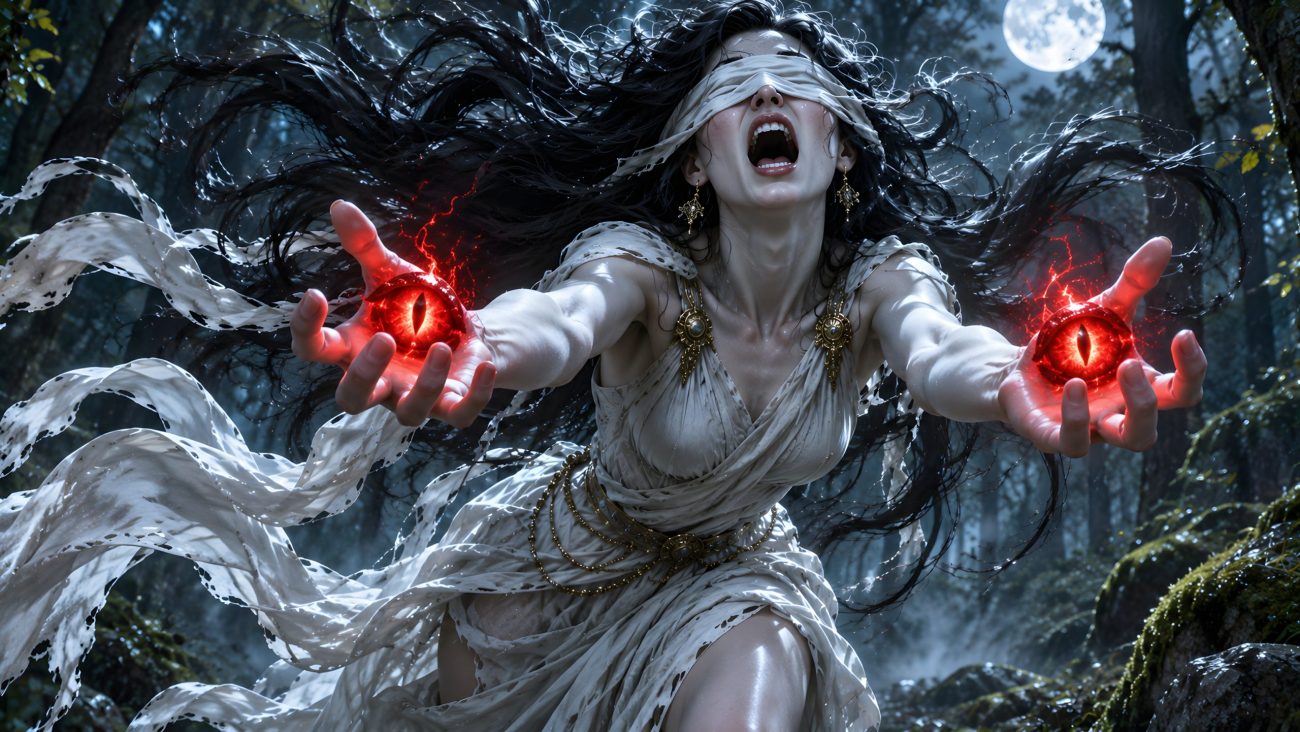
Zeus granted Lamia certain supernatural powers, including prophecy and the ability to remove her own eyes and put them back whenever she wished. Some stories explain this strange gift as a way to ease her suffering, since Hera had cursed her with sleeplessness or the inability to close her eyes. Lamia could also change her appearance, making her a particularly frightening and unpredictable figure.
Over time, the name Lamia came to describe a broader class of terrifying spirits. These Lamiai haunted the night and were invoked by parents and nurses to frighten children into behaving. Like other bogeymen of ancient folklore, they were said to snatch and swallow children, sometimes even devouring them alive. In some traditions, Lamia became closely associated with Mormo and Gello, other frightening figures used to warn children against disobedience.
Later stories transformed Lamia into a seductive creature who preyed on young men. She could disguise herself as a beautiful woman, lure a victim into a false sense of security, and then feed on his flesh or blood. One famous tale tells of a mysterious woman who seduced Menippus of Lycia. The philosopher Apollonius of Tyana recognised that she was not human but an empousa, a supernatural being often associated with Lamiai. When he exposed her true nature, the luxurious mansion and wedding preparations she had created vanished, revealing the deception. The creature confessed that she had been fattening Menippus up because she desired the blood of young men.
Lamia’s monstrous nature was sometimes linked to serpents. In ancient stories and later interpretations, she could possess a snake-like body or other features that blurred the boundary between woman and beast. Her name also became associated with other terrifying female figures who preyed on the living.
The legend of Lamia endured for centuries, inspiring writers and artists long after the ancient Greek world had passed. She became a symbol of monstrous motherhood, dangerous seduction, and the fears surrounding children and the night. Her story also inspired John Keats’s poem Lamia, which draws on the tradition of the beautiful woman whose supernatural identity conceals a terrible secret.
Sources
Wikipedia contributors. (n.d.). Lamia. In Wikipedia, from https://en.wikipedia.org/wiki/Lamia