Tradition: Japanese Mythology
Alternative Names: 福鼠, Lucky Mouse, Fortune Mouse, Auspicious Rat
Category: Rat
The Myth
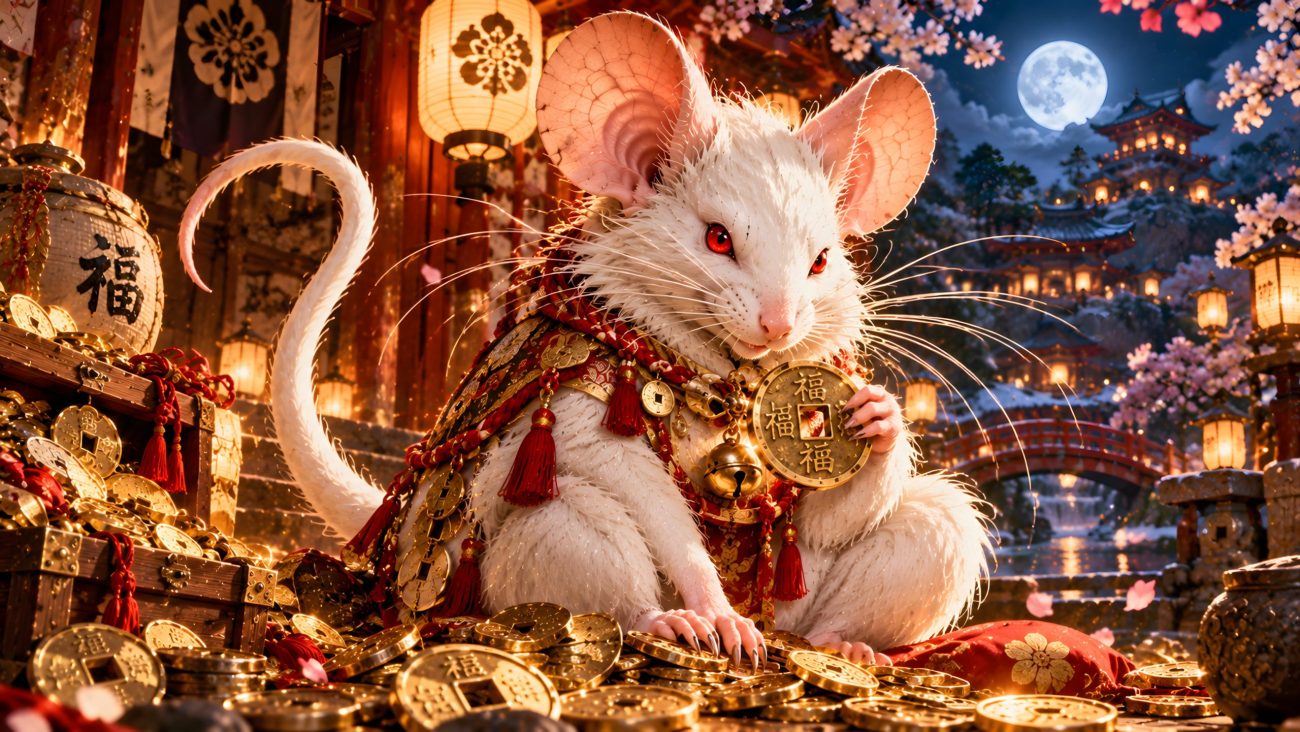
Fuku Nezumi, meaning “Fortune Mouse,” is an auspicious mouse in Japanese folklore. White mice were traditionally regarded as messengers of Daikokuten, a deity associated with wealth and prosperity, and were believed to bring good fortune to those who treated them well.
A folk tale from Yamaguchi Prefecture tells of a hardworking but impoverished old man who prayed for a better life on New Year’s Eve. In a dream, a divine messenger instructed him to clean his neglected home and drain. Following this advice, he discovered a black rat that followed him home and jumped onto his household altar. There, the old man found a white mouse sitting beside the New Year’s rice cakes. Afterward, good fortune came to him: the mouse massaged him at night and helped cultivate his fields. A greedy neighbour tried to take the mouse for himself, but his attempts to capture it only resulted in finding ordinary black rats covered in rice-cake flour. The true fortune mouse had already returned to the kind old man’s home.
Another account appears in Kii Chinjiroku, written by Kimuro Uun during the late eighteenth century. It tells of a man named Nishibayashi who built a small household altar around the New Year. Soon, mice began bringing coins to it each night, until the weight of the money threatened to break the wooden shelf. When he reinforced the altar, the mice stopped coming. The coins were later offered to temples and shrines, with the remainder kept as a personal treasure.
Sources
“Fukunezumi.” 新版TYZ 妖怪図鑑 (New TYZ Yokai Encyclopedia). https://tyz-yokai.blog.jp/archives/1010655157.html