Tradition: Chinese Mythology
Alternative Names: 当康, 當康, 當庚, Dang Kang, Yázhū (牙豚), Tusked Pig
Category: Pig
The Myth
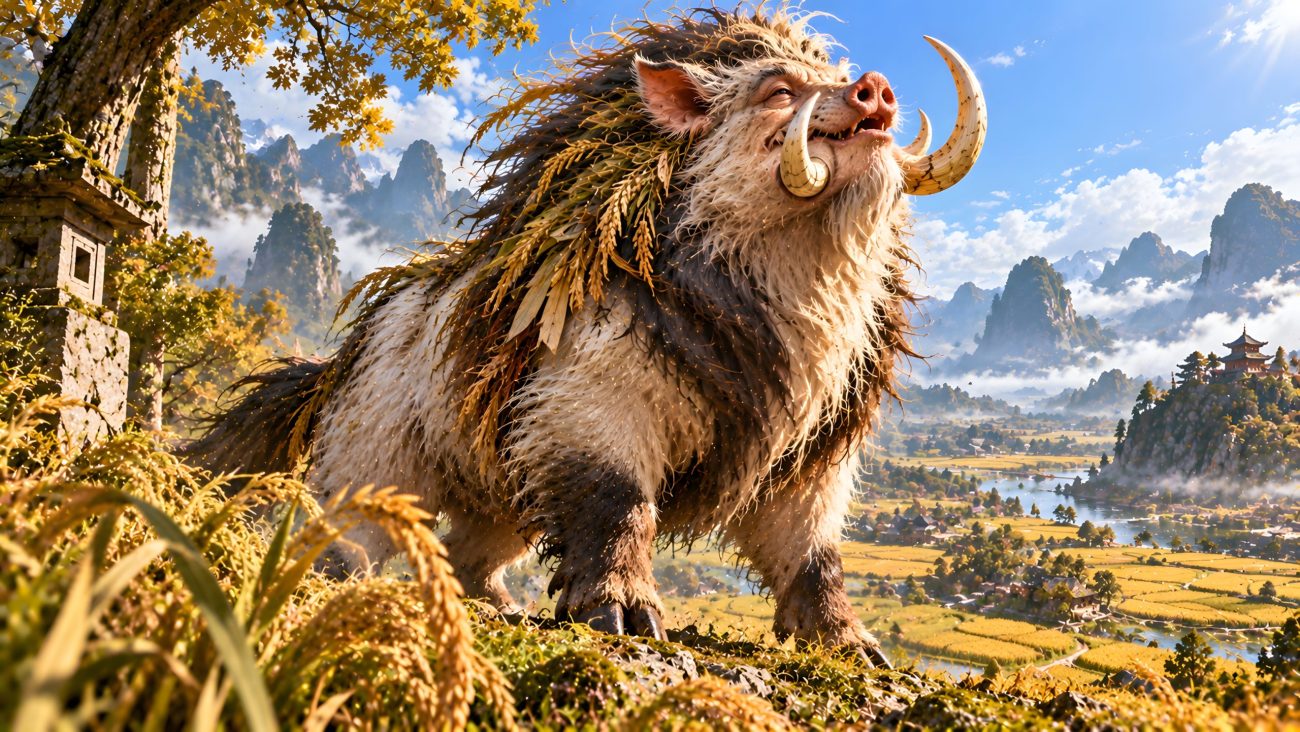
Tōkō, also known as Dang Kang, is a mythical beast described in the ancient Chinese geographical text Shanhaijing (The Classic of Mountains and Seas). According to the Eastern Mountains Classic, it inhabits Qin Mountain, a place rich in gold and jade. The creature resembles a pig and possesses prominent tusks. When it cries out, it calls its own name, “Dang Kang,” with its name understood to imitate the sound it makes.
The appearance of Tōkō is considered an auspicious omen. According to the Shanhaijing, when the creature appears, the world enjoys abundant harvests. Its association with agricultural prosperity is also reflected in the interpretation of its name. The Chinese historian of antiquity Itō Seiji suggested that the character kang is connected to the word for rice husks, originally referring to mature, hardened grain. Tōkō may therefore have been welcomed as a wild beast whose arrival heralded a successful harvest.
Knowledge of Tōkō reached Japan through Chinese texts, including the Shanhaijing and encyclopedic reference works. It appears in the illustrated animal section of the Edo-period Morokoshi Kinmō Zui, as well as in picture scrolls depicting strange creatures from the Asian mainland. In the Kaiki Chōjū Zukan (Illustrated Scroll of Strange Birds and Beasts), Tōkō is portrayed with the body of a pig or wild boar and a human face. Although the scroll preserves the creature’s traditional habitat, distinctive cry, and association with abundant harvests, it does not describe its physical appearance in the accompanying text.
Sources
“Dang Kang.” 新版TYZ 妖怪図鑑 (New TYZ Yokai Encyclopedia). https://tyz-yokai.blog.jp/archives/1073598500.html?utm_source=chatgpt.com