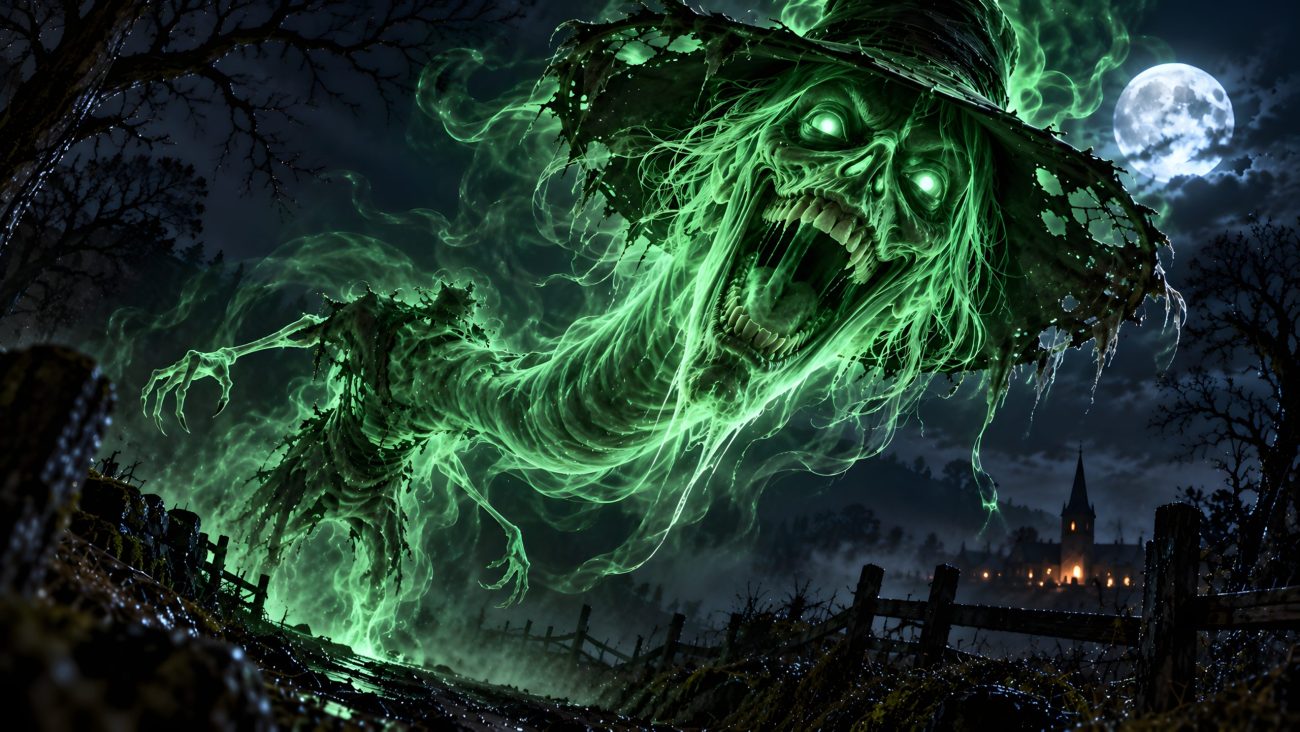
Tradition: German Mythology
Alternative Names: Emann, Homann, Hoymann, Hoimann, Jochhoimann, Hejkadlo, Hehmann, Ropenkerl
Category: Ghost
The Myth
The Hemann is a mysterious spirit from German folklore known primarily for its frightening cries, which echo through the darkness and terrify people who hear them. Usually invisible, it announces its presence with strange shouts such as “he he,” “he helfts,” or other distinctive calls that vary between regions. The creature is recorded in traditions from former German-speaking areas of Bohemia and Silesia, as well as the Upper Palatinate, the Fichtel Mountains, the Vogtland, Westphalia, and parts of Baden-Württemberg. In Bohemia, it is also known by the Czech name Hejkadlo.
The Hemann often pursues people with its cries, seemingly chasing them without ever quite catching up. However, anyone who dares to imitate its call risks a much more dangerous encounter. The spirit may leap onto the person’s back, forcing them to carry it, a supernatural attack known in German tradition as aufhocken. Depending on the regional version, it may also lead people astray or strike them in the face. The Hemann is not always understood as the same kind of being: it may be the ghost of a sinner condemned to haunt a boundary that they unlawfully moved during life, a field spirit associated with the final sheaf of the harvest, or occasionally a household spirit. Some accounts connect its cries to the calls of owls, eagle owls, hoopoes, nightjars, and ravens.
Regional traditions give the Hemann a variety of appearances and behaviors. In the Upper Palatinate, the related Hoymann or Hoimann haunts mountain forests, where its rough, manlike voice or owl-like cry can be heard from a considerable distance. Although it is usually invisible, it may appear as a tall hunter wearing a broad-brimmed hat, a giant reaching toward the clouds, or a figure dressed in a smock-frock. It is sometimes identified as a restless soul or even the Devil. The Hoymann punishes those who steal wood from the forest, and it is also associated with the Wild Hunt. In Lower Lusatia, the Homann cries at noon, serving as a natural time signal for local people. In Northern Bohemia, the Hehmann hides in cornfields and leaps onto anyone who imitates its shrill call.
Other related figures appear in neighboring traditions. In Switzerland, the invisible Egelsee-Hüper cries “hüp hüp” around midnight near Lake Egelsee. In Westphalia, the Ropenkerl’s cry is considered an omen of bad weather. The Heitmännchen appears as a small blue flame, punishes those who imitate its voice, but may help with the harvest if offered a sandwich. The Homännchen briefly appears as a tiny man in a grey camisole among a herd of cattle before vanishing. In the Lechrain region, the Hojemännlein are tiny green kobolds inhabiting forests and abandoned farms. During Advent, they shout “hoje,” perform somersaults, and play mischievous tricks. Their cries sound like sorrowful weeping, and although they can behave playfully, they punish anyone who imitates their calls. Across these regional variations, the Hemann tradition combines eerie nocturnal cries, warnings against trespassing or theft, and the danger of answering supernatural voices.
Sources
“Hemann.” Wikipedia: The Free Encyclopedia. Wikimedia Foundation. Accessed October 16, 2026. https://en.wikipedia.org/wiki/Hemann