Tradition: German Mythology
Alternative Names: Poltergeist, Rumbling Ghost, Noisy Spirit
Category: Ghost
The Myth
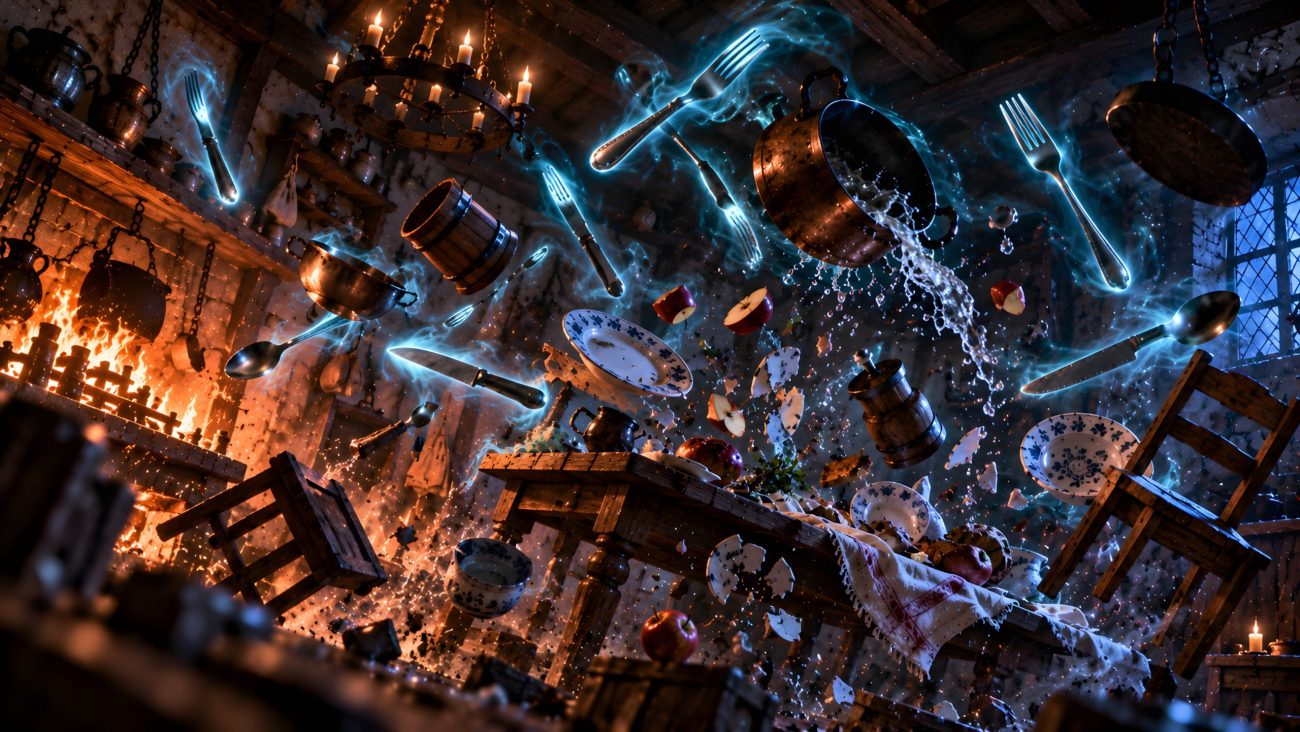
A poltergeist, whose name comes from the German words for “rumbling” and “spirit,” is a noisy and disruptive supernatural being in German folklore and ghostlore. Unlike ghosts that merely appear as apparitions, poltergeists are associated with physical disturbances in the places they haunt. They announce their presence through loud crashes, unexplained knocking, and other noises, while seemingly invisible forces move, overturn, or destroy objects around them.
Poltergeists are also said to torment people directly. They may pinch, bite, hit, or trip those who encounter them, while furniture and smaller objects such as cutlery can move or even levitate without an apparent cause. Other manifestations include foul smells, spontaneous fires, and electrical disturbances such as flickering lights. Their activity is often chaotic and destructive, making them particularly unsettling spirits in stories of haunted houses and unexplained disturbances.
Accounts of poltergeist-like phenomena occur across many cultures, including Brazil, Australia, the United States, Japan, and numerous European countries. Reports of such disturbances date back to at least the first century. Although traditionally understood as the work of ghosts or spirits, skeptical interpretations attribute these events to human trickery, sometimes involving young pranksters deceiving adults.
Sources
“Poltergeist.” Wikipedia: The Free Encyclopedia. Wikimedia Foundation. Accessed October 16, 2026. https://en.wikipedia.org/wiki/Poltergeist