Tradition: Japanese Mythology
Alternative Names: 中有, Chūin, Intermediate Existence
Category: Ghost
The Myth
Chūu refers to the intermediate state between death in the present world and rebirth into the next life. In Japanese Buddhist belief, this period lasts forty-nine days, during which the deceased’s spirit is believed to travel between the world of the living and the world of the dead. This wandering period is sometimes called the journey of Chūu.
During these forty-nine days, the deceased undergoes a series of judgments by the Ten Kings of the underworld. From King Shinkō through King Taizan, these judges pass judgment on the dead, with King Enma confronting the deceased on the thirty-fifth day. Buddhist memorial services are traditionally held every seven days, from the seventh day after death until the forty-ninth day, when the intermediate period ends.
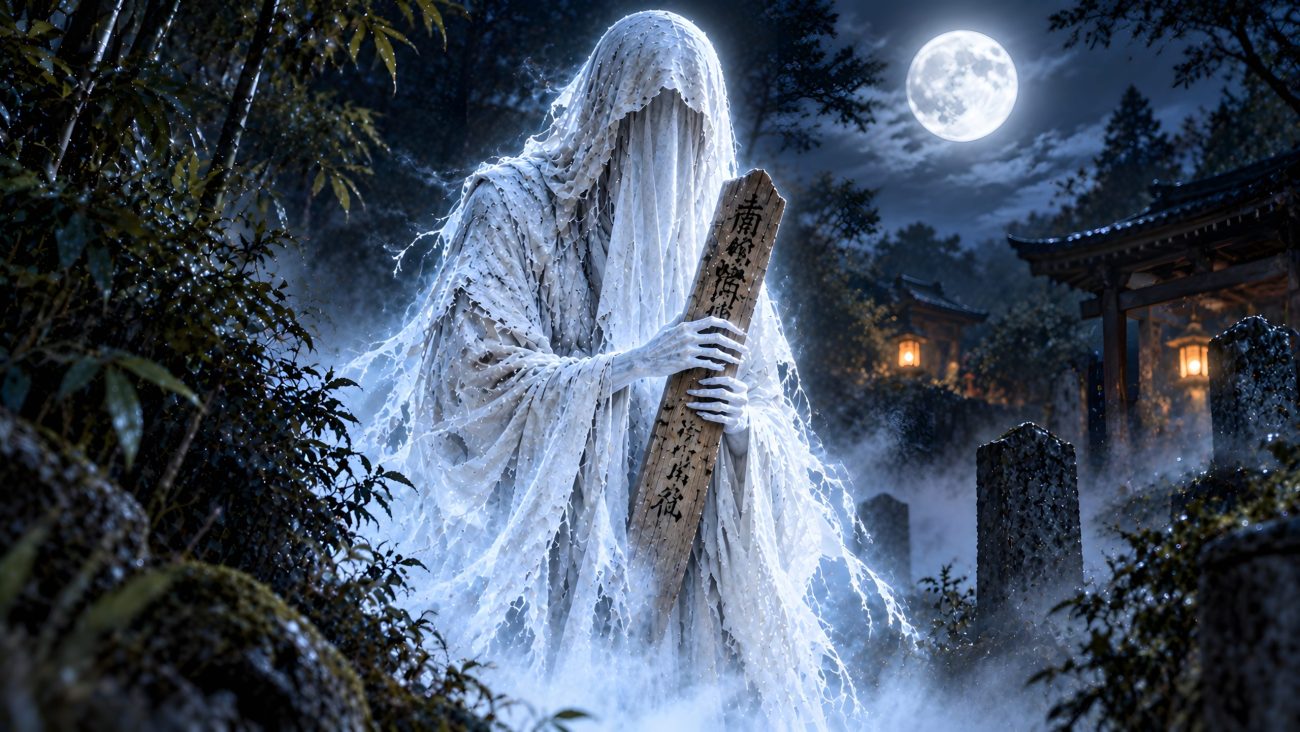
In the Japanese illustrated scroll Hyakuyōzu, a strange ghostlike creature is named Chūu. It stands among bushes with its face concealed and clutches a sotoba, a wooden memorial tablet used in Buddhist funerary rites. Its hidden face and funerary object evoke the image of a spirit lingering between the world of the living and the afterlife, unable to complete its journey.
Sources
. “中有 (Chūu).” 新版TYZ 妖怪図鑑 (New TYZ Yokai Encyclopedia). https://tyz-yokai.blog.jp/archives/1010655125.html