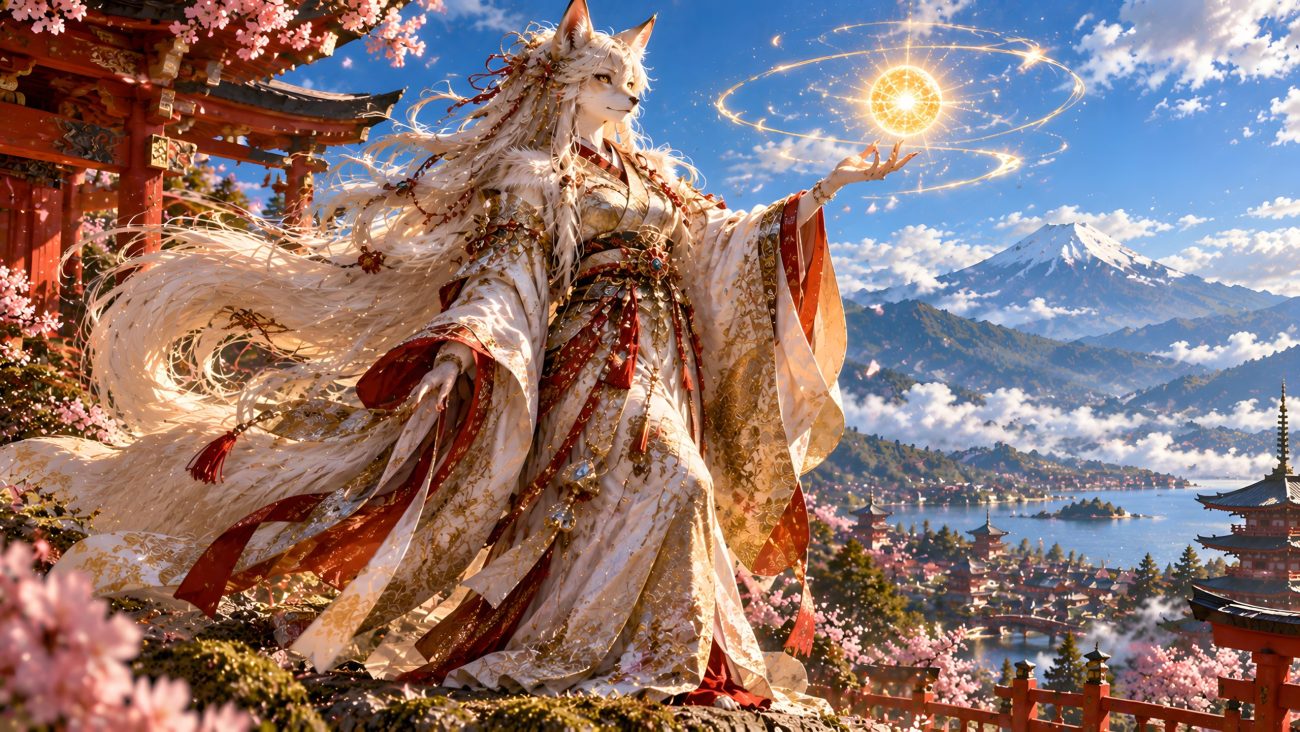
Tradition: Japanese Mythology
Alternative Names: Kūko (空狐), Inari Kūko, Sky Fox
Category: Fox
The Myth
Kūko are exceptionally ancient and powerful benevolent fox spirits known as zenko, or good kitsune. After reaching three thousand years of age, a tenko may ascend to the rank of kūko, becoming a being of pure spirit with magical powers comparable to those of the gods. Unlike younger kitsune, kūko have no physical bodies and require no food or other sustenance. Their appearance becomes more human-like, and they lose their tails entirely, although their ears retain their distinctive foxlike shape. They possess extraordinary abilities, including telepathy, clairvoyance, and the power to see into the future.
Despite their immense power and great age, kūko rank below tenko in kitsune society. This is because they have reached a stage resembling retirement from active service to Inari, the deity associated with fox spirits. Rather than carrying out duties directly, they act as revered elders and trusted advisers. When they interact with humans, their intentions are benevolent. They may bring prosperity to temples and households, help honest people gain recognition for their talents, or temporarily possess a foolish but good-hearted person to teach them valuable lessons. Unlike the harmful possession associated with malevolent fox spirits, a kūko’s possession does not cause illness or mental disturbance.
One account describes a kūko who had lived in Kyoto for a long time before travelling to Edo. During his journey, he stopped at the home of a samurai named Nagasaki Genjirō and temporarily inhabited the body of one of the samurai’s fourteen-year-old servants. Speaking through the boy, the spirit explained the different ranks of foxes and the distinction between benevolent zenko and harmful yako. For five days, he entertained Genjirō and his neighbours with stories about the Genpei War, the Battle of Dannoura, and the Battle of Sekigahara. Before departing, the kūko used his powers to cure the boy’s illnesses. As a final gesture of gratitude for the hospitality he had received, he left Genjirō a signed calligraphic scroll containing the secret inner teachings of Hakke Shinto.
Sources
“Kuuko.” Yokai.com: The Database of Japanese Folklore. https://yokai.com/kuuko/