Tradition: Romani Mythology, Russian Mythology
Alternative Names: Hāgrin, Chagrin Hedgehog
Category: Forest Dweller
The Myth
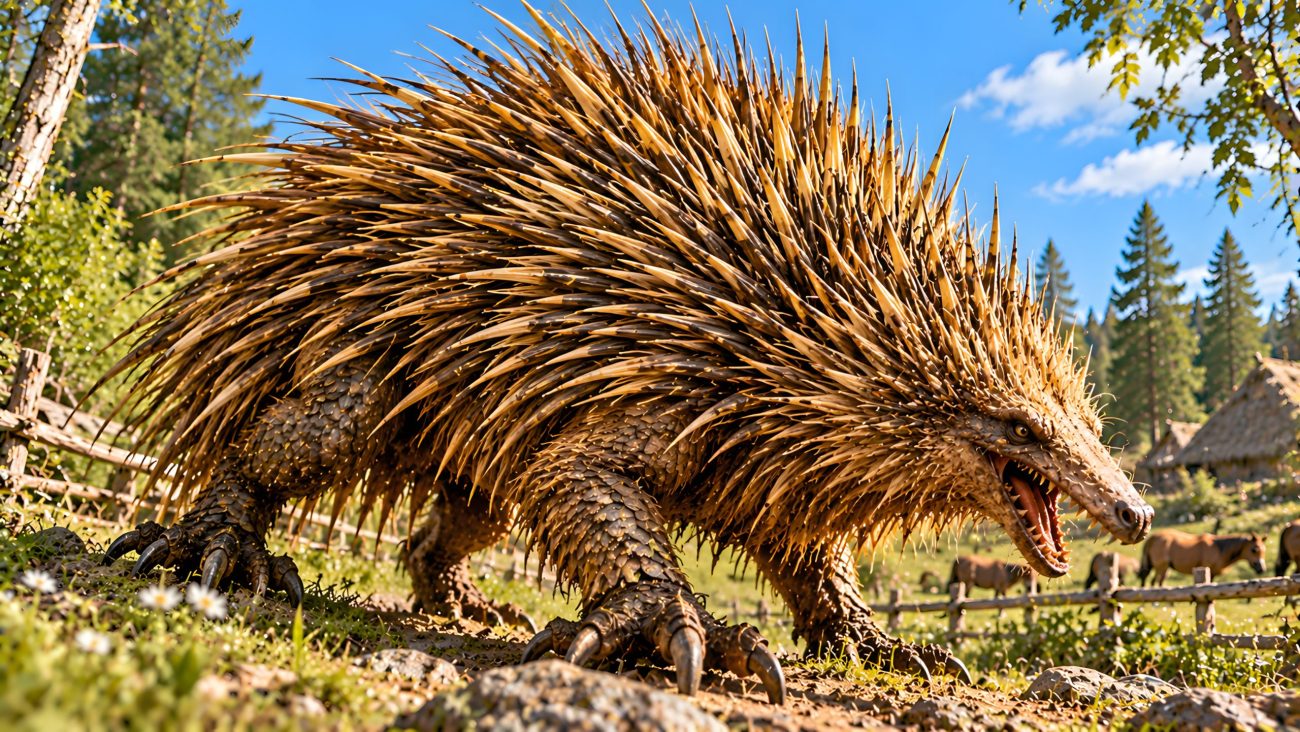
The Chagrin is a monstrous hedgehog or porcupine from Romani mythology, renowned for its extraordinary size, magical powers, and association with livestock diseases. It can grow to an enormous length, with a body covered in thick, sharp spines that shimmer like gold. Its long, pointed quills are said to resemble the thorns of a dragon, while its paws look like those of a dragon and are covered with scales. Some accounts describe the Chagrin as having a long, narrow snout and a fearsome appearance that makes it unlike any ordinary hedgehog.
The Chagrin is considered dangerous to livestock, particularly cattle and horses. It urinates on animals and the ground, causing red abscesses and painful ulcers to appear on the hides of affected animals. Its urine is believed to make horses lose their strength and develop sores. To protect their animals, Romani people use magical rituals and protective charms. They may collect the Chagrin’s burnt feathers or quills and scatter the ashes around livestock, believing this will repel the creature and prevent disease. Iron objects, such as nails or knives, may also be placed among the ashes to strengthen the protection.
The Chagrin can be driven away through spoken spells and ritual actions. One method involves burning its feathers and scattering the ashes over the ground, while another uses a rope smeared with garlic juice to create a protective circle. The rope is accompanied by a spell commanding the Chagrin to jump into a stream and drown. These rituals reflect the creature’s supernatural nature and the fear it inspires among those who depend on livestock for their livelihood. Its claws are also believed to possess magical properties, and rubbing the ashes of its middle claw onto a dead person’s body is said to increase sexual potency.
Sources
“Chagrin.” New Bestiary (Bestiary.us). Accessed October 12, 2026. https://www.bestiary.us/chagrin