Tradition: Ukrainian Mythology, Russian Mythology, Belarusian Mythology
Alternative Names: Samowiła, Samodiva, Vila, Wila
Category: Fairy
The Myth
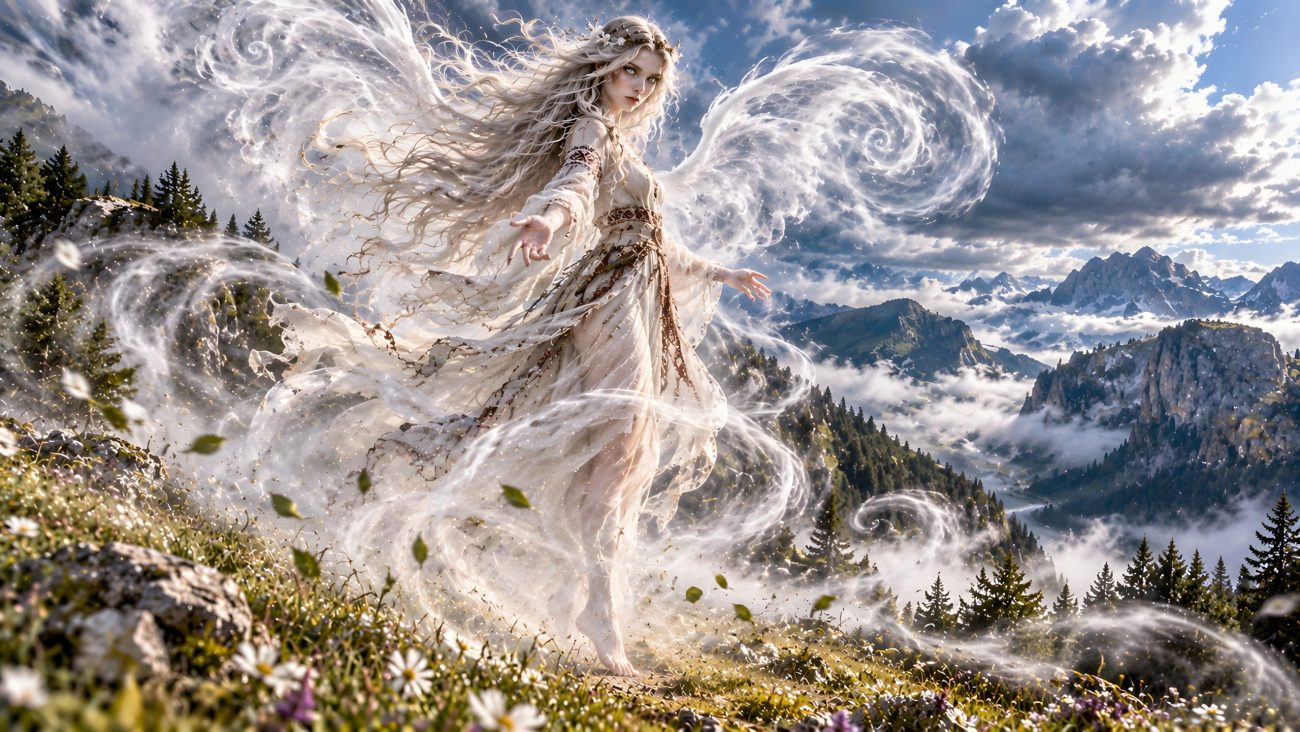
The Wiły were beautiful supernatural spirits associated with the wild places of the natural world. They were believed to originate from the souls of young women who died, and could inhabit forests, mountains, rivers, lakes, and even clouds. Forest Wiły were called samowily, while others were associated with mountains, waters, or clouds. They could appear as beautiful winged girls with pale, almost transparent bodies, usually naked or lightly clothed, but were also able to take the forms of horses, swans, falcons, and wolves. They could transform themselves into whirlwinds and were sometimes associated with serpent-like forms. In groups, they moved through the wilderness and could even ride upon clouds or move them simply by fixing their gaze upon them.
The Wiły were capricious toward humans and could be either helpful or dangerous. They might assist young men in finding wives, warn people of approaching hailstorms, help farmers in need, or reveal knowledge of the future. Their favor could therefore bring protection and prosperity, but their anger was feared. When offended, they could unleash hail, powerful winds, or drought upon fields, destroying crops and bringing hardship to entire communities. They were especially dangerous to people who encountered them directly, as they could dance with men until they died, blind them, drive them mad, or fill them with overwhelming and impossible desires.
In Western Slavic tradition the Wiła could eventually become associated with a more sinister kind of supernatural being, particularly one that brought madness to humans. The old meaning of the word itself became connected with madness, reflecting the belief that encountering these spirits could drive a person out of his senses. Their nature therefore stood between the beautiful and the terrifying: they were alluring spirits of forests, mountains, waters, and storms who could aid mortals when treated well, but whose supernatural beauty concealed a dangerous and unpredictable power.
Sources
“Wiła.” Wikipedia, wolna encyklopedia (Polish Wikipedia). Wikimedia Foundation. Accessed October 5, 2026.
https://pl.wikipedia.org/wiki/Wi%C5%82a