Tradition: Germanic mythology
Alternative Names: Drude, Trude, Druden
Category: Demon
The Myth
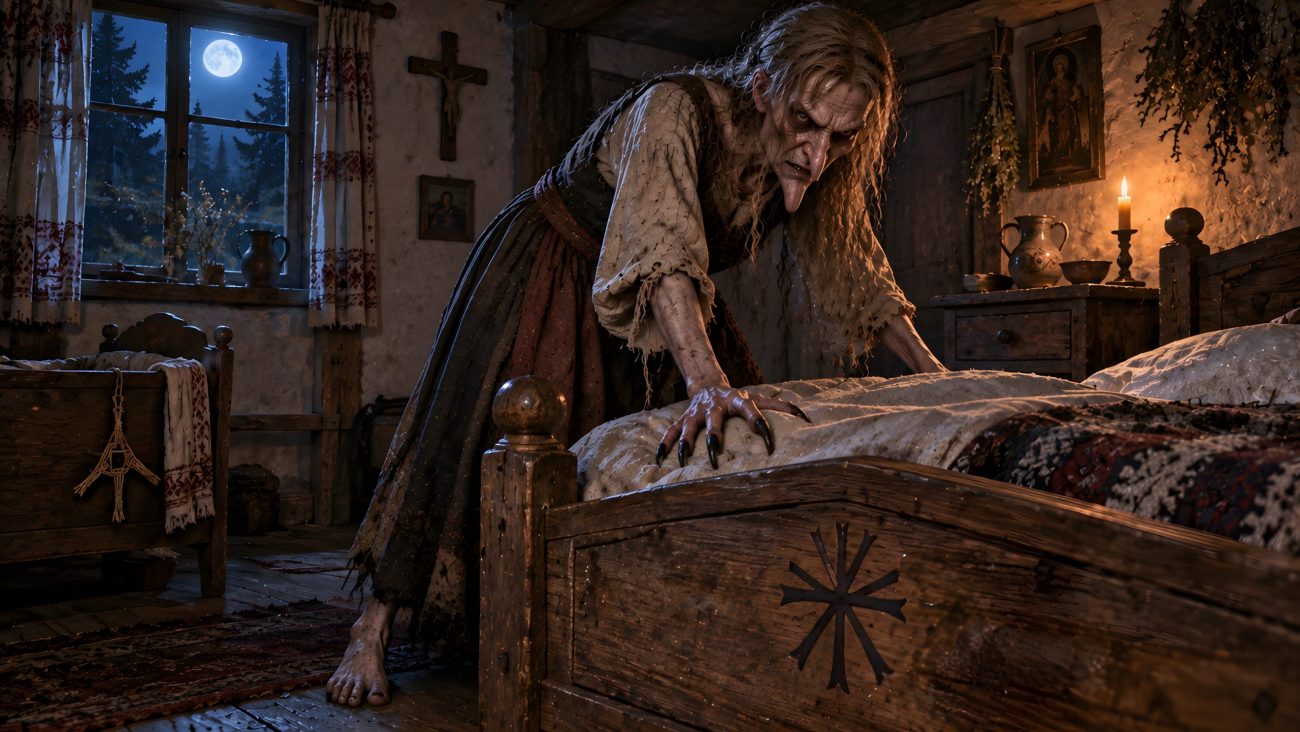
The Drude is a malevolent female nocturnal spirit, particularly associated with southern Germany. She is a kind of Alp or witch-hag who torments people in their sleep and causes nightmares known as Alpdruck, the sensation of being pressed down by a supernatural being.
The Drude is capable of changing her size. She may become small enough to enter a house as a tiny creature, or even appear in the form of a butterfly. At other times she can grow into a giantess, leaving enormous footprints impressed upon stone. In some traditions, it is not the physical body of the witch that attacks people, but her spirit, which leaves her body during the night and travels to torment sleeping victims.
A person oppressed by a Drude could attempt to drive her away in several ways. Grabbing an object could force the Drude to beg for its return. Throwing a pillow at her was believed to repel her, while pronouncing a holy name could frighten her away. In Tyrolean folklore, placing a flax-threshing comb on the chest with its spikes pointing upward was believed to deter the Drude and prevent her from returning.
The Drude was also associated with protective charms. The Drudenfuß, or “Drude’s foot,” was a magical symbol identified with either a pentagram or hexagram. It was placed on houses, stables, gates, cradles, and beds to protect people and animals from the Drude and other supernatural beings. In some regions, a fir-wood Drudenfuß was placed inside a baby’s cradle because the Trude was believed to press down upon infants and prevent them from crying.
Another protective object was the Drudenstein, or “Drude stone.” These were often naturally perforated stones, especially smooth stones shaped by rivers. A ribbon could be threaded through the hole and the stone hung inside a house, beside a cradle, or on the bars of a stable window. Such stones were believed to protect against the Drude, witches, nightmares, Alps, and other harmful spirits.
In southern German folklore, certain stones or landmarks were also known as Trudenstein. One tradition held that these were places where female spirits gathered to decide which humans they would torment. A Bavarian legend tells that the Druden once attempted to place a particular stone at a farmstead, but abandoned it when a rooster crowed.
Sources
“Drude.” Wikipedia: The Free Encyclopedia. Wikimedia Foundation. Accessed September 10, 2026. https://en.wikipedia.org/wiki/Drude