Gelert

Tradition / Region: Welsh Mythology
Alternate Names:
Category: Dog


The Myth

Gelert was the loyal hunting dog of the Welsh ruler Llywelyn the Great.

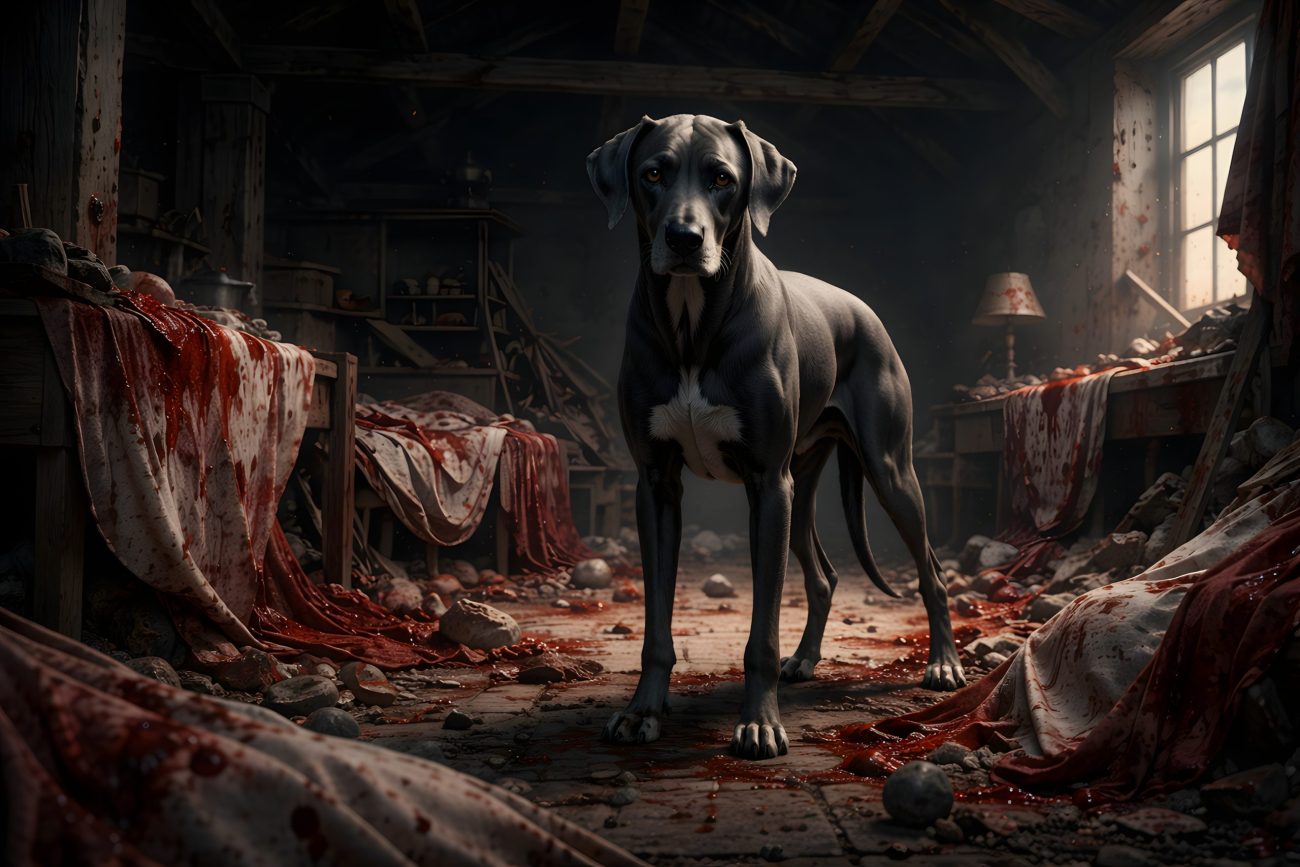
One day Llywelyn went out hunting, leaving his infant child at home. Gelert remained behind to guard the house. When the prince returned, he found the scene in chaos. The cradle was overturned, the child nowhere in sight, and Gelert rushed forward to greet him with blood smeared around his mouth.

Seeing this, Llywelyn believed the worst. Thinking the dog had killed the child, he drew his sword in anger and struck Gelert down.

As the dog gave a final cry, Llywelyn suddenly heard another sound — the crying of his baby. Searching the room, he found the child alive beneath the overturned cradle. Nearby lay the body of a wolf, slain by Gelert while defending the infant.

Realizing what he had done, Llywelyn was filled with grief. He had killed the faithful dog who had saved his son’s life. He buried Gelert with honor, raising a grave in memory of his loyalty and sacrifice.

It was said that from that day forward Llywelyn never smiled again, and the echo of Gelert’s dying cry remained with him for the rest of his life.

Thus Gelert was remembered as the faithful hound who died protecting his master’s child, his story living on as a tale of loyalty, loss, and tragic mistake.


Gallery


Sources

Wikipedia contributors. (n.d.). Gelert. In Wikipedia, from https://en.wikipedia.org/wiki/Gelert


Interpretive Lenses

Religious Readings
  • Christian Ascetic Deep Dive
Philosophical Readings
  • Nietzschean Deep Dive
Psychological Readings
  • Jungian Deep Dive
Esoteric Deep Dive
  • Hermetic Deep Dive
Political / Social Readings
  • Marxist Deep Dive

Cavall

Tradition / Region: Welsh Mythology
Alternate Names: Cafall, Cabal, Caball
Category: Dog


The Myth

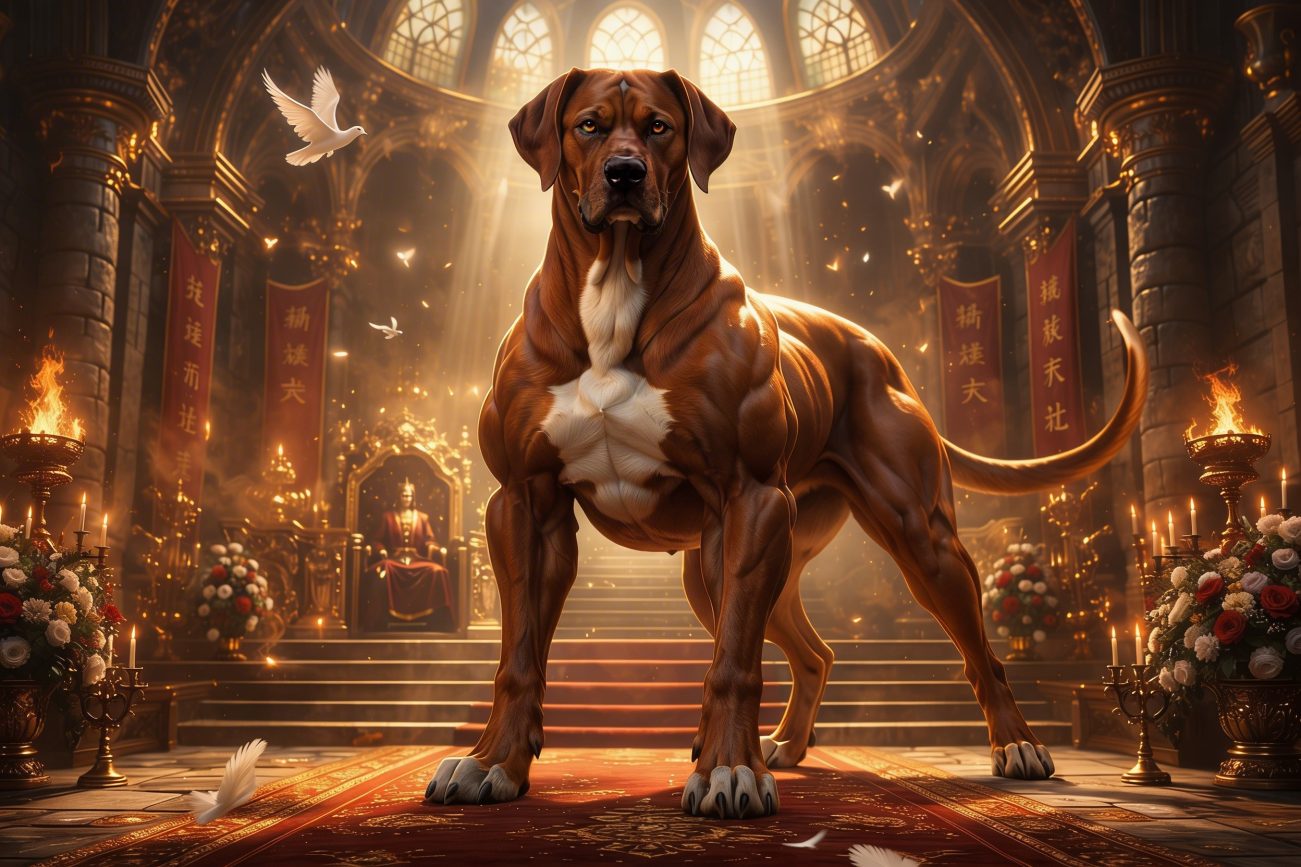
Cavall was the favorite hunting dog of King Arthur.

He was famed among Arthur’s hounds for his strength and loyalty, and during hunts he held a special place. When Arthur pursued game, the other dogs were often released first, while Cavall was kept back. Only when the moment was right would he be unleashed, and then he would race after the quarry with unmatched speed.

Cavall is most closely remembered for the hunt of the monstrous boar Twrch Trwyth. During this pursuit, the hound chased the beast across the land, and in the course of the hunt he leapt upon a stone and left the mark of his paw impressed in it.

Arthur ordered that a mound of stones be raised around that rock to honor the moment. The place became known as Carn Cavall, the Cairn of Cavall.

It was said that the stone bearing the pawprint possessed a strange power. Travelers who visited the cairn sometimes took the stone away, carrying it off for a day or a night. Yet when they returned, the stone would always be found back upon the mound where it belonged, as though the land itself refused to let the mark of Arthur’s dog be removed.

Thus Cavall was remembered not only as a hunter beside a king, but as a hound whose deed left a permanent sign in the earth, a mark that endured long after the hunt itself had passed into legend.


Gallery


Sources

Wikipedia contributors. (n.d.). Cavall. In Wikipedia, from https://en.wikipedia.org/wiki/Cavall


Interpretive Lenses

Religious Readings
  • Christian Ascetic Deep Dive
Philosophical Readings
  • Nietzschean Deep Dive
Psychological Readings
  • Jungian Deep Dive
Esoteric Deep Dive
  • Hermetic Deep Dive
Political / Social Readings
  • Marxist Deep Dive

Petitcrieu

Tradition / Region: Welsh Mythology
Alternate Names: Petitcreiu, Petitcru, Pticru
Category: Dog


The Myth

Petitcrieu was a wondrous dog said to come from the enchanted isle of Avalon. He belonged to Duke Gilan of Wales, who had received him as a gift from a goddess who loved him.

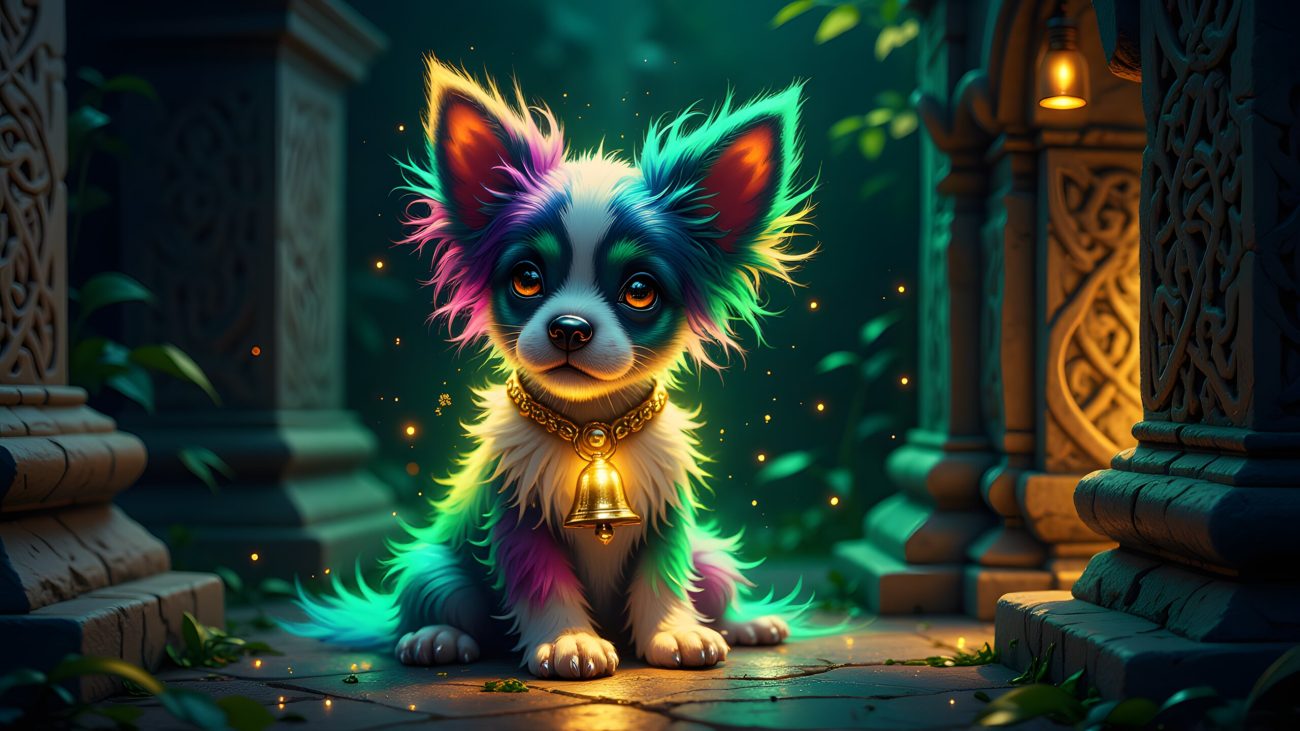
The little dog was unlike any creature of the ordinary world. His coat shimmered with many colors, beautiful beyond description, and around his neck he wore a collar with a small golden bell. Whenever the bell rang, its sound filled all who heard it with joy and drove away sorrow and grief.

Petitcrieu was a strange being even among magical creatures. He could not move on his own and had to be carried wherever he went. He never ate and seemed to have no need of food. He simply existed as a living marvel, bringing comfort to those near him.

When the knight Tristan was living in exile from Cornwall, he came to the court of Duke Gilan. The Duke, wishing to cheer his guest, showed him the fairy dog. Tristan was deeply taken with the creature and resolved to win him.

A giant named Urgan was troubling the land, and Tristan promised that if he defeated the giant, the Duke would grant him whatever reward he chose. Tristan fought and killed the giant, and when the time came to claim his prize, he asked for Petitcrieu.

The Duke honored his word, and Tristan took the dog with him. But Tristan did not keep the magical creature for himself. Instead, he sent Petitcrieu to Iseult, the woman he loved, hoping the bell’s enchantment would keep her forever free from sorrow.

When Iseult received the dog, she understood the magic of the bell and what it would do to her heart. She did not wish to live without grief, nor to have her true feelings hidden behind enchantment. Taking the collar, she removed the golden bell and cast it into the sea.

From that moment, Petitcrieu’s magic could no longer banish sadness. Yet the little dog remained with her, no longer a charm against sorrow but a faithful companion who stayed beside her in both happiness and grief.

And so the fairy dog of Avalon passed from being a creature of enchantment to one of quiet loyalty, remembered in the tales of Tristan and Iseult.


Gallery


Sources

Wikipedia contributors. (n.d.). Petitcrieu. In Wikipedia, from https://en.wikipedia.org/wiki/Petitcrieu


Interpretive Lenses

Religious Readings
  • Christian Ascetic Deep Dive
Philosophical Readings
  • Nietzschean Deep Dive
Psychological Readings
  • Jungian Deep Dive
Esoteric Deep Dive
  • Hermetic Deep Dive
Political / Social Readings
  • Marxist Deep Dive