
Black Hare

Tradition / Region: Austrian Mythology
Alternate Names: –
Category: Rabbit (hare)


The Myth

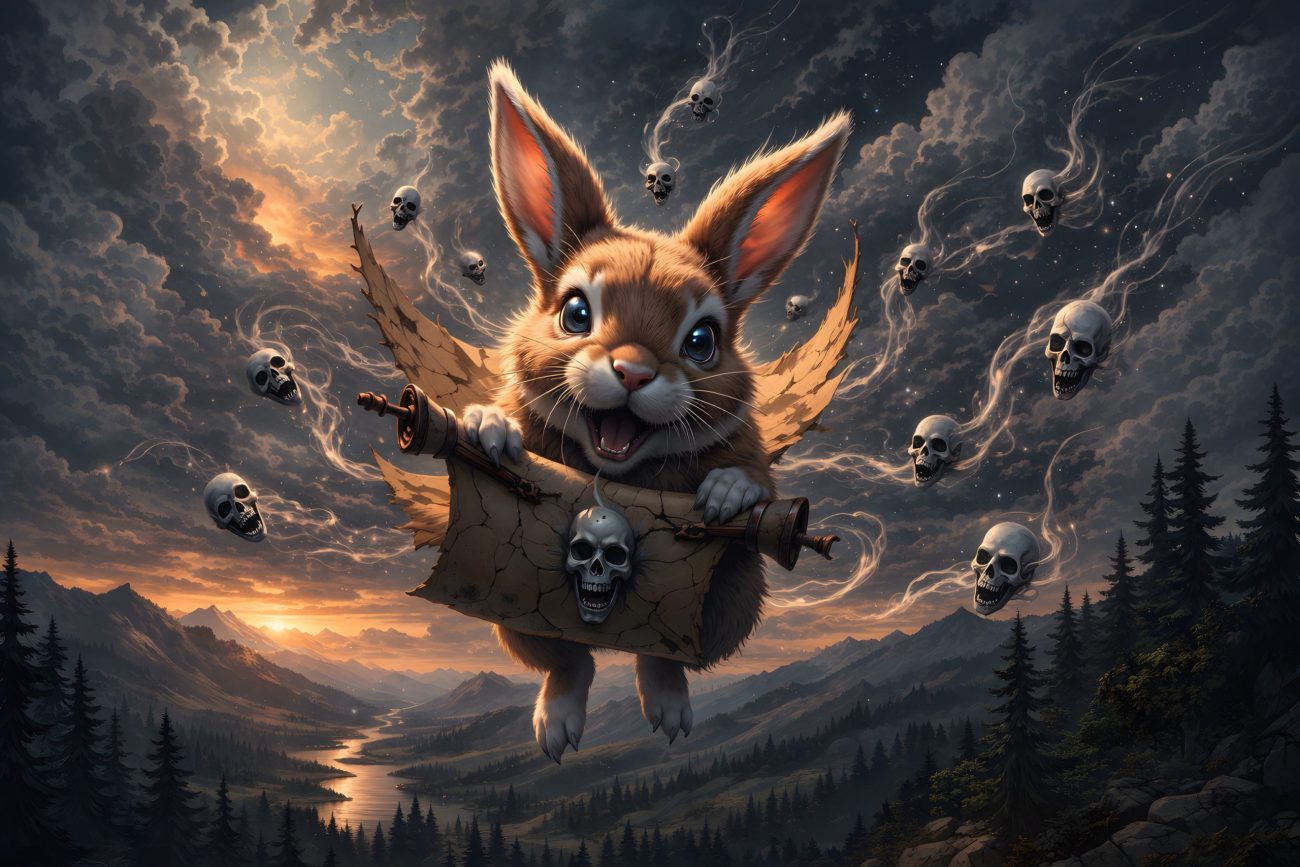
The Devil appears as a black hare and is understood to be a manifestation of the Devil himself, taking animal form to deceive and claim human lives.

The legend takes place in an old farmhouse where a group of workers were threshing grain in autumn. During a break, they joked and challenged one another, and one of the farmhands boasted that a person could hang themselves even from a single straw. When the others doubted him, he insisted it was possible and agreed to prove it, asking them to cut him down immediately if he began to suffocate.

He tied a straw to a beam and placed it around his neck, attempting to demonstrate his claim. At that exact moment, a pitch-black hare with glowing red eyes suddenly ran through the barn. The sight startled everyone, and they all chased after it, completely forgetting the man hanging from the straw.

When they finally returned, exhausted and empty-handed, they found him dead, still hanging. The straw had not broken.

The black hare was understood to have been the Devil, appearing deliberately to distract the others and claim the life of the reckless man.


Sources

sagen.at contributors. (n.d.). Der schwarze Hase. In sagen.at, from https://www.sagen.at/texte/sagen/oesterreich/oberoesterreich/linz/derschwarzehase.html
Utixo’s Rabbit

Tradition / Region: Khoi mythology (Southwestern Africa)
Alternate Names: Tiqua
Category: Rabbit / divine messenger


The Myth

Utixo is a benevolent sky god of the Khoi people, dwelling above the world and speaking through thunder. He sends rain to nourish the land and watches over human life. In one well-known story, Utixo decided to send a message to humanity concerning death.

Utixo declared that death would not be eternal and that humans would one day rise again. To deliver this message, he chose a rabbit as his messenger and sent it down from the sky to the people.

As the rabbit traveled, it became confused and forgot the message it had been entrusted with. When it finally reached humanity, the rabbit spoke the opposite of Utixo’s words, telling people that death was final and that they would not rise again.

Because of the rabbit’s mistake, death became permanent in the world. From that time onward, humans were said to die forever, and the rabbit was remembered as the bearer of the wrong message, whose error changed the fate of humankind.

In Khoi tradition, this story explains why death is irreversible and why the rabbit holds a special place in myth as a divine messenger whose failure shaped the human condition.


Interpretive Lenses

Religious Readings
Philosophical Readings
Psychological Readings
Esoteric Deep Dive
Political / Social Readings
Other

Centzon Tōtōchtin

Tradition / Region: Aztec Mythology, Mexcian Mythology
Alternate Names: Centzontōtōchtin (“Four Hundred Rabbits”)
Category: Rabbit, deity


The Myth

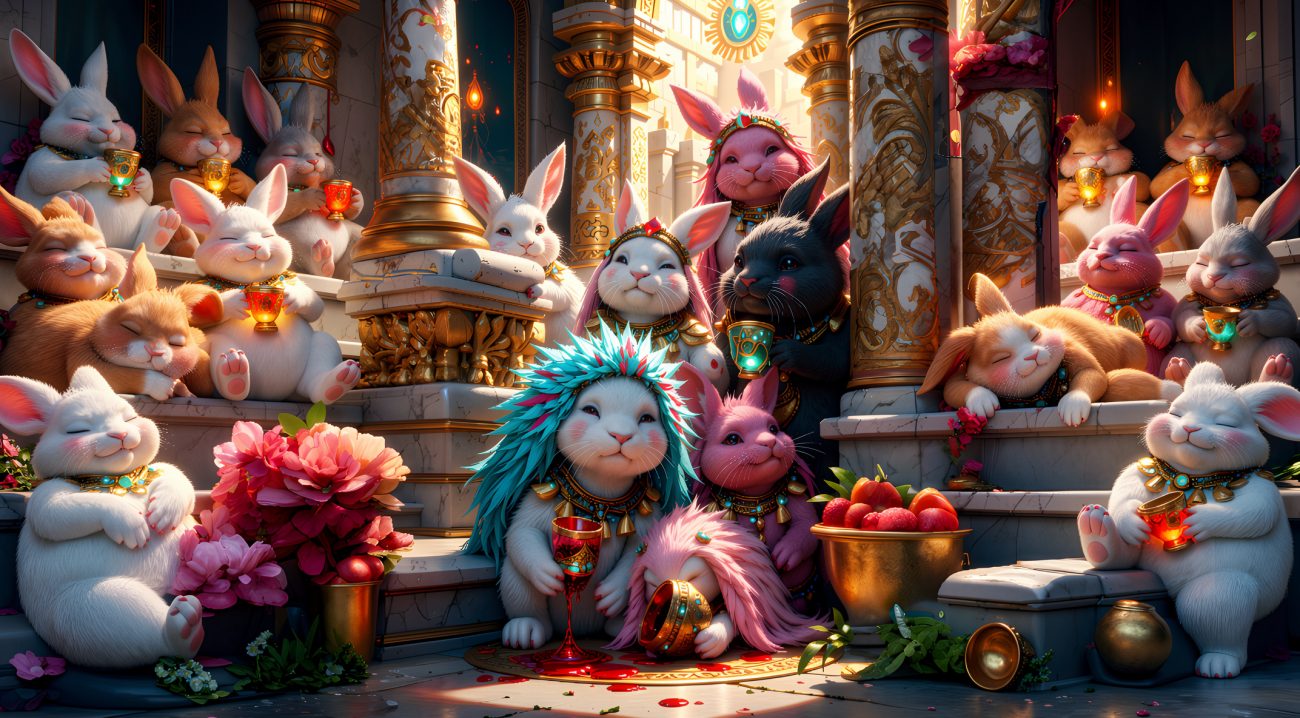
In Mexica mythology, the Centzon Tōtōchtin are a great company of divine rabbits known as the Four Hundred Rabbits. They are gods associated with pulque, the fermented drink made from the maguey plant, and they are said to gather frequently for feasts and drunken celebrations. The number four hundred does not signify a precise count, but rather an uncountable multitude.

The Centzon Tōtōchtin are the children of Mayahuel, the goddess of the maguey plant, and Patecatl. Mayahuel was believed to nourish her children with the sap of the maguey, which became pulque. Through this parentage, the rabbits are bound to the plant and its intoxicating drink.

Each of the Centzon Tōtōchtin embodies a different aspect of drunkenness and behavior brought on by pulque. Among them are Tepoztecatl, Texcatzonatl, Colhuatzincatl, and Macuiltochtli, whose name means “Five Rabbit.” Tepoztecatl is often described as their leader and is closely associated with ritual calendars and sacred festivals.

The rabbits are said to assemble together, drinking pulque and celebrating noisily. In these gatherings, they represent the many forms intoxication can take, from joy and laughter to disorder and excess. Their presence explains why different people react differently when they drink, each one being touched by a different rabbit god.

The Centzon Tōtōchtin appear in myths surrounding the discovery and ritual use of pulque. In some stories, a rabbit is involved in revealing the maguey’s hidden properties, linking the animal directly to the sacred drink. Shrines and temples, including those dedicated to Tepoztecatl, honored these gods through offerings of pulque during festivals and ceremonies.

Thus, the Centzon Tōtōchtin remain remembered as a divine multitude of rabbit gods, born from the maguey, gathering endlessly in celebration, and inseparably bound to pulque and its effects among gods and humans alike.


Interpretive Lenses

Religious Readings
Philosophical Readings
Psychological Readings
Esoteric Deep Dive
Political / Social Readings
Other