Tradition: Manx Mythology
Alternative Names: The Foawr, Manx Giant
Category: Giant
The Myth
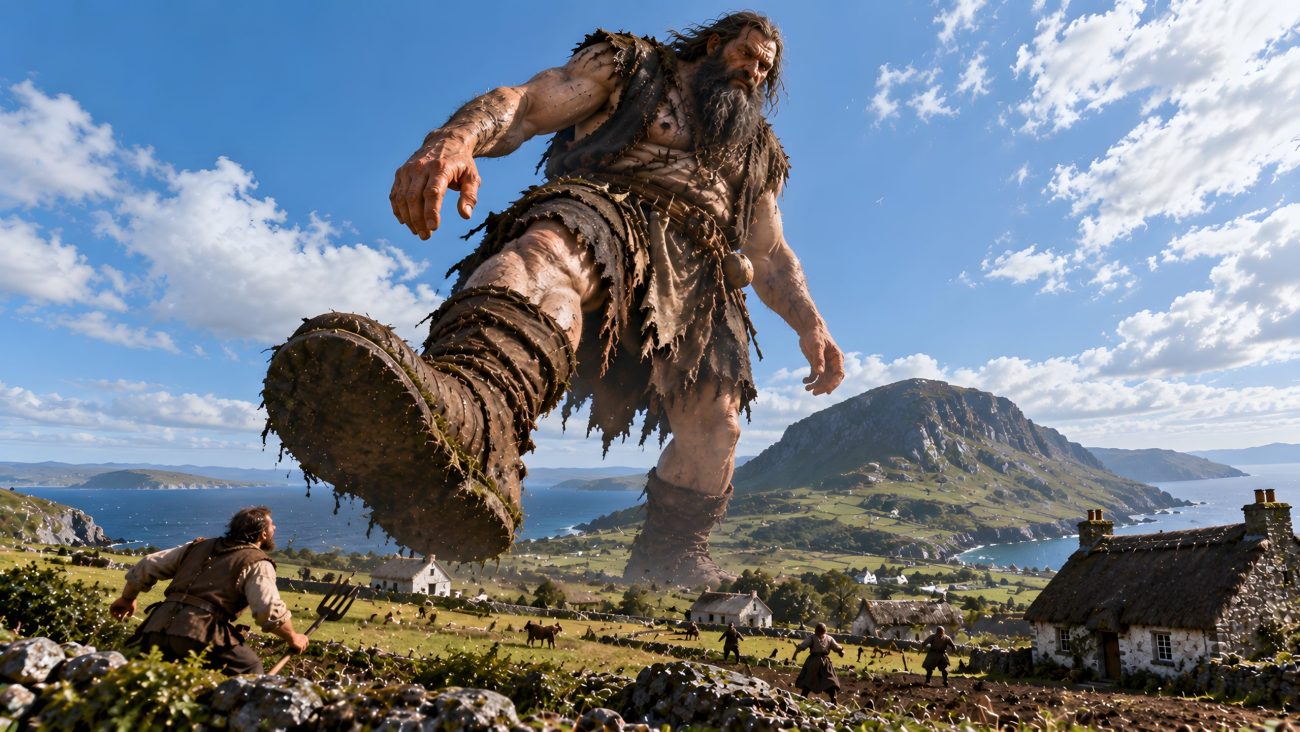
The Foawr is a giant from the folklore of the Isle of Man, known for striding across the island while carefully avoiding the houses beneath his enormous feet. According to the tale A Moon of Gobbags, a Foawr lived on Cronk-ny-Iree-Laa, meaning the Hill of the Rising Sun, where he slept among the rocks before wandering across the countryside during the day.
One day, the giant visited the farm of Colcheragh, a notoriously lazy farmer who neglected his fields until they became overgrown with thistles and other weeds. When the Foawr stepped into the thistles, they scratched the soles of his best shoes. Mistaking the weeds for an unusual crop, he asked Colcheragh what they were. Rather than admit that his land was neglected, the farmer claimed that the thistles belonged to the Little Fellows, supernatural beings, and that their down could be used to make a wonderfully soft bed.
The Foawr, whose rocky sleeping place was uncomfortable, offered Colcheragh a pocketful of lead and copper from the old mines and caves near Bradda in exchange for seven bags of thistledown. The farmer avoided immediate trouble by claiming that the down could only be gathered during a mythical event called a moon of gobbags. He insisted that the giant knew what this meant, although no such moon existed. When the Foawr eventually discovered the deception, he threatened to blow Colcheragh’s house into the sea unless the thistledown was ready the following night.
Colcheragh’s wife devised a solution. She advised him to plough the entire field and then claim that the Little Fellows had collected the thistledown and cleared the land while he slept. Colcheragh followed her instructions, leaving no thistles behind. When the Foawr returned with his sacks, the farmer blamed the imaginary Little Fellows and suggested that they had carried the thistledown toward Brearey Mountain. The giant hurried away in pursuit, but naturally found nothing.
The deception saved Colcheragh from the Foawr’s anger, but it also taught him a lesson. From that day onward, he became one of the tidiest farmers on the island, keeping his land free of weeds so that the giant would have no reason to return. The tale combines the formidable size and strength of the Foawr with a humorous story about laziness, clever deception, and the consequences of neglecting one’s responsibilities.
Sources
Broome, Dora. Fairy Tales from the Isle of Man. Isle of Man: Norris Modern Press Limited, 1951 (reprinted 1980).