Buchis

Tradition / Region: Egyptian mythology
Alternate Names:
Category: Cow


The Myth

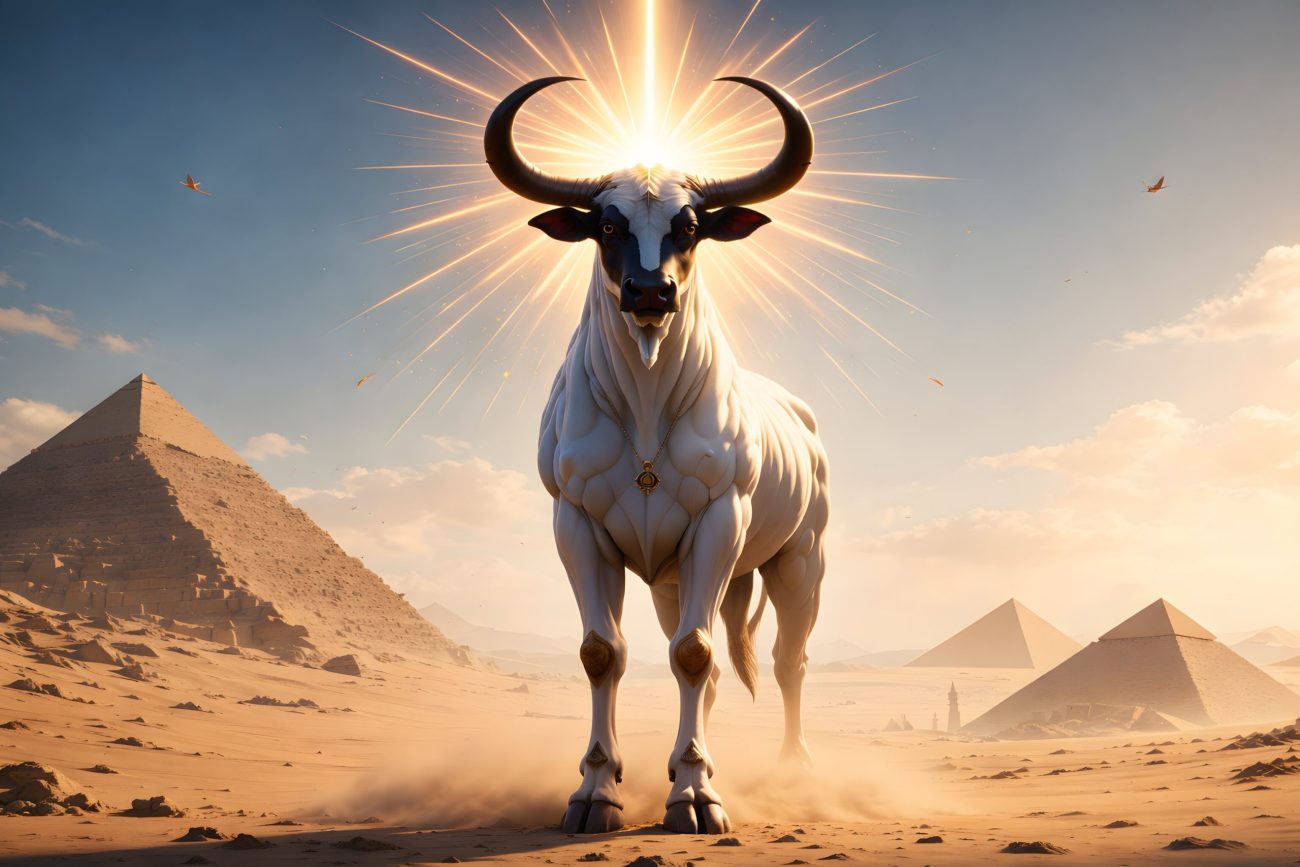
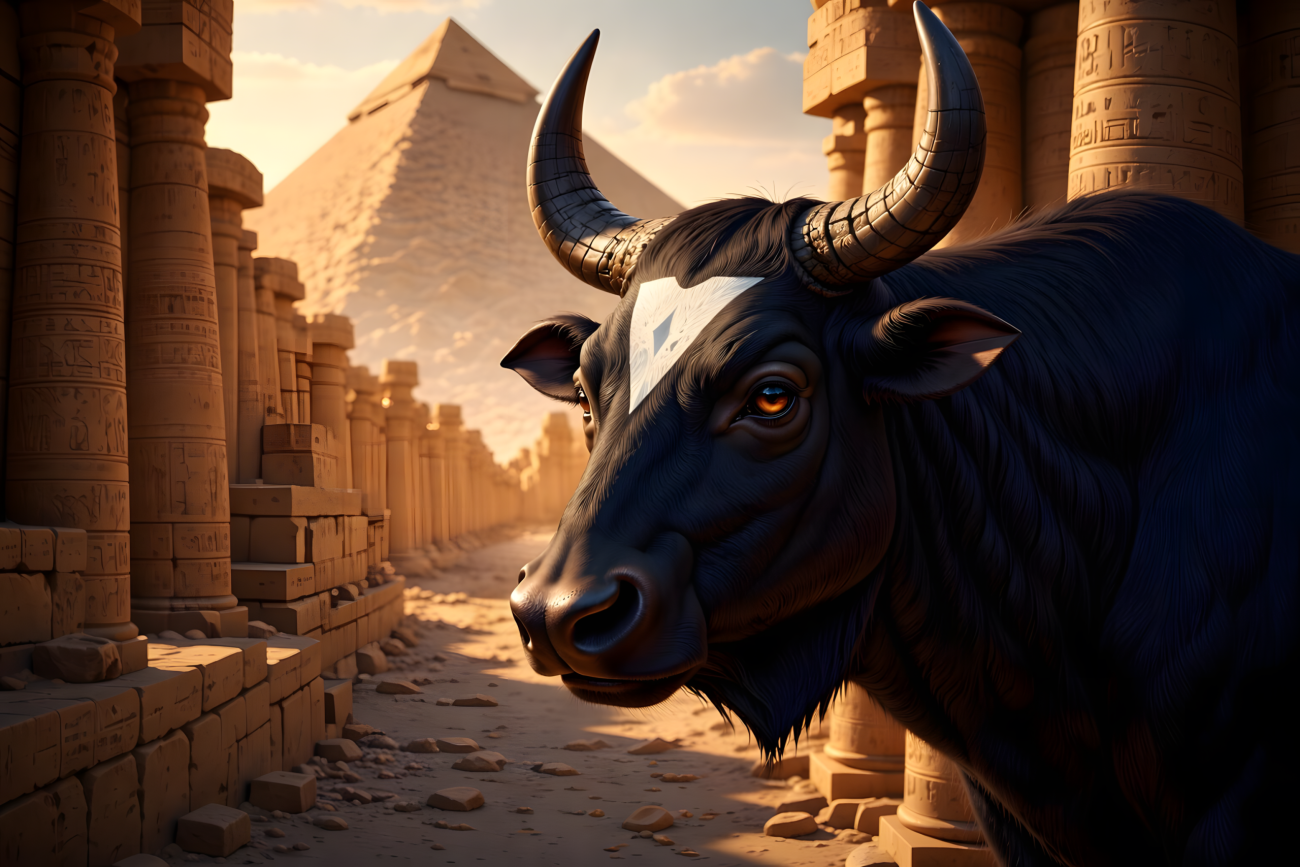
In the city of Hermonthis there appeared a bull unlike any other. Its body shone white as sunlight, while its face was dark as night. The people knew at once that this was no ordinary beast. It was Buchis, the living presence of Montu, god of war and strength, whose life-force had taken flesh.

Buchis was not worshipped as an animal, but as a god walking among humans. Every movement of the bull was watched closely, for within its steps and gestures the will of Montu was believed to be revealed. Priests cared for it with reverence, tending to its needs as one would attend a divine king. Where Buchis lived, Montu himself was thought to be present.

When Buchis died, it did not pass away like common cattle. Its body was prepared with sacred rites, preserved so that the divine force within it would endure beyond death. The bull was laid to rest in a holy place set aside for such beings, and the land mourned as if a god had withdrawn from the world.

Yet Buchis did not end with a single life. Another bull would be born bearing the same signs—white body, black face—and Montu would again walk among mortals. In this way, Buchis embodied the cycle of divine presence, death, and return.

To the people of Egypt, Buchis was proof that the gods were not distant. They could live, breathe, and stand silently among humankind, their power contained within the calm, watchful form of a sacred bull.


Gallery


Sources

Dodson, A. (2005). Bull Cults. In American University in Cairo Press eBooks (pp. 72–102). https://doi.org/10.5743/cairo/9789774248580.003.0004


Interpretive Lenses

Religious Readings
  • Christian Ascetic Deep Dive
Philosophical Readings
  • Nietzschean Deep Dive
Psychological Readings
  • Jungian Deep Dive
Esoteric Deep Dive
  • Hermetic Deep Dive
Political / Social Readings
  • Marxist Deep Dive
Other
  • How to Invite The Buchis

Apis

Tradition / Region: Egyptian mythology
Alternate Names: Hapis; Hapi-ankh
Category: Cow


The Myth

In ancient Egypt, the gods did not always speak through thunder or visions. Sometimes, they walked the earth in living form. One such presence was Apis, the sacred bull of Memphis.

Apis was born when a ray of divine light struck a cow, filling her womb with the power of the heavens. From this miracle came a calf unlike any other, marked from birth as holy. His black body bore signs placed by the gods themselves, and through these signs the people knew that a divine will now walked among them.

Apis lived in a temple, tended with great care. He was not worshipped as an animal alone, but as a bridge between worlds. Through his movements, his moods, and his behavior, the gods revealed their intentions. When Apis was calm, the land prospered. When he grew restless, people feared change was coming.

He was bound to great gods. In life, he carried the presence of Ptah, the shaper of the world. In death, he became one with Osiris, lord of rebirth and the underworld. Thus Apis embodied the cycle of existence itself: birth, power, death, and return.

When Apis died, he was mourned as a king. His body was laid to rest with ceremony and reverence, and the people waited for his return, knowing another Apis would be born. Each new bull was not a replacement, but a continuation—the same divine force entering the world again in living flesh.

Through Apis, the Egyptians believed the gods remained close. He was strength made visible, fertility given form, and the promise that life, even in death, never truly ends.


Gallery


Sources

Herodotus. (1921). The Histories, Book 3, Section 28 (A. D. Godley, Trans.). Loeb Classical Library, Vol. II. Cambridge, MA: Harvard University Press.

Wikipedia contributors. (n.d.). Apis (deity). In Wikipedia, The Free Encyclopedia. Retrieved May 28, 2025, from https://en.wikipedia.org/wiki/Apis_(deity)


Interpretive Lenses

Religious Readings
  • Christian Ascetic Deep Dive
Philosophical Readings
  • Nietzschean Deep Dive
Psychological Readings
  • Jungian Deep Dive
Esoteric Deep Dive
  • Hermetic Deep Dive
Political / Social Readings
  • Marxist Deep Dive
Other
  • How to Invite The Apis

Akshit

Tradition / Region: Egyptian mythology
Alternate Names:
Category: Cow, Goddess


The Myth

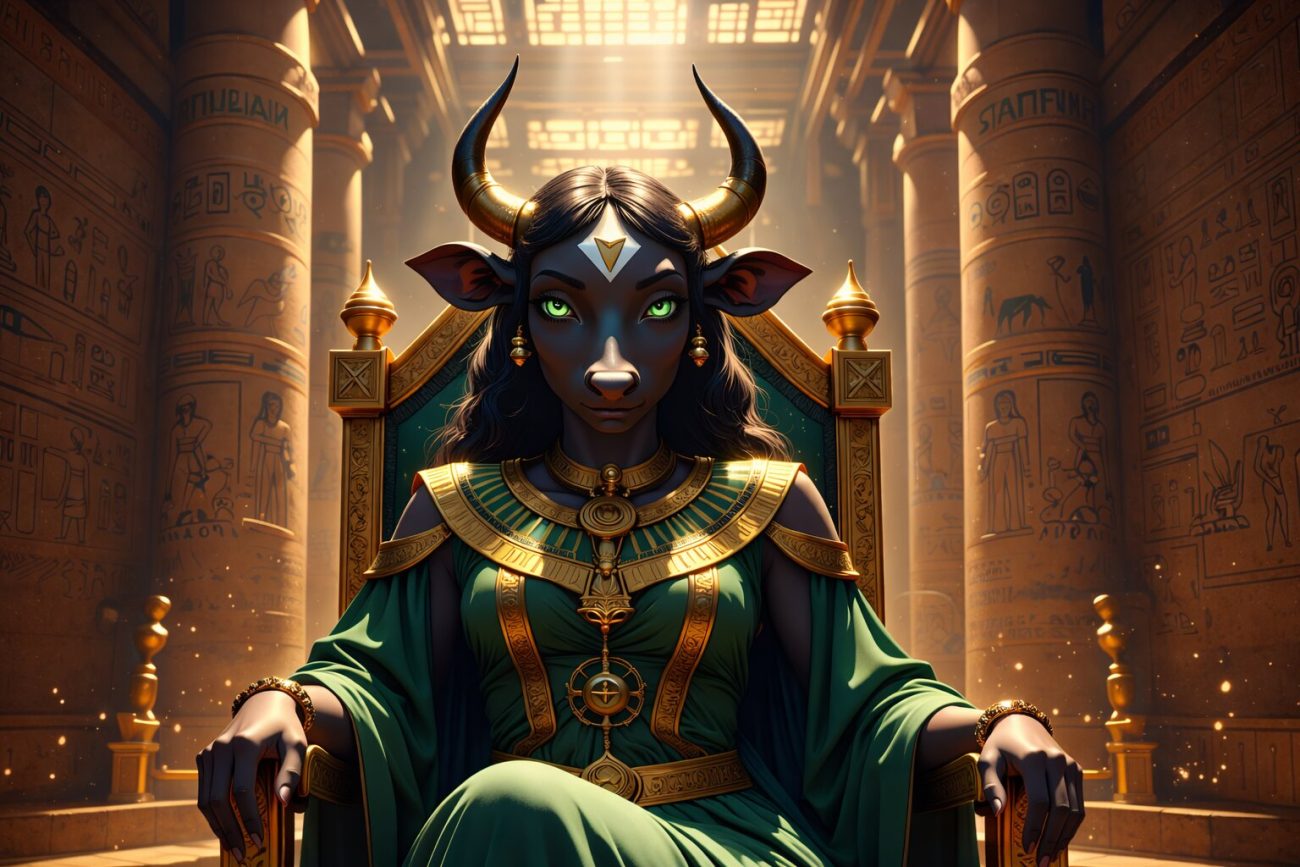
In the city of Oxyrhynchus there was honored a quiet goddess named Akshit, a sacred cow whose destiny was bound to the gods themselves. From her body was born Apis, the holy bull, chosen to walk among humans as a living sign of divine power.

Akshit nurtured her son knowing he was more than a calf. Within him lived fertility, strength, and the will of the gods. As Apis grew, he became the center of reverence: temples rose for him, offerings were brought, and the people watched his movements for meaning. Through him, the gods spoke without words.

Akshit remained in the background of this sacred life, yet everything depended on her. Without her care, the divine bull could not exist. As his mother, she guarded the passage by which divine force entered the world in living form.

Thus Akshit was remembered not for command or spectacle, but for creation itself—the sacred mother who gave the gods a body through which they could dwell among humankind.


Gallery


Sources


Budge, E. A. W. (1920). An Egyptian hieroglyphic dictionary : with an index of English words, king list and geological list with indexes, list of hieroglyphic characters, coptic and semitic alphabets, etc. (p. 95) J. Murray.


Interpretive Lenses

Religious Readings
  • Christian Ascetic Deep Dive
Philosophical Readings
  • Nietzschean Deep Dive
Psychological Readings
  • Jungian Deep Dive
Esoteric Deep Dive
  • Hermetic Deep Dive
Political / Social Readings
  • Marxist Deep Dive
Other
  • How to Invite The Akshit