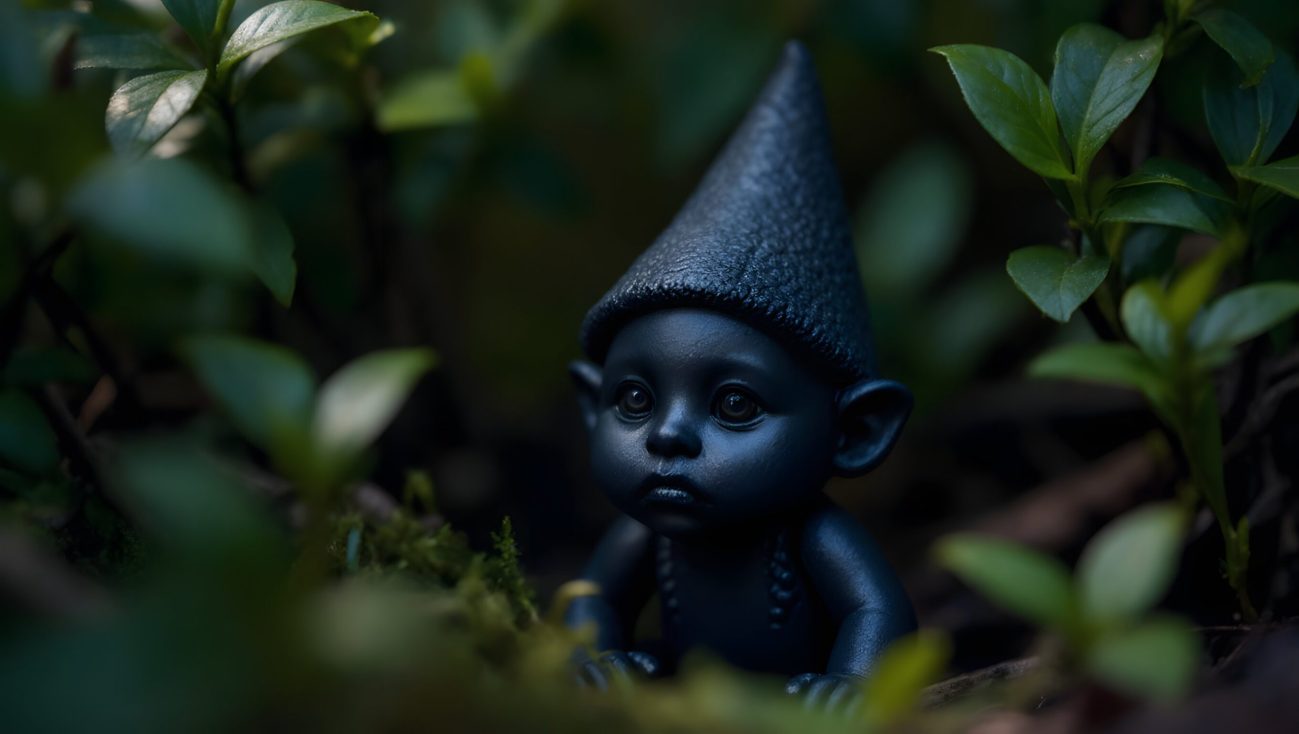
In the countryside of Groningen, people once spoke in hushed tones of the Grauwkes, small, black gnome-like beings who lived hidden beneath hedges and thick growth. By day they remained unseen, buried deep in the roots and shadows where no one looked too closely.
At evening, when light faded and the land grew quiet, the Grauwkes emerged. They did not come to help or to trade favors, but to frighten. Shapes would move where nothing should be, soft sounds followed travelers along paths, and sudden presences made hearts race without reason. People felt watched, surrounded, or chased, though nothing could be clearly seen.
The Grauwkes were not known for grand deeds or lasting harm. Their power lay in fear itself—the unease that crept in at dusk, the sudden panic that made someone hurry home, the sense that something small and malicious lingered just out of sight.
Because of this, people avoided hedges after dark and warned children not to linger outside at night. The Grauwkes did not need to be seen to be believed in; their work was done as soon as fear took hold.
On the island of Schiermonnikoog, the dunes are said to be inhabited by the Dúnaters, tiny beings who belong wholly to sand, wind, and grass. They are no more than five centimeters tall, small brown figures covered in hair, so easily mistaken for clumps of earth or roots if glimpsed at all.
The Dúnaters live deep within the dunes and act as guardians of the plants and animals that grow there. Anyone who damages the dunes—by uprooting plants, hunting where they should not, or disturbing the land—risks their anger. Though small, the Dúnaters are not weak. When provoked, they can make themselves large, looming and dangerous, and their punishment is swift.
Children were often warned about them. Those who wandered carelessly were told that a Dúnater might drag them into a rabbit hole, pulling them beneath the sand where no one could see or hear them. Such stories kept children close to home and respectful of the dunes.
Yet the Dúnaters were not only feared. They were also woven into gentler beliefs about birth and beginnings. On the island stood a high, bare dune called the Blinkert, said to be the place where children came from. There, the Dúnaters cared for newborn babies beneath the sand, tending them until parents came to choose them. It was said that if a child laid their ear against the dune, they could hear a baby softly crying beneath the surface. Children could even go there to ask for a little brother or sister.
But the Dúnaters were unpredictable. In darker moods, they were said to push babies under the sand until they ate it, a grim image meant to explain illness, deformity, or misfortune. In the late nineteenth century, when a girl appeared on the island with a large hump on her back, people whispered that the Dúnaters had held her in their tunnels for too long, forcing her to swallow sand until it deformed her body.
Thus the Dúnaters lived in memory as both protectors and threats: tiny dune folk who guarded nature, frightened children into obedience, and lingered beneath the sand as unseen keepers of life, danger, and the fragile balance of the island.
In the peatlands of the Soesterveen near Soest, people once spoke quietly of small beings called Meuzelmannekens. They were a kind of earth folk, living unseen among the turfhopen—the stacked piles of peat that lay drying on the land. While the peat remained, the Meuzelmannekens dwelled within it. When the turfhopen were taken away, they slipped back into the earth itself, vanishing without trace.
They were also said to live in the grain fields near the Lazarusberg. While the corn stood tall, the Meuzelmannekens remained hidden among the stalks. But when harvest time came and the fields were cut bare, they withdrew once more into the mountain. There, deep within the hill, they spent the entire winter, sheltered beneath the ground.
No one ever truly saw them. They caused no harm, stole nothing, and brought no illness or fear. Their presence was known only through tradition and quiet belief, as beings who shared the land but never troubled those who worked it.
The Meuzelmannekens were remembered as peaceful dwellers of soil and field, moving with the rhythms of harvest and winter, retreating into earth and hill as naturally as seeds sinking back into the ground.
Beneath fields, hills, and old farmyards live the aardmannetjes, small earth beings usually dressed in green. They dwell unseen beneath the ground, moving quietly through the soil, and though most people never glimpse them, their presence is felt in subtle ways.
The aardmannetjes help humans with their work, but only if they are not watched. Crops grow straighter, tools are found where they were lost, and tasks seem to finish themselves overnight. Yet they do not tolerate curiosity. Anyone who spies on them risks punishment, for the aardmannetjes are said to blow out the eye of those who try to observe them.
They are also known to steal human children, leaving one of their own in the cradle instead. The small pipes sometimes found sticking out of the ground are said to be aardmanspijpjes, openings to their hidden homes. Whoever builds a house on land where aardmannetjes live invites disaster: such houses are doomed to be destroyed by fire or storm, again and again.
In Friesland, the ierdmantsjes are said to dance in the middle of cornfields, singing a strange song: “Monday, Tuesday, Wednesday.” Once, a hunchback overheard them and dared to finish the song with “Thursday, Friday.” Instead of punishing him, the earth beings laughed and rewarded him by removing his hump.
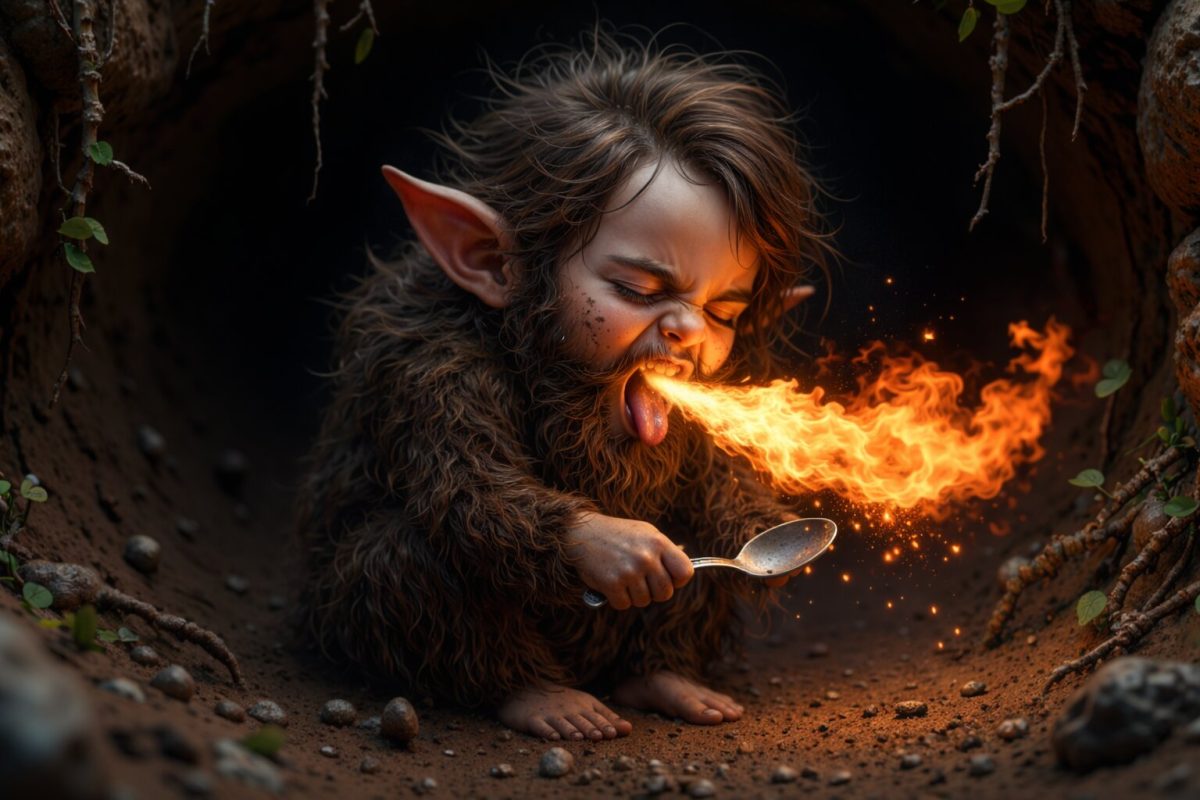
In another tale, a mighty, hairy aardman lived in the Aardjesberg near Bussum. Each year he demanded a maiden as his bride. When no maidens were left, his rage grew uncontrollable. He spewed fire from his mouth, and the nearby village was burned to the ground, house by house, until nothing remained.
Thus the aardmannetjes are remembered as helpers and destroyers alike—generous when respected, merciless when crossed—guardians of the earth who demand silence, distance, and humility from those who live above them.
Limburg
In the folklore of Limburg, especially along the River Maas, people once believed in small underground beings called aardmannetjes (little earth men). According to local legends, they lived in tunnels beneath places such as the ruins of Stein Castle. These creatures slept during the day and came out at night. They were said to wander through houses borrowing kitchen utensils, milking cows, and sometimes causing quarrels among servants, whom they would watch and laugh at from a distance.
Stories about them were told across many Limburg villages. In Doenrade, a servant once tried to trick the aardmannetjes by putting pieces of old shoe leather into a pot of rice pudding meant for them. When the dwarfs discovered the prank, they realized they were being spied on and extinguished the servant’s light—after which he was said to have lost an eye.
In Roggel, the aardmannetjes were believed to borrow pots and pans at night and return them before morning, carefully cleaned. They were harmless as long as people left them alone and did not try to look at them. According to tradition, they eventually disappeared because they could not tolerate the sound of church bells.
Similar traditions placed them at other locations such as Pijpersberg, Spekberg near Tegelen, and near Nunhem and Heithuizen. At Spekberg, legends claimed the small people once lived inside the sandy hill and smoked tiny pipes. Small clay pipes occasionally found in the ground were popularly believed to have belonged to these beings, though scholars later suggested they were early tobacco pipes.
One famous incident occurred around 1832, when a local man secretly buried small pipes in the hill and later “discovered” them, claiming they were relics of the aardmannetjes. After an investigation by the Belgian authorities, he confessed the find was a hoax.
Frisia
Another story from Maasbree tells that when a fire destroyed twenty-two houses, one home remained untouched because its owner had always lent household items to the little people. Like many supernatural beings in European folklore, the aardmannetjes were eventually said to have vanished when church bells and Christian practices spread through the region.
An old folk tale tells of a farm laborer named Sjoerd, who was known in his village as Sjoerd Bult because of his large hunchback. One evening, as he and his wife returned from the fields by moonlight, they crossed a wheat field and heard a strange buzzing sound. Soon countless aardmannetjes—tiny earth-dwelling beings—climbed out of the furrows and began dancing.
Seeing the pitchfork Sjoerd carried (whose shape resembled a cross), the little creatures showed respect and did not harm him. Instead they asked him to join their dance. As they danced, they sang the same short verse over and over:
“Monday, Tuesday, Wednesday.”
Sjoerd laughed and told them their song was incomplete. He added the missing days—“Thursday, Friday, Saturday.” The earth men were delighted and offered him a reward: he could choose either wealth or beauty. Sjoerd chose to be rid of his hunchback. The dwarfs tossed him high into the air, and when he landed, his back was straight.
When the villagers saw Sjoerd the next day, they were amazed. But a greedy and ill-tempered tailor named Semme, who lived in the same village, demanded to know how the miracle had happened. That night he went to the field himself. Trying to imitate Sjoerd, he clumsily added “Sunday” to the song, but he demanded the reward that Sjoerd had refused—wealth. The earth men laughed, tossed him into the air, and when he landed he had gained Sjoerd’s old hump.
Later Sjoerd returned to the field once more. The aardmannetjes explained that they had been forced to dance every moonlit night until someone completed their song. Because Sjoerd had done so, they were now free to return to their underground realm. As thanks, they filled his sack with small bags of gold. When Sjoerd arrived home, the treasure had turned into stones and leaves—but when he sprinkled holy water on them, they transformed back into gold and precious jewels.
From that day on, Sjoerd became a wealthy man and no longer had to depend on the greedy tailor.
Gallery
Sources
Abe de Verteller contributors. (n.d.). Van aardmannetje tot zwarte juffer: Een lijst van Nederlandse en Vlaamse elfen en geesten. In Abe de Verteller, from https://abedeverteller.nl/van-aardmannetje-tot-zwarte-juffer-een-lijst-van-nederlandse-en-vlaamse-elfen-en-geesten/