Dog King

Tradition / Region: Danish Mythology, Swedish Mythology, Icelandic Mythology
Alternate Names: Raka, Rakke, Rakken, Saurr
Category: Dog


The Myth

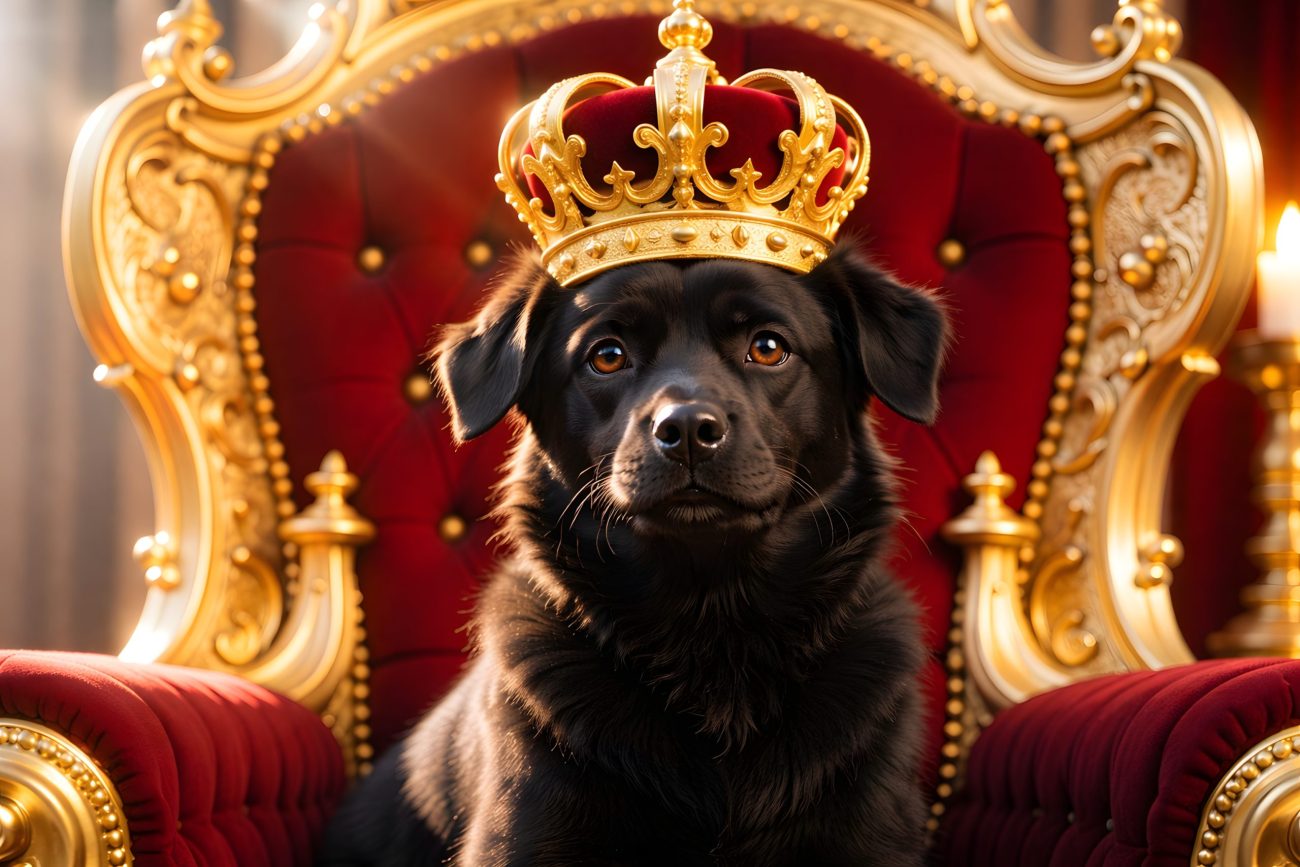
In the old northern histories, there are tales of a strange and humiliating rule — the time when a dog was made king over men.

One version tells that after the deaths of the Danish rulers Haldan and Helgi, the Danes fell under the power of a foreign king from Sweden. Instead of sending them a prince or governor, the conqueror sent them a small dog and commanded that it should be their king. He warned that anyone who brought him news of the dog’s death would pay with his life.

The Danes were forced to accept the animal as their ruler. For a time the dog was treated with ceremony and obedience. But one day, when larger dogs began fighting, the small royal dog leapt among them and was torn apart.

No one dared announce what had happened. At last a herdsman named Snyo went to the foreign king’s court. Speaking in riddles and clever words, he maneuvered the king into declaring the dog dead himself. Because the king had spoken it, Snyo was spared and was then made king of Denmark in the animal’s place.

Another northern tale tells of a conqueror who invaded Norway and defeated its aged ruler. To shame the defeated people, he placed a dog upon the throne and ruled the country through officials who acted in the animal’s name. The dog was surrounded by nobles and guards, and strict laws were given that anyone who failed to show it proper honor would be punished. Thus the land was forced to bow before a beast.

A further story speaks of King Eysteinn, who conquered the region of Trondheim. After the people killed the son he had set over them, the king returned in anger and gave them a cruel choice: they must take either his slave Thorer or his dog Saurr as their new ruler.

Believing a dog would be easier to endure, the people chose Saurr.

The dog was treated as a true king. He was given a golden collar, a throne, attendants, and a great hall to dwell in. Judgments were issued in his name, and decrees were marked with the print of his paw. For three years the land lived under the rule of the animal king.

At last wolves broke into the fold where Saurr was kept and tore him to pieces. So ended the strange reign of the dog king.

Yet the memory of these tales remained strong enough that poets spoke of the time when men bowed to a dog, and songs were even sung in honor of the beast who had once worn a crown.


Sources

Wikipedia contributors. (n.d.). Dog king. In Wikipedia, from https://en.wikipedia.org/wiki/Dog_king

Ekke Nekkepenn

Tradition / Region: Danish Mythology
Alternate Names: Ekkehard Nekkepenn, Eke Nekepen, Eckeneckepenn
Category: Mermaid


The Myth

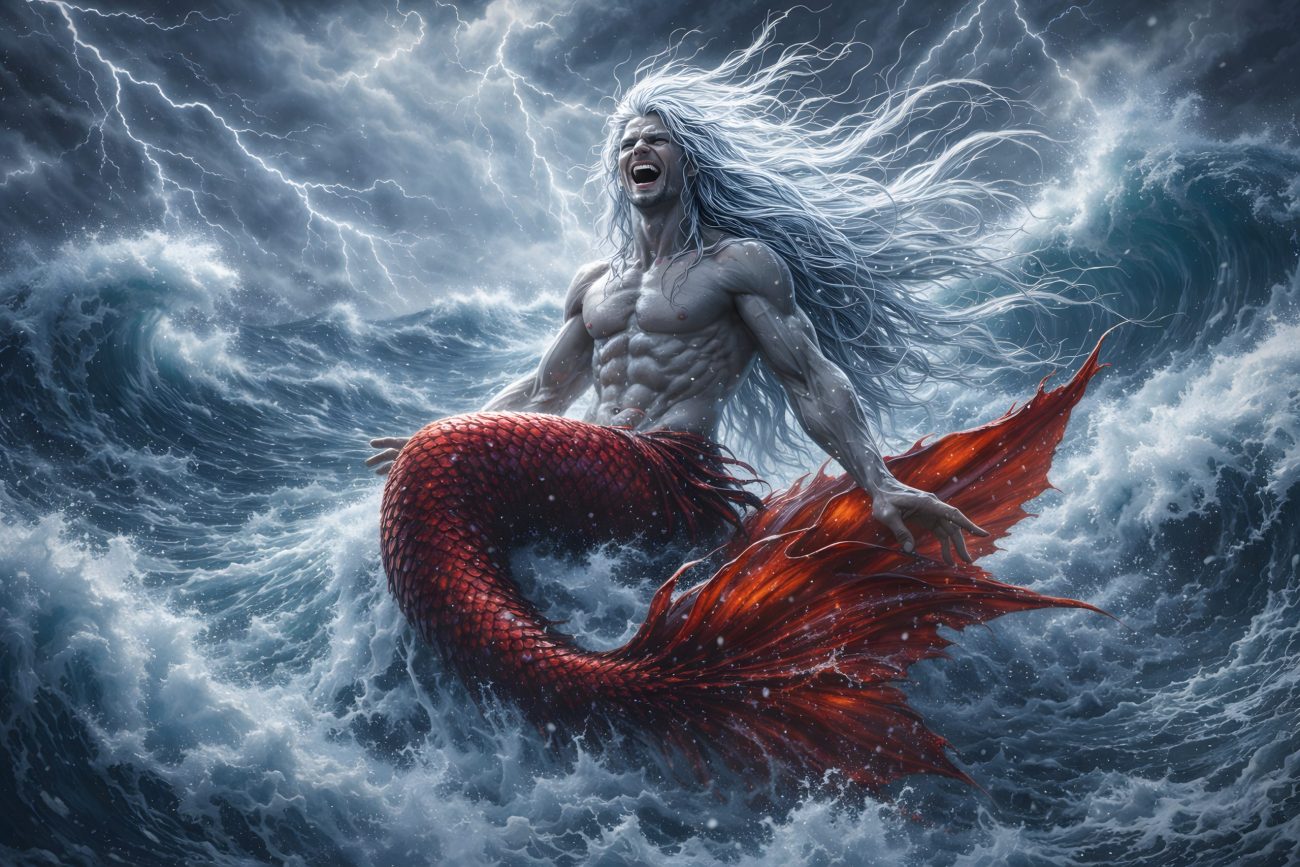
Beneath the waves of the North Sea lived Ekke Nekkepenn, a merman who dwelt on the seabed with his wife, Rahn.

One day, a ship bound for England was caught in a violent storm. As the vessel struggled against the waves, Ekke Nekkepenn rose from the depths and called to the captain, begging for help. His wife Rahn was about to give birth, and he needed a human woman skilled and kind to assist her.

The captain’s wife, brave and compassionate, agreed. The merman led her down into the depths, to his home beneath the sea. There she helped Rahn deliver the child safely. In gratitude, Ekke Nekkepenn gave her gold and silver before returning her unharmed to the surface.

The captain and his wife reached their home in Rantum on the island of Sylt, safe and prosperous.

Years passed. Rahn grew old, and Ekke Nekkepenn began to remember the beautiful woman who had helped him. Desire stirred in him. He resolved to claim the captain’s wife for himself.

One day, when the captain’s ship sailed again, Ekke Nekkepenn persuaded Rahn to grind salt upon the seabed. As she worked, a great whirlpool formed in the sea. The vortex seized the ship and dragged it down, along with its crew.

Now free to pursue his plan, Ekke Nekkepenn rose from the sea, taking the form of a handsome sailor. On the shore at Rantum, he met Inge, the captain’s young daughter. Against her will, he placed golden rings upon her fingers and hung a chain about her neck.

“You shall be my bride,” he declared.

Inge wept and begged to be released. Ekke Nekkepenn answered that she could win her freedom only if she learned his name by the next night.

No one on the island knew the stranger’s name. In despair, Inge wandered along the shore the following evening. From the distant dunes at Hörnum she heard a voice singing:

Today I brew,
Tomorrow I bake,
The day after that my wedding I’ll make.
My name is Ekke Nekkepenn,
My bride is Inge of Rantum,
And none know my name when I am alone.

Inge hurried back to the meeting place. When the sailor appeared, she faced him and said, “Your name is Ekke Nekkepenn, and I remain Inge of Rantum.”

At the sound of his true name, the merman’s power over her was broken. Enraged and thwarted, Ekke Nekkepenn vanished back into the sea.

Yet it is said that when storms rise suddenly off the coast of Sylt, and whirlpools churn the water, Ekke Nekkepenn still stirs in anger beneath the North Sea.


Sources

Wikipedia contributors. (n.d.). Ekke Nekkepenn. In Wikipedia, The Free Encyclopedia. Retrieved February 14, 2026, from https://en.wikipedia.org/wiki/Ekke_Nekkepenn