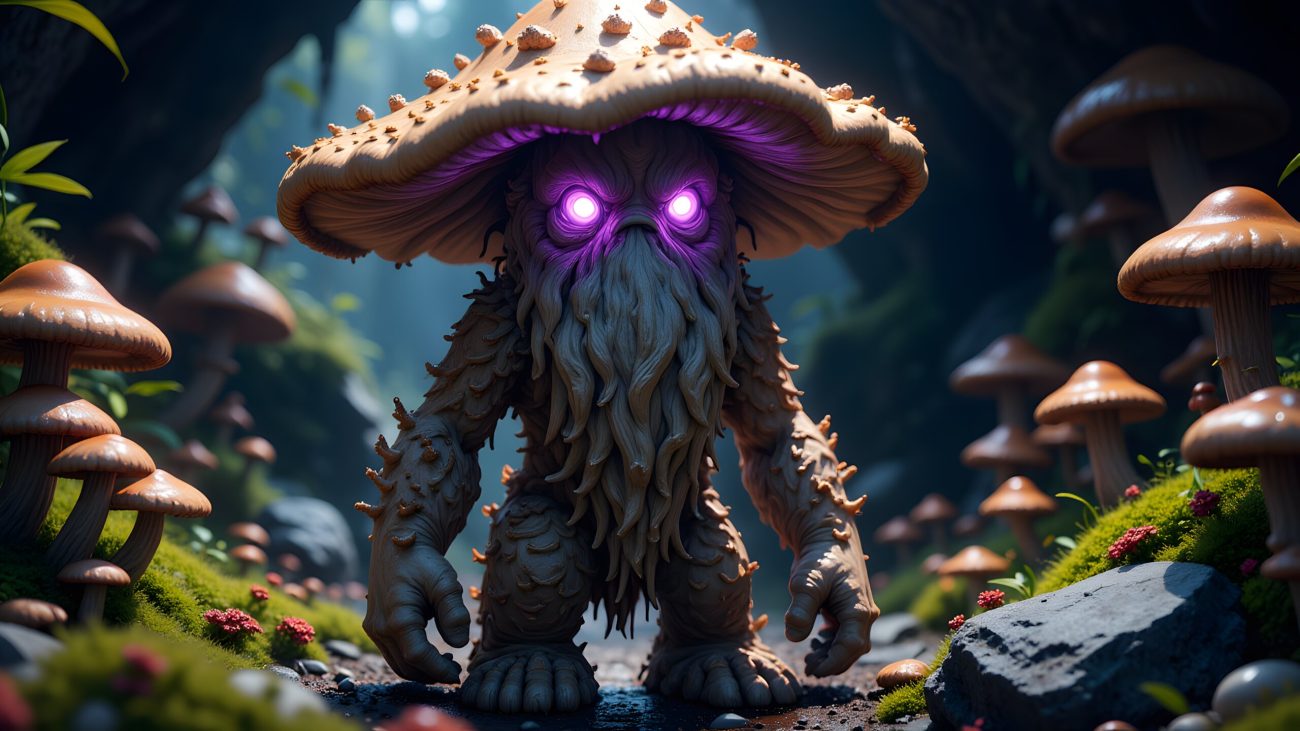
Junren

Tradition / Region: Chinese mythology
Alternate Names: People of Small Stature
Category: Gnome


The Myth

Beyond the familiar lands of humankind, in the far and unnamed regions of the world, there live the Junren, a race of people small in body yet fully human in form. They dwell in distant wildernesses where mountains, forests, and seas stretch beyond the reach of ordinary travelers.

The Junren are said to live together as their own people, forming small kingdoms hidden at the edges of the world. Though diminutive in size, they walk upright, speak, labor, and order their lives as humans do. Their lands mirror the greater world, only scaled down—fields, dwellings, and communities shaped to their stature.

They are rarely seen, not because they are spirits or illusions, but because their homes lie far from known roads. Those who glimpse them often do so only briefly, mistaking them at first for children, birds, or moving shadows among grass and stone. By the time the eye adjusts, the Junren have already withdrawn.

In the old telling, the Junren serve as a reminder that the world is vast and layered, filled with peoples unseen by most. Humanity is not alone in shaping civilization; even in the remotest wilderness, lives unfold according to their own customs and rhythms.

Thus the Junren endure in story as the small people of the far lands, quiet proof that the earth holds more nations than those whose names are commonly known.


Gallery


Sources

Wikipedia contributors. (n.d.). 茜人. In Wikipedia, The Free Encyclopedia, from https://zh.wikipedia.org/wiki/%E8%8F%8C%E4%BA%BA


Interpretive Lenses

Religious Readings
  • Christian Ascetic Deep Dive
Philosophical Readings
  • Nietzschean Deep Dive
Psychological Readings
  • Jungian Deep Dive
Esoteric Deep Dive
  • Hermetic Deep Dive
Political / Social Readings
  • Marxist Deep Dive
Other
  • How to Invite The Junren

Red Willow Children

Tradition / Region: Chinese Mythology
Alternate Names: Red Willow Boys, Tamarisk Children
Category: Gnome


The Myth

In the deep mountains near Urumqi, herders tell of tiny people who appear when the red willows bloom. They are no taller than a foot or two and resemble miniature men, women, and children. When spring comes and the willow branches redden, these beings break off the twigs, bend them into small hoops, and wear them as crowns upon their heads.

They gather in groups and dance among the valleys, moving in circles and making soft, musical sounds, like a distant song carried by the wind. Their dancing is joyful but fleeting, and they vanish as suddenly as they appear.

At times, the Red Willow Children creep into camps or tents to steal food. When caught, they do not resist. Instead, they fall to their knees and weep like frightened children. If tied or imprisoned, they refuse all food and soon die. If released, they move away timidly at first, walking only a short distance before turning back to look. If shouted at or chased, they kneel again and cry. Only when they are far enough away to know they are safe do they finally flee, crossing streams and mountains and disappearing into the wilderness.

No one has ever found their nests or homes. They seem to belong neither fully to the forest nor to the mountains, and their true nature is uncertain. Some say they are neither spirits nor beasts, but something in between.

One tale tells of a local magistrate who once captured a Red Willow Child and brought it away for closer inspection. Its hair, eyebrows, and beard were said to be indistinguishable from those of a human. This discovery led some to believe that the ancient stories of little people hidden in the wild places of the world might be true after all.

Thus the Red Willow Children remain beings of song and sorrow—small, elusive figures who dance beneath blooming willows and vanish before they can ever be fully understood.


Gallery


Sources

Wikipedia contributors. (n.d.). 红柳娥. In Wikipedia, The Free Encyclopedia, from https://zh.wikipedia.org/wiki/%E7%BA%A2%E6%9F%B3%E5%A8%83


Interpretive Lenses

Religious Readings
  • Christian Ascetic Deep Dive
Philosophical Readings
  • Nietzschean Deep Dive
Psychological Readings
  • Jungian Deep Dive
Esoteric Deep Dive
  • Hermetic Deep Dive
Political / Social Readings
  • Marxist Deep Dive
Other
  • How to Invite The Red Willow Children

Ear People

Tradition / Region: Chinese mythology
Alternate Names: Man in the Ear
Category: Gnome


The Myth

There was once a man named Tan Jinxuan who devoted himself to inner cultivation. He practiced breathing and stillness, enduring heat and cold alike, believing that persistence would bring insight. For many months nothing happened—until one day, as he sat quietly, he heard a faint whisper inside his ear, as soft as the buzzing of a fly.

The voice said, “You can see me.”

When Tan opened his eyes, the sound vanished. When he closed them and calmed his mind, the whisper returned. Each time he sat in meditation, the tiny voice spoke again, and Tan grew convinced that something truly lived within his ear.

One day, when the voice spoke once more, Tan answered it. At that moment, a tiny being leapt out from his ear and fell spinning onto the ground. It was no more than three inches tall, shaped like a small man with a fierce face like a yaksha, savage and sharp-eyed despite its size.

Tan stared in astonishment as the little creature whirled about, real and solid, no longer hidden. Before he could grasp it or speak further, it vanished as suddenly as it had appeared, leaving Tan alone with the certainty that unseen beings dwell closer to humans than anyone suspects.

Thus it was said that some spirits live not in forests or mountains, but within the body itself—heard only in silence, seen only by those who dare to listen.


Gallery


Sources

Wikipedia contributors. (n.d.). 耳中人. In Wikipedia, The Free Encyclopedia, from https://zh.wikipedia.org/wiki/%E8%80%B3%E4%B8%AD%E4%BA%BA


Interpretive Lenses

Religious Readings
  • Christian Ascetic Deep Dive
Philosophical Readings
  • Nietzschean Deep Dive
Psychological Readings
  • Jungian Deep Dive
Esoteric Deep Dive
  • Hermetic Deep Dive
Political / Social Readings
  • Marxist Deep Dive
Other
  • How to Invite The Ear People