Tiangou

Tradition / Region: Chinese Mythology
Alternate Names: Heavenly Dog
Category: Dog


The Myth

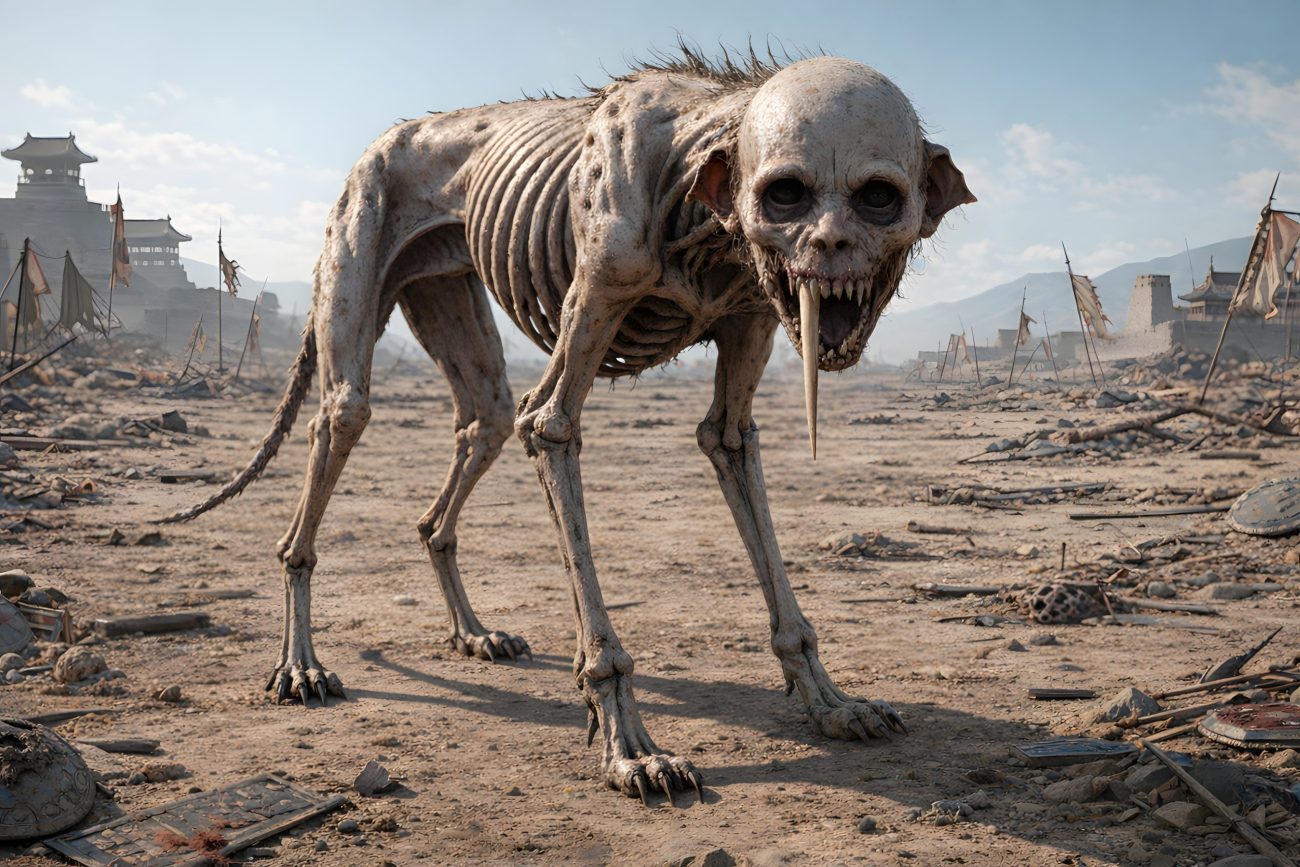
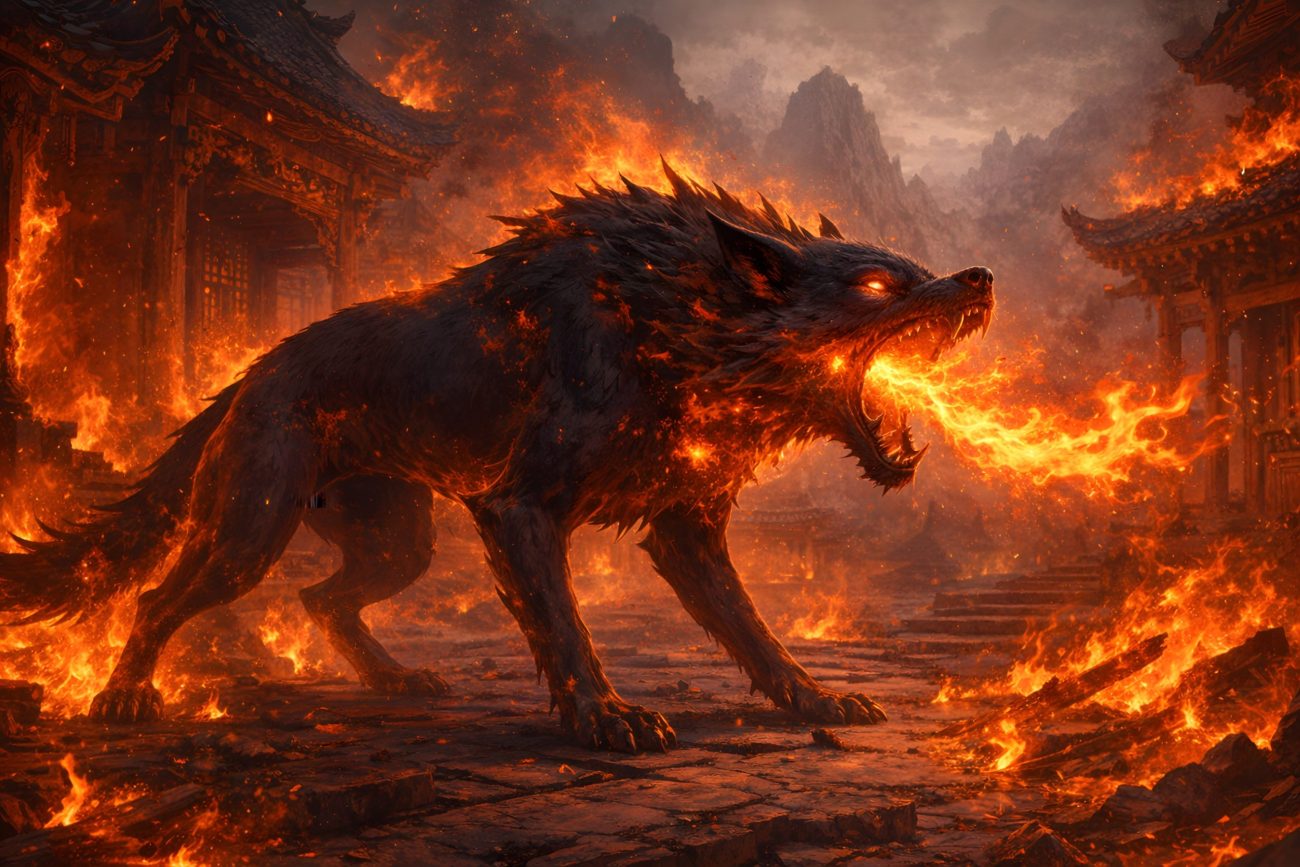
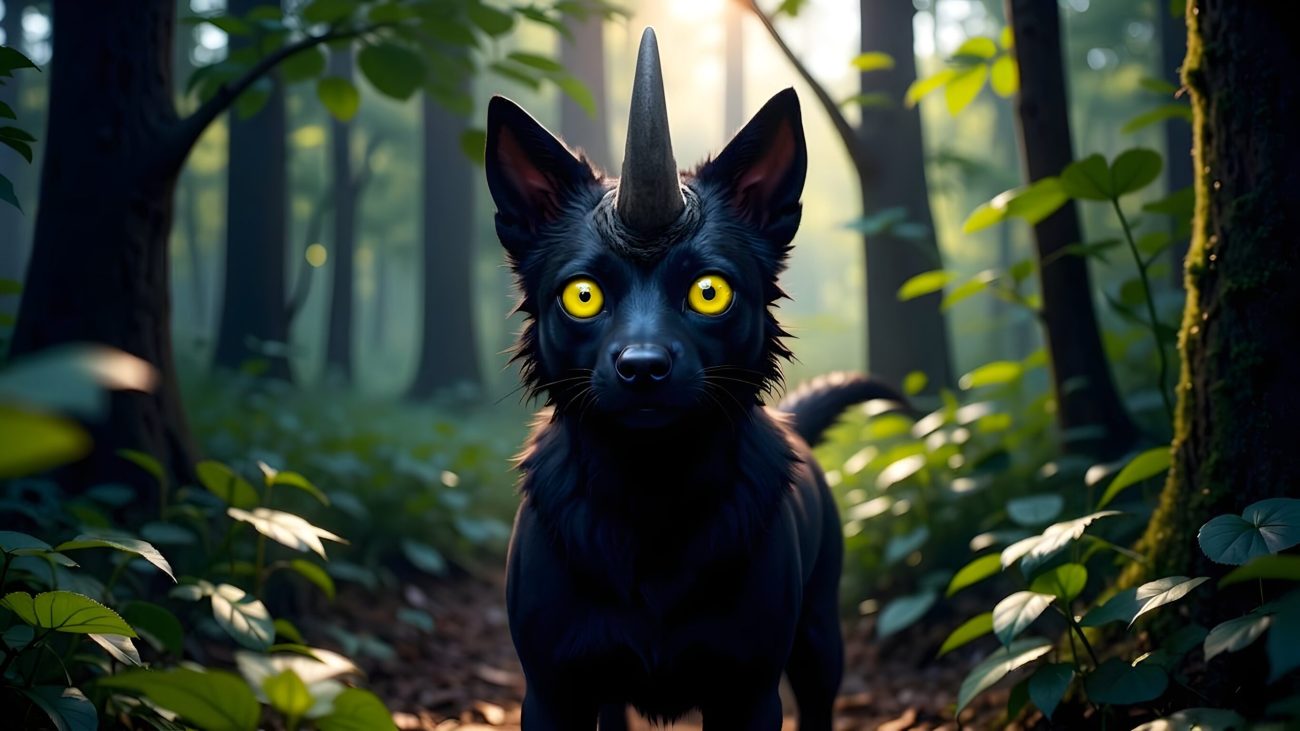
Tiangou, the Heavenly Dog, is a powerful creature of the sky known throughout ancient China.

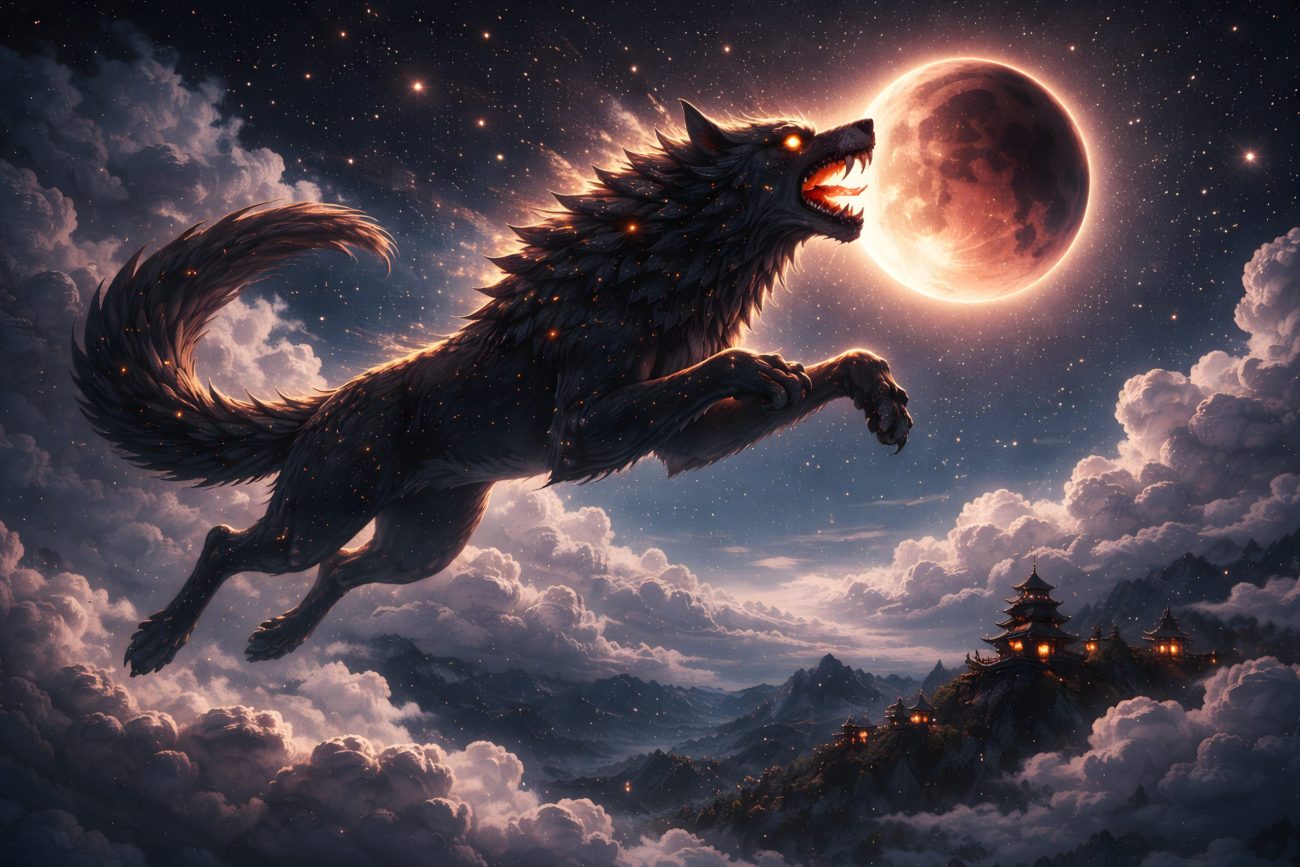
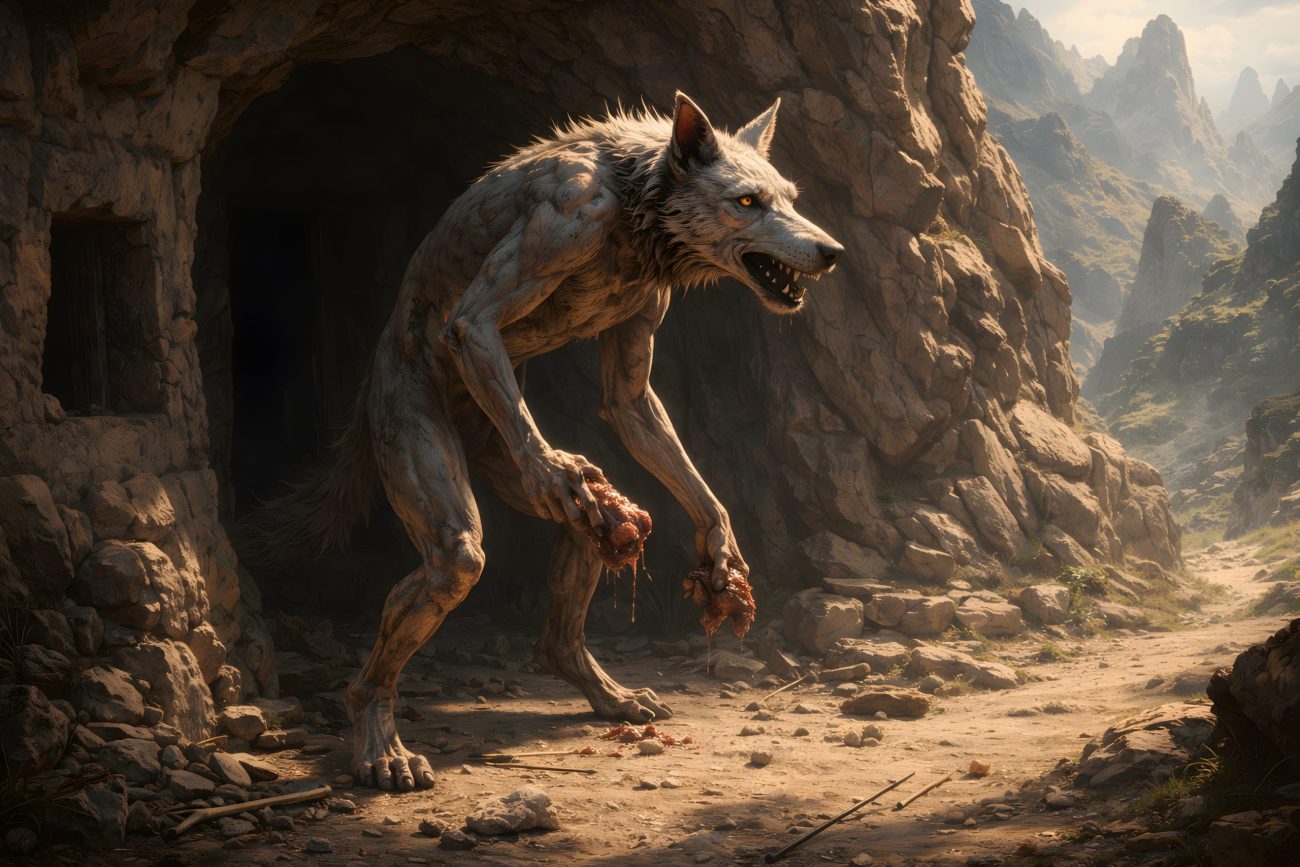
In one form, it is seen as a dark, enormous dog that appears during eclipses. When the Sun or Moon suddenly darkens, people said it was because Tiangou had risen into the heavens and begun to devour it. The creature was believed to swallow the heavenly body, causing the sky to dim until the light returned again.

One story tells that after the hero Hou Yi shot down the nine extra suns that scorched the world, he received an elixir of immortality from the Queen Mother of the West. Before he could drink it, his wife Chang’e secretly consumed the potion herself and began to float upward toward the heavens.

At that moment, Hou Yi’s black dog entered the room and licked the remaining drops of the elixir. The magic transformed it. Growing larger and more powerful, the dog leapt into the sky and chased after Chang’e. Terrified, she fled to the Moon and hid there.

The dog followed her and swallowed the Moon itself, taking Chang’e with it.

When the Queen Mother of the West learned what had happened, she seized the creature. Recognizing that it had once belonged to Hou Yi, she did not destroy it. Instead, she ordered the dog to release the Moon and Chang’e, and she set it as a guardian of the gates of Heaven. From then on, it was known as Tiangou, the Heavenly Dog.

In other traditions, Tiangou is not only feared but also respected. In a more benevolent form it appears as a celestial guardian, linked to the stars and said to protect against misfortune, robbers, and danger.

Another story tells that a divine archer named Zhang Xian watches the sky for the Heavenly Dog. When Tiangou threatens the heavens, Zhang Xian draws his bow and shoots to drive it away, protecting both the sky and the lives of the people below.

Thus Tiangou is remembered as both a devourer of the Moon and a guardian of Heaven — a celestial dog whose presence explains the darkening of the sky and whose power reaches across both myth and the stars.


Gallery


Sources

Wikipedia contributors. (n.d.). Tiangou. In Wikipedia, from https://en.wikipedia.org/wiki/Tiangou


Interpretive Lenses

Religious Readings
  • Christian Ascetic Deep Dive
Philosophical Readings
  • Nietzschean Deep Dive
Psychological Readings
  • Jungian Deep Dive
Esoteric Deep Dive
  • Hermetic Deep Dive
Political / Social Readings
  • Marxist Deep Dive

Rhinoceros Dog

Tradition / Region: Chinese Mythology
Alternate Names:
Category: Dog


The Myth

In old Chinese tales there is mention of a rare and mysterious creature known as the Rhinoceros Dog, an animal believed to bring prosperity to the household that possesses it.

One story tells that during the reign of Emperor Hui of the Jin dynasty, a man named Huai Yao lived in Lou County in the region of Wu. One day his family began hearing the sound of a dog barking from beneath the ground. When they searched for the source, they found only a tiny hole in the earth, no larger than the burrow of a worm.

Curious, Huai Yao prodded the ground with a stick and then began digging. After digging several feet down, he struck something. Continuing to dig, he uncovered two small puppies, one male and one female. Their eyes had not yet opened, and though young, they seemed larger than ordinary newborn dogs.

He took them home and fed them, and soon word spread. Neighbors gathered to see the strange animals. Among them was an elder who, upon seeing the pups, declared that they were Rhinoceros Dogs. He told Huai Yao that whoever obtained such creatures would see their family prosper and flourish, and that they should be carefully raised.

From then on, the Rhinoceros Dog was remembered as a rare and fortunate animal, one that might appear in unexpected places and bring wealth and good fortune to those who found it.


Gallery


Sources

Wikipedia contributors. (n.d.). 犀犬. In Wikipedia, from https://zh.wikipedia.org/wiki/%E7%8A%80%E7%8A%AC


Interpretive Lenses

Religious Readings
  • Christian Ascetic Deep Dive
Philosophical Readings
  • Nietzschean Deep Dive
Psychological Readings
  • Jungian Deep Dive
Esoteric Deep Dive
  • Hermetic Deep Dive
Political / Social Readings
  • Marxist Deep Dive

Peng Hou

Tradition / Region: Chinese Mythology
Alternate Names:
Category: Dog


The Myth

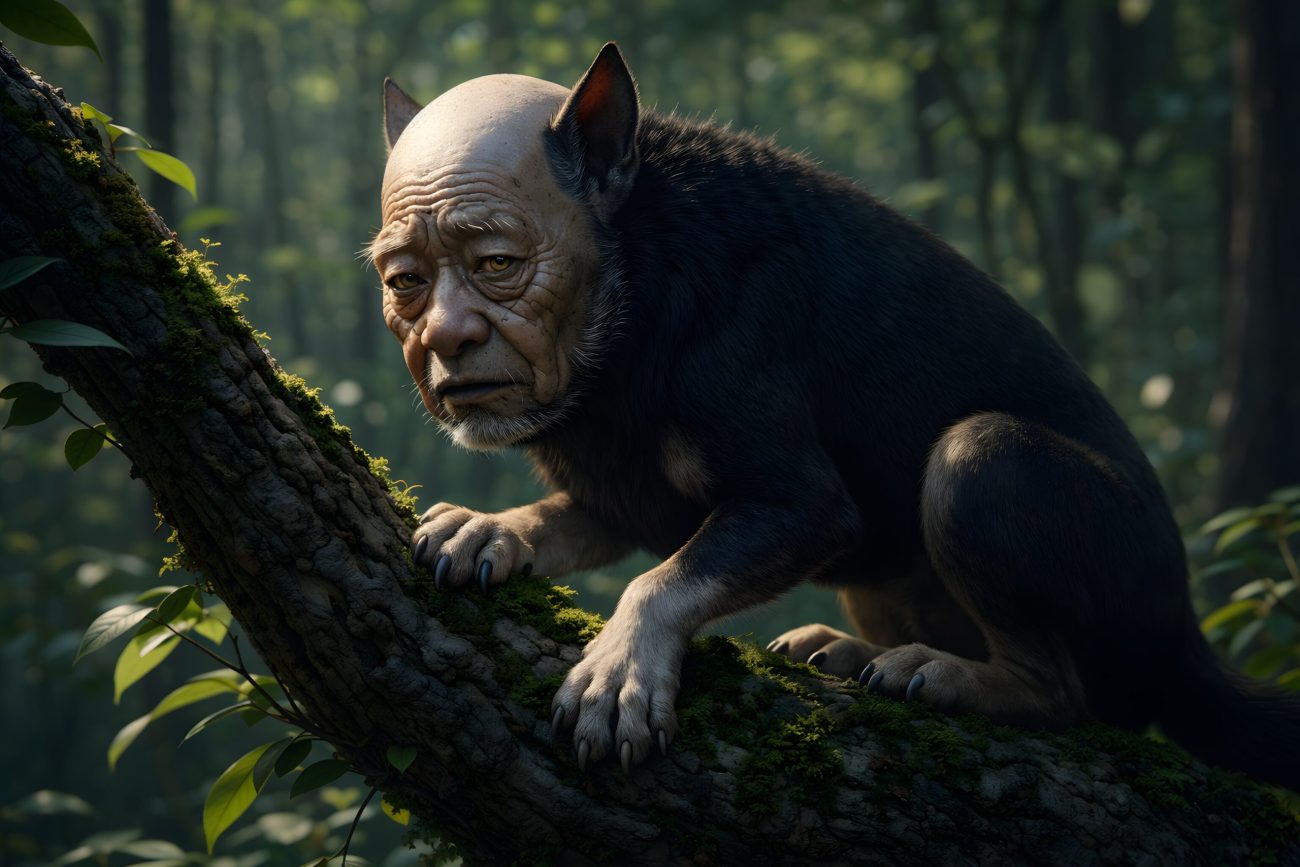
Peng Hou is a strange spirit said to dwell inside ancient trees. It is believed that when a tree has stood for a thousand years, something may begin to live within it, and that being is called Peng Hou.

One story tells of a man who ordered a great camphor tree to be cut down. As the woodcutters struck the trunk, something astonishing happened — the tree began to bleed, as if it were alive. From the split in the trunk a creature suddenly leapt out.

It had a human-like head but the body of a black dog. It had no tail, and its appearance was both unsettling and uncanny, as though it belonged to neither the world of beasts nor that of spirits.

The creature was captured. Instead of fearing it, the people cooked and ate it. Those who tasted the flesh said it was very similar to dog meat.

Peng Hou was known in old Chinese records of strange beings, where it was counted among the spirits and monsters that inhabit the natural world. It was said to be one of the hidden lives that grow alongside trees, emerging only when the tree is cut or disturbed.

In later times the story traveled beyond China, and tales of tree-dwelling creatures shaped like dogs appeared in other lands as well. Some believed that echoes heard in mountains or forests might be caused by such spirits moving unseen among the trunks.

Thus Peng Hou is remembered as a being born from ancient wood — a creature that sleeps within trees for centuries, only revealing itself when the axe splits the living trunk.


Gallery


Sources

Wikipedia contributors. (n.d.). 彭侯. In Wikipedia, from https://zh.wikipedia.org/wiki/%E5%BD%AD%E4%BE%AF


Interpretive Lenses

Religious Readings
  • Christian Ascetic Deep Dive
Philosophical Readings
  • Nietzschean Deep Dive
Psychological Readings
  • Jungian Deep Dive
Esoteric Deep Dive
  • Hermetic Deep Dive
Political / Social Readings
  • Marxist Deep Dive

Nine-Eared Dog

Tradition / Region: Chinese Mythology
Alternate Names:
Category: Dog


The Myth

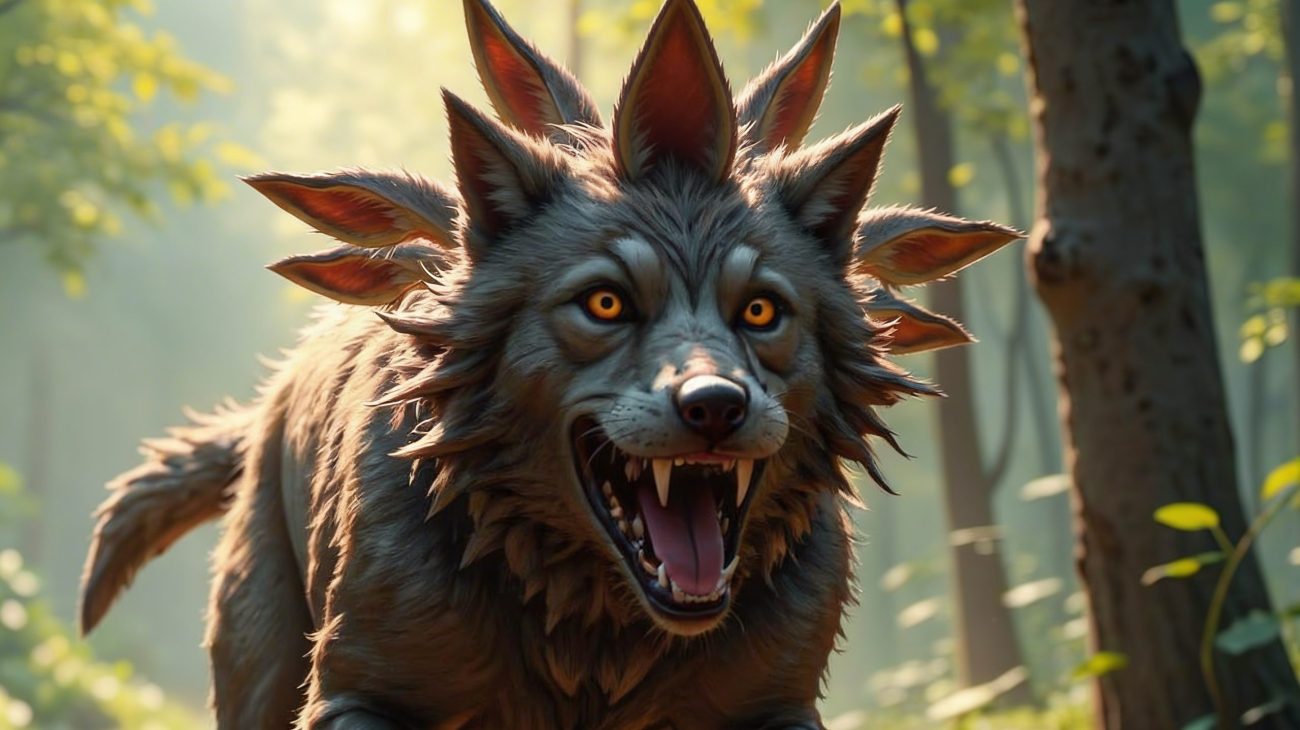
In old tales from southern China, hunters spoke of a strange and wondrous animal known as the Nine-Eared Dog.

This creature looked like an ordinary hunting dog at first glance, but it possessed nine ears. It was said to be a spiritual animal whose ears revealed the outcome of a hunt. Whenever the dog’s ears moved, it foretold what its master would gain that day. If one ear twitched, one animal would be caught. If several ears stirred, several beasts would fall. The more ears that moved, the richer the hunt would be.

One story tells of a hunter named Chen from Leizhou, a man who had no children and made his living by hunting. He owned such a dog, and it never failed him. Before each hunt, he would watch its ears to learn what fortune awaited him in the wilds.

One day, as he prepared to set out, all nine ears of the dog suddenly moved at once. Chen was overjoyed, believing he would return with more game than ever before. Certain of great success, he followed the dog deep into the wilderness.

But instead of leading him to prey, the dog brought him into a thorny and tangled place where it circled restlessly, unable to move onward. Confused, Chen searched the ground and discovered something hidden among the brush — a massive egg, nearly a foot across.

He carried the strange object home. When the egg finally opened, it did not reveal a bird or beast but a human child. On the child’s hands were markings, and upon them were written the characters for “Thunder” and “Zhou.”

Thus the Nine-Eared Dog did not lead its master to animals that day, but to a discovery of far greater mystery — a sign that the spirit-dog’s gifts did not always point to the hunt, but sometimes to fate itself.


Gallery


Sources

Wikipedia contributors. (n.d.). 九耳犬. In Wikipedia, from https://zh.wikipedia.org/wiki/%E4%B9%9D%E8%80%B3%E7%8A%AC


Interpretive Lenses

Religious Readings
  • Christian Ascetic Deep Dive
Philosophical Readings
  • Nietzschean Deep Dive
Psychological Readings
  • Jungian Deep Dive
Esoteric Deep Dive
  • Hermetic Deep Dive
Political / Social Readings
  • Marxist Deep Dive