Tradition / Region: Greek Mythology
Alternate Names: Hekabe
Category: Dog, Transformation figure, Tragic queen
The Myth
Hecuba was the queen of Troy, wife of King Priam and mother of many children. During the war with the Greeks, her sons and daughters were slain, and her city was destroyed. When Troy finally fell, she was taken captive by the victors and led away into slavery.
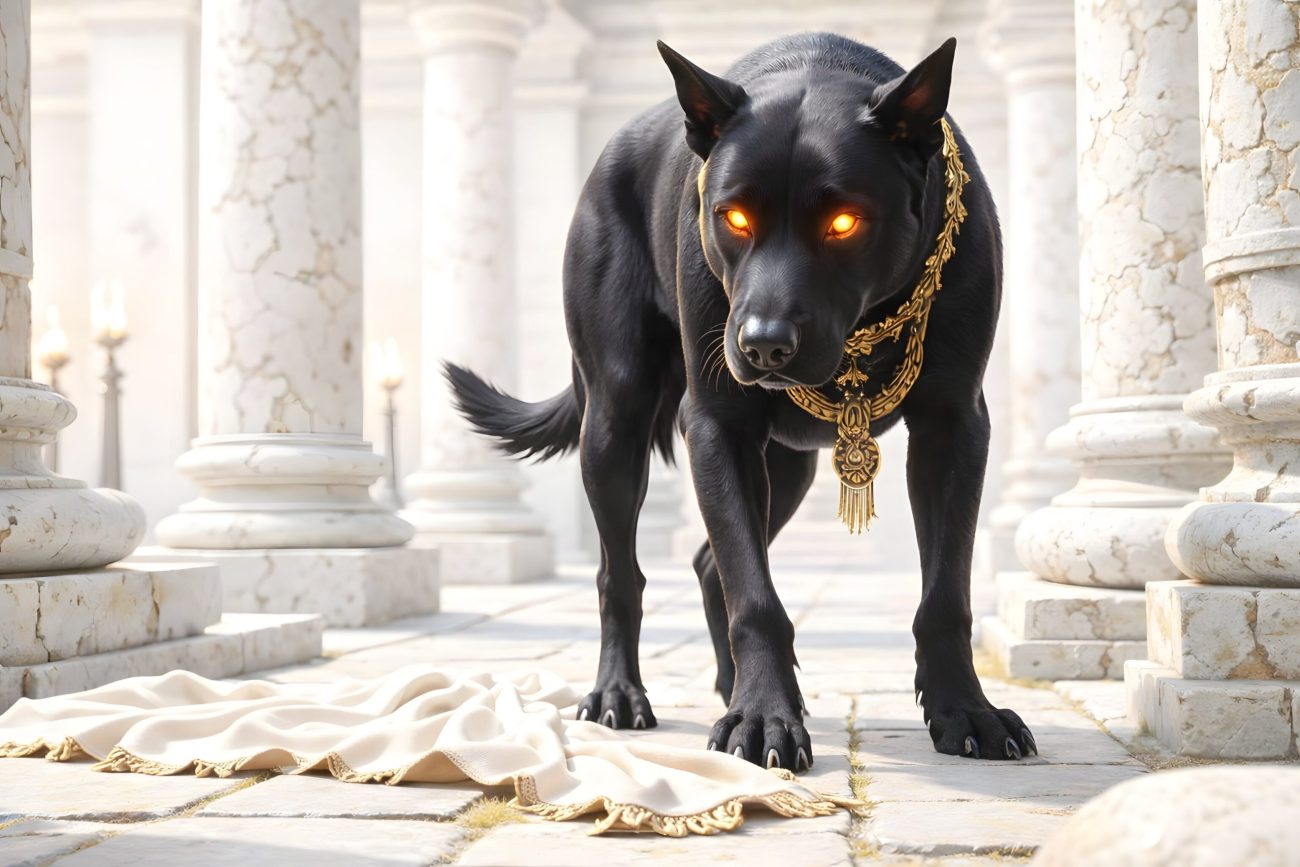
In one tale, as she was handed over to Odysseus, grief and fury overcame her. She cursed him, snarling like a wild beast. Because of her rage and the depth of her suffering, the gods transformed her into a dog. In this form she escaped her captors, and it is said that the goddess Hecate later took her in as one of her sacred companions.
Another story tells that her transformation came after an even greater sorrow. When the war ended, Hecuba learned that her daughter Polyxena had been sacrificed at Achilles’ tomb. Soon after, the body of her son Polydorus was discovered on the shore, murdered despite having been sent away for safety. Seeing the corpses of her children, the queen’s mind broke beneath the weight of grief. She cried out and howled like a dog, and her voice lost all human sound.
In some tellings, this madness became a true change. Driven beyond reason, she threw herself into the sea. There she was transformed into a she-dog with blazing eyes. Her body was later said to rest at a place called Kynosema, the “Dog’s Grave,” a headland known to sailors who passed that shore.
Yet another version says that after her transformation she did not perish, but was taken by the goddess Hecate. The goddess made her one of the spirits that follow her, a canine presence moving between the world of the living and the dead.
So Hecuba, once queen of mighty Troy, was remembered not only for her sorrow, but for the strange fate that turned her from a grieving mother into a creature of the night.
Sources
Wikipedia contributors. (n.d.). Hecuba. In Wikipedia, from https://en.wikipedia.org/wiki/Hecuba