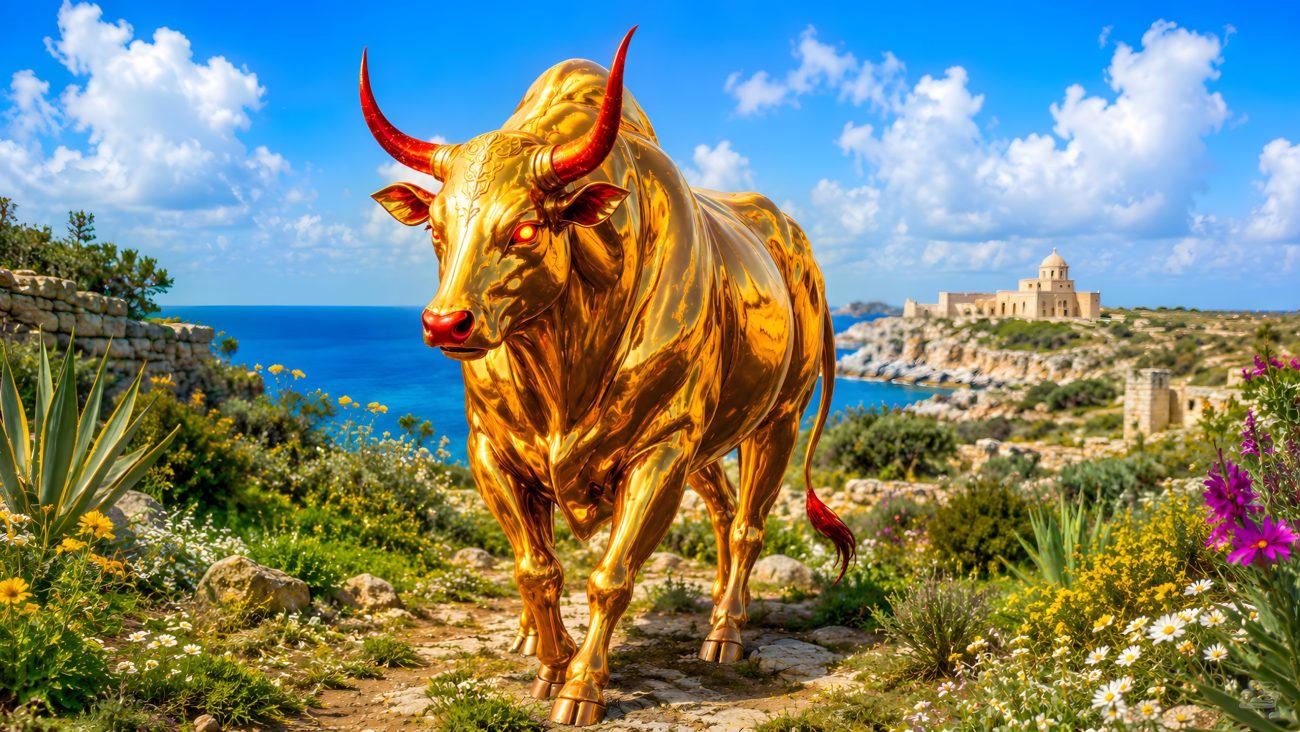
Tradition / Region: Malta Mythology
Alternative names: Qawqam
Category: Cow
The Myth
The Qawqam is a mysterious supernatural ox from Maltese folklore that roams the rocky countryside, hills, and isolated roads of the island at night. It is described as an enormous wild ox with immense strength and long powerful horns rising high above its head. Golden in color, it appears both beautiful and frightening, standing apart from ordinary animals.
The creature moves silently through open fields, low brushlands, and abandoned paths, appearing suddenly out of darkness before disappearing again without warning. Villagers believed that encountering the Qawqam was extremely dangerous. People who crossed its path risked injury or death, and its mere appearance was enough to drive travelers indoors after sunset.
The Qawqam was said to travel not only across the surface of the land but also beneath it. Certain hills and rocky places were believed to contain hidden passages through which the beast entered the underworld and returned again. Because of this, the ox was considered a creature that moved between worlds, belonging partly to the realm of the living and partly to unseen places below the earth.
At times the Qawqam was seen grazing quietly in the wilderness, glowing gold beneath moonlight as though it were part of the land itself. Yet people believed it could never truly be captured, owned, or followed. It always vanished before anyone could approach too closely.
Farmers and herdsmen sometimes connected the creature to the fragile nature of wealth, labor, and possession. The Qawqam represented power that could not be controlled — something valuable yet untouchable, capable of disappearing without trace.
The Qawqam remains remembered as a horned night-beast of Malta: a golden ox wandering lonely hills, hidden tunnels, and dark roads between the visible world and the unseen depths beneath the island.
Sources
Mifsud, S. D. (2014). The Maltese bestiary: An illustrated guide to the mythical flora and fauna of the Maltese Islands (p. 28).