Tradition / Region: Korean Mythology
Alternative Name: –
Category: Snake, Deer
The Myth
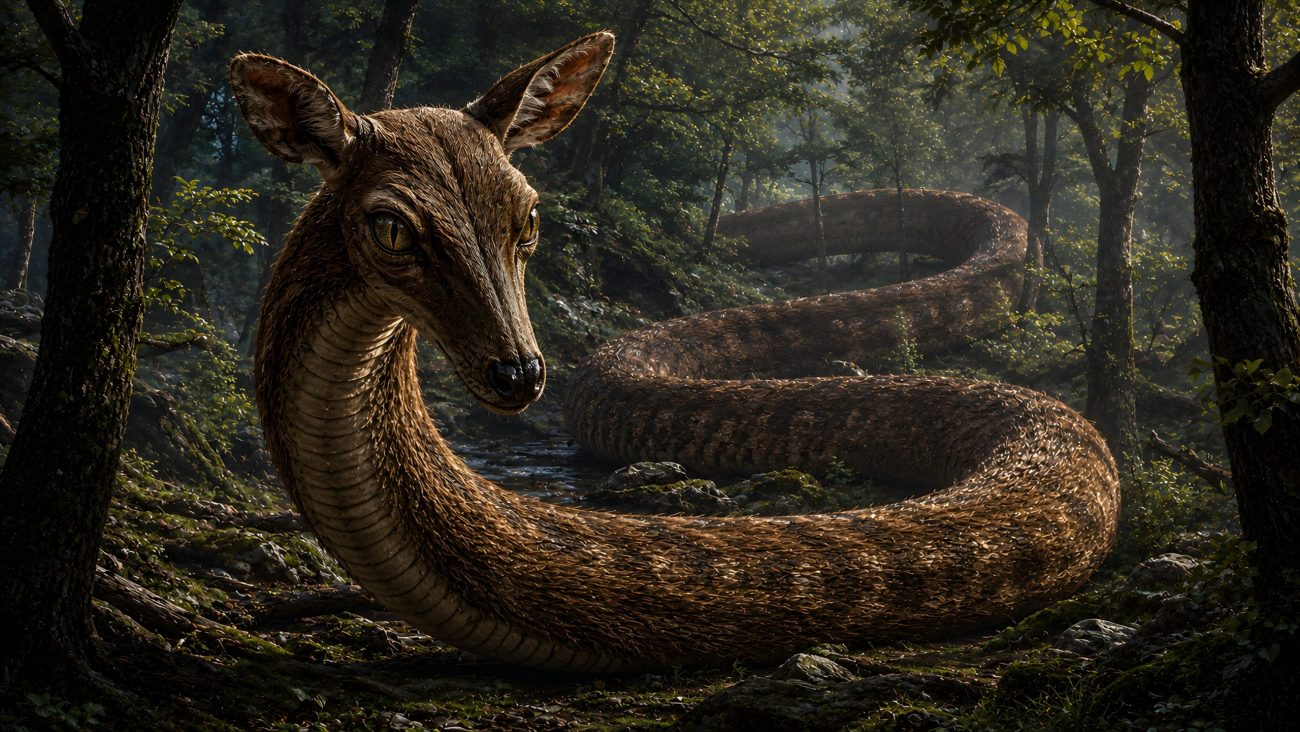
The Chandusa is a mysterious giant serpent from Korean folklore and classical literature of the Joseon period. It is described as an enormous snake around seven meters long with the hornless head of a roe deer. Some traditions considered it related to other strange serpents such as cat-headed snakes and gigantic tesa serpents.
Unlike ordinary snakes, the chandusa was believed to possess supernatural powers. It often appeared near human homes and settlements, especially around gates, courtyards, or walls. Despite its massive size, it lived inside tiny holes or burrows that seemed impossibly deep.
Legends claimed that attempts to block its lair were useless. Stones placed over the hole would mysteriously return to their original position by the next morning, as though the creature had moved them through unnatural means.
One famous story appears in the Taedong Yaseung. The scholar and nobleman Yiam Seong-in reportedly encountered a chandusa near his home at night. He described seeing a massive snake with the head of a roe deer moving near the gate before vanishing into a tiny hole by the southern wall.
After discovering that the creature’s burrow could not be sealed, even with heavy stones, he became convinced the serpent was supernatural. Fearing the creature, he sold his house and moved away entirely.
Sources
Bestiary.us. (n.d.). Chandusa. Retrieved May 10, 2026, from https://www.bestiary.us/chandusa